


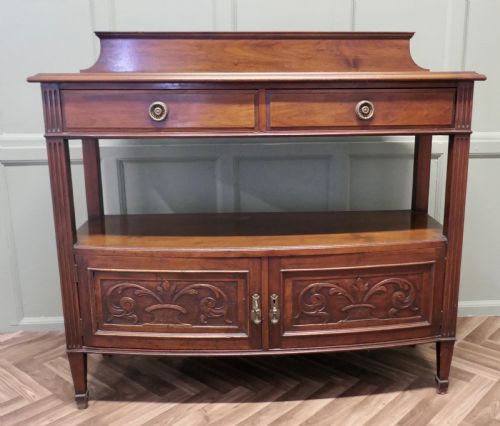


French Dining Room Buffet
A french dining room buffet brings heavy timber presence and practical storage to a home, with Walnut and Oak examples dominating.
French Dining Room Buffet
When searching for a french dining room buffet, buyers encounter substantial storage furniture designed for serving and holding dining wares. The selection spans distinct eras, ranging from 18th Century provincial oak sacristy cabinets to later Louis XV style parquetry top sideboards and Art Deco walnut pieces.
The most common versions met on this page include walnut and oak sideboards reflecting French Provincial, Louis XV, and Art Nouveau styles. Pieces range from low kitchen or hallway buffers to grand chateau style sideboards and credenzas.
Origins stretch across the 18th and 19th centuries into 1930, capturing both provincial utility and metropolitan revival tastes. Buyers frequently find walnut construction paired with brass hardware, marble, and glass elements.
Materials and construction methods
Makers utilised solid timbers such as oak, walnut, burr walnut, and mahogany to build the carcasses and drawers of these items. These woods were frequently selected for their durability and grain pattern.
Surface decoration involved intricate parquetry work, extensive carving, and inlaid details that defined styles from French Provincial to Art Nouveau and Victorian Rococo Revival. Secondary elements like brass, iron, glass, and marble appear across various periods to provide functional and decorative contrast.
French Dining Room Buffet Retail Price Guide 2026
Typical asking prices for french dining room buffet among the pieces listed under this phrase on Sellingantiques today, from the lower quarter to the upper quarter. They describe what is for sale here now, not the wider market.
Listings feature woods spanning walnut, burr walnut, oak, mahogany, alongside decorative additions of marble, glass, brass, and iron.
What separates the tiers of quality
The sophistication of the timber selection and decorative technique separates standard examples from exceptional ones. Finely figured burr walnut and complex parquetry tops indicate higher ambition in the workshop.
The depth and execution of the carved ornamentation also distinguish the range. Crisp hand-carving in walnut or oak points to skilled craftsmanship rather than routine production.
The French Dining Room Buffet Glossary
- Chiffonier
- A compact sideboard or tall chest of drawers. In 19th century pieces, it often includes a raised shelf back.
- Parquetry
- A geometric mosaic of wood pieces used for decorative floors and furniture tops. It creates patterned surfaces on panels and boards.
- Louis XV Style
- A decorative design style characterised by asymmetry, curves, and natural motifs such as leaves and shells. It heavily influences French revival pieces from later centuries.
- Sacristy Cabinet
- A low storage piece originally used in church vestries for vestments and vessels. These utilitarian forms adapt well to domestic kitchens and hallways.
French Dining Room Buffet: Frequently Asked Questions
What is a french dining room buffet used for?
These pieces serve primarily for storing dining china, glassware, and silver while offering a flat surface for serving food.
Historically, they also functioned as display areas for decorative objects in formal dining rooms and hallways.
How do I date a french dining room buffet?
Dating relies on identifying the primary timber, the complexity of the carving, and stylistic markers such as Art Nouveau curves or provincial simplicity.
Examining the construction methods and hardware, including brass and iron fittings, helps narrow down the period of manufacture.
What is the difference between a sideboard and a credenza?
Sideboards generally feature deeper storage and cupboards designed specifically for dining room utility and serving.
Credenzas often include glass panels and display areas, leaning slightly more towards decorative display than purely utilitarian storage.
Are these pieces suitable for modern living rooms?
Their substantial timber construction and generous storage make them practical for contemporary dining rooms, hallways, and living spaces.
They integrate well by providing functional surface area and enclosed storage while adding historical character to a room.