

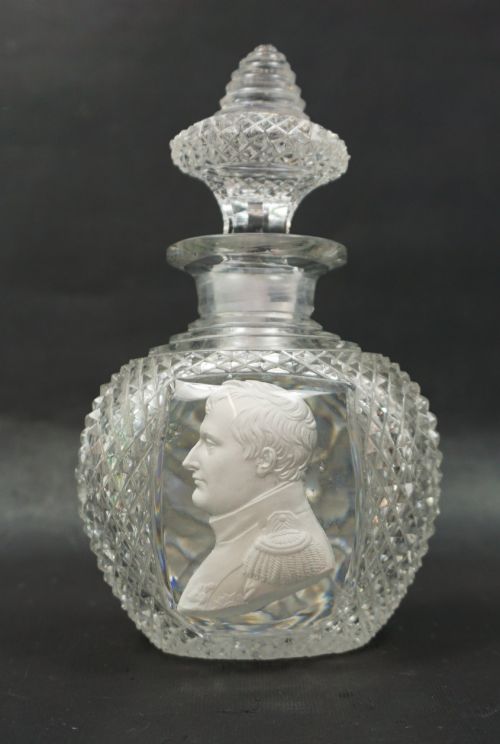


French Cut Glass Bottle
A french cut glass bottle brings heavy brilliance and refined metalwork to a dressing table, prized for its tactile weight and decorative presence.
French Cut Glass Bottle
When you search for a french cut glass bottle, you enter a domain of heavy crystal vessels designed to hold perfume, spirits or wine. The most common forms on this page are small scent bottles, often fitted with intricate metal caps or housed in dedicated caskets.
The objects span the nineteenth century and later periods, displaying styles from Charles X and French Restoration to Belle Epoque and Art Nouveau. Alongside pocket or dressing table scent bottles, the selection includes larger table wares such as decanters, carboys and champagne coolers.
Origins are distinctly French, frequently enhanced by precious mounts in sterling silver, gilt bronze or brass. Certain examples combine faceted crystal with layered glass or enamel details, serving both practical storage and ornate display.
How they were made
Makers shaped heavy glass and lead crystal through glassblowing and deep facet cutting, achieving sharp geometric edges that catch the light. Overlay techniques added distinct colour layers to the clear crystal base, which artisans then cut through to reveal the contrast underneath.
Metalwork played an integral role, with workshops casting mounts in gilt bronze or fabricating collars and lids from sterling silver and gold leaf. Additional decorative treatments included guilloché enamel and embossed leather applied to protective caskets.
French Cut Glass Bottle Retail Price Guide 2026
Typical asking prices for french cut glass bottle among the pieces listed under this phrase on Sellingantiques today, from the lower quarter to the upper quarter. They describe what is for sale here now, not the wider market.
Listings feature materials such as lead crystal, silver, gilt bronze, brass and ceramic alongside styles ranging from Charles X to French Art Nouveau.
What varies in quality
Quality rests primarily on the depth and crispness of the glass cutting, alongside the weight and purity of the crystal itself. Superior pieces show sharp, unblemished facets and thick walled construction that gives the vessel a substantial hand feel.
The standard of the metal mounts further separates the ordinary from the exceptional. Finely chased gilt bronze or heavy silver collars securely fit the glass body, while intricate sulphide portraits or layered enamel work indicate higher levels of artisan skill.
The French Cut Glass Bottle Glossary
- Scent bottle
- A small vessel designed to hold liquid perfume, typically fitted with a secure stopper or hinged metal cap. These items frequently feature decorative glass cutting or precious metal overlays.
- Chatelaine scent bottle
- A portable bottle equipped with a small chain or ring, allowing it to be suspended from a chatelaine belt hook. They were worn as practical accessories in the nineteenth century.
- Sulphide portrait
- A small cameo made of white ceramic paste embedded within clear glass or crystal. This technique creates a detailed, three-dimensional medallion effect.
- Guilloché enamel
- A decorative metal technique where a precise geometric pattern is機械 engraved and then covered with translucent enamel. It provides a luminous, patterned surface finish on metal caps and lids.
- Carboy
- A large, bulbous glass vessel traditionally used for holding liquids safely. In this context, they appear as substantial decorative pieces.
French Cut Glass Bottle: Frequently Asked Questions
What is a French cut glass bottle used for?
These vessels were historically utilised to hold perfumes, smelling salts or fine spirits on dressing tables and in drawing rooms.
Today, collectors use them as decorative mantelpiece accents, vanity displays or functional decanters for dining.
How do I identify a Charles X piece?
Charles X items generally date from the 1820s to the 1830s and display restrained neoclassical lines combined with rich gilt bronze mounts.
Look for architectural clarity in the metal stands and heavier, simpler glass forms compared to later ornate styles.
Are all these bottles made of crystal?
The listings encompass both standard glass and high-lead crystal, with many pieces explicitly noted as heavy crystal.
Crystal offers greater clarity and refractive brilliance due to its lead content, allowing deeper and sharper facet cutting.
How should I clean my glass bottle?
Gentle washing with warm water and mild soap is sufficient for most antique glass surfaces, avoiding harsh abrasives.
Take care around silver or gilt bronze mounts to keep cleaning fluids away from delicate metalwork and enamel.