
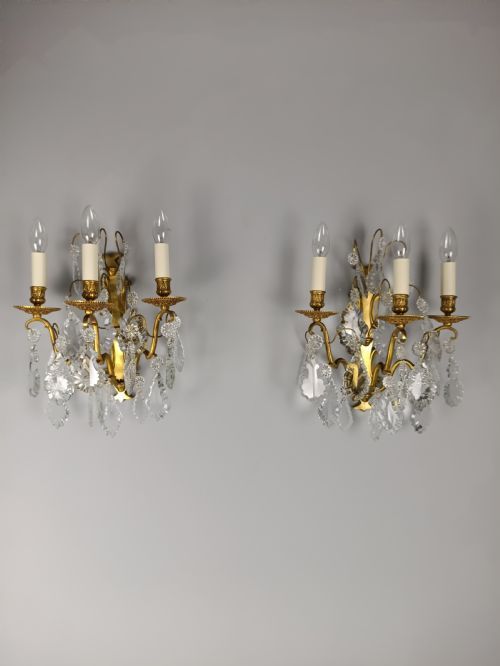


French Crystal Wall Light Pair
A French crystal wall light pair brings radiant, reflected illumination and period elegance to an interior space.
French Crystal Wall Light Pair
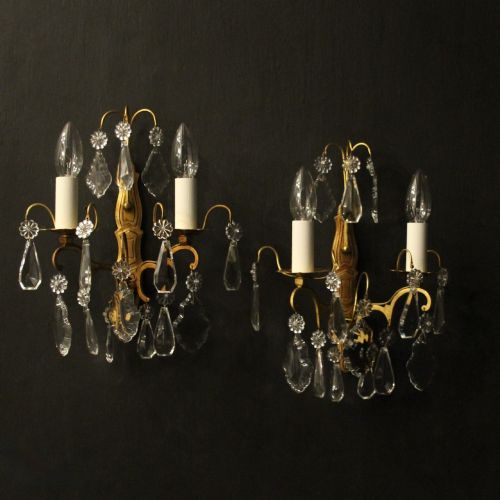
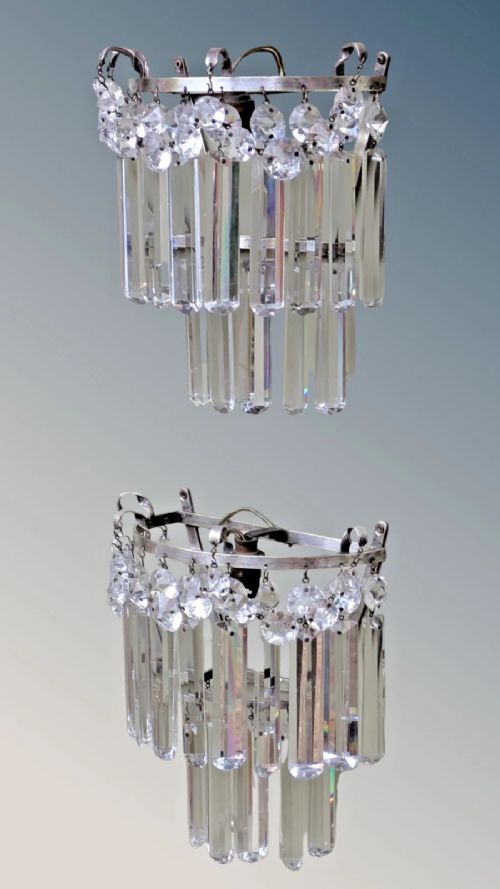
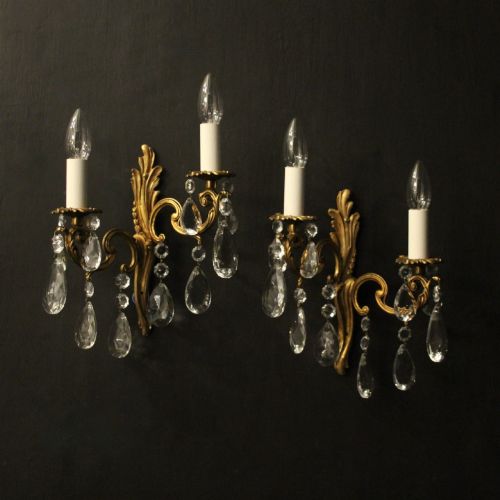
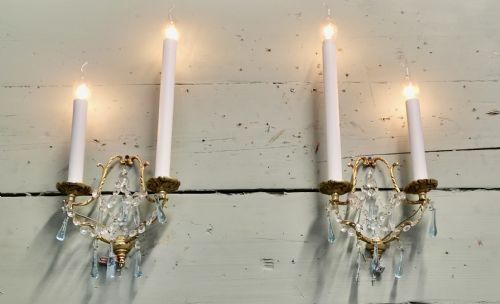
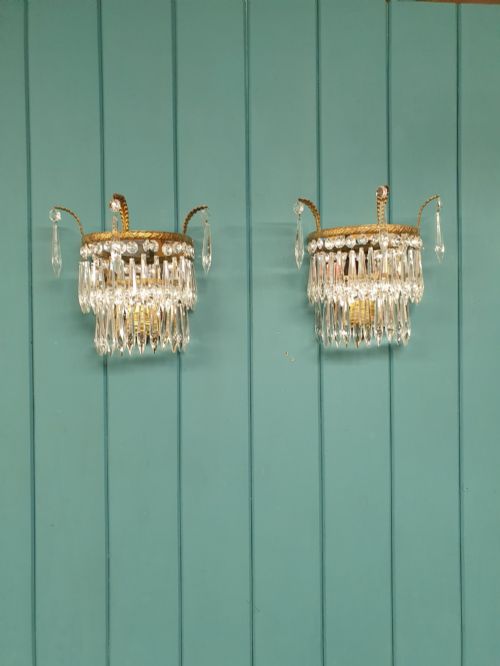
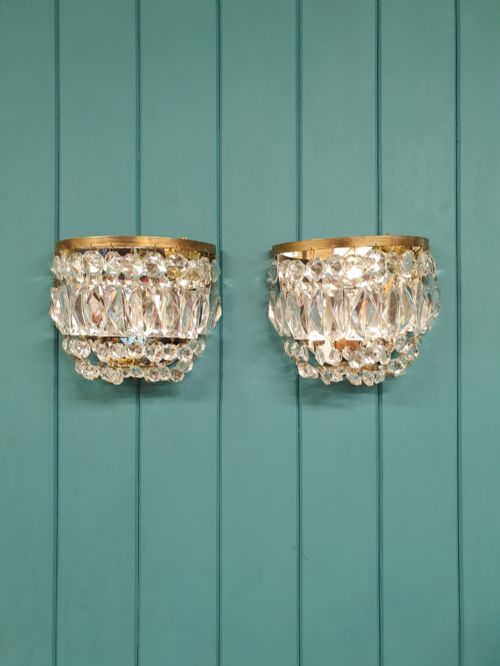
A French crystal wall light pair consists of matched sconces designed to mount directly onto a wall, most frequently sourced from the nineteenth and early twentieth centuries. These fixtures combine metal frames with glass and crystal elements to catch and refract light across a room. The selections on this page span styles from simple Edwardian spike designs to elaborate Rococo and Baroque gilt forms.
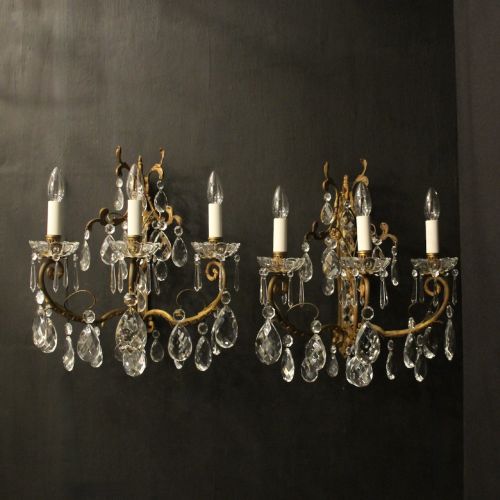
Twin and triple arm configurations dominate the available items, alongside single arm sconces, girandoles, and miniature wall chandeliers. Metalwork frames typically utilise brass, gilt bronze, or ormolu, while the hanging components feature cut crystal and glass drops. Pieces often date from the 1920s and 1930s, reflecting earlier revival aesthetics including Regency and French Chateau motifs.
Materials and construction methods
The structural frames of these sconces rely on cast brass, gilt bronze, and gilt metal, shaped into scrolling arms, backplates, and decorative mounts. Metal casting often employs lost-wax or sand-casting techniques, followed by hand-chasing to sharpen details on leaves, cherubs, and architectural scrolls. Gilding finishes are applied to the metal surfaces to provide a durable and reflective golden sheen.
Crystal and glass elements are hand-cut and polished, then suspended from the metal arms using wire pins or delicate loops. Prisms, beads, and pendeloques are arranged in tents, bags, or graduated cascades to maximise the refraction of light from the bulbholders or candles. Wiring is frequently modernised to meet safety standards while retaining the original historical mountings.
Some Edwardian spike lights hid their wiring so cleverly that guests surely wondered if the candles were burning by pure magic.
Assessing quality in antique wall sconces
Quality rests upon the crispness of the metal casting and the depth of the hand-chasing on the bronze or brass components. Superior examples display sharply defined motifs, secure joints, and heavy, substantial frames rather than light, stamped sheet metal. The weight and clarity of the crystal drops also distinguish finer pieces, with hand-cut facets producing sharper light refraction than pressed glass.
The integrity of the gilding and the completeness of the crystal dressing indicate the care a piece has received over time. Matching sets that retain their original matching drops and uniform metal patination command greater appreciation than assembled pairs or those missing significant portions of their crystal fringe.
Maison Baguès·Baccarat
The French Crystal Wall Light Pair Glossary
- Girandole
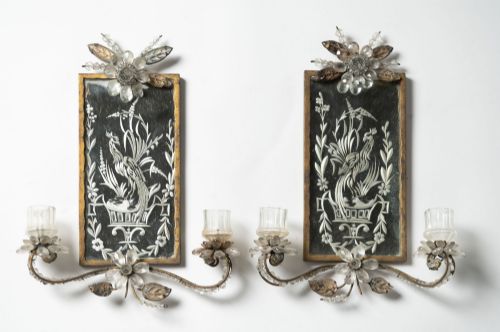
- A branched wall sconce featuring a mirrored backplate to multiply the ambient illumination. The reflective glass plate sits directly behind the candle arms.
- Ormolu
- Finely ground high-carat gold mercury-gilded onto a bronze base metal. This technique creates a rich, durable golden surface characteristic of fine nineteenth-century French metalwork.
- Pendeloque
- A drop of cut crystal or glass, often pear-shaped or teardrop-formed, suspended from the arms or frame to catch and scatter light. These elements move gently with air currents in the room.
- Toleware
- Painted sheet metal objects, often decorated with floral or pastoral motifs. In wall lights, tole provides coloured accents alongside traditional brass and crystal.
- Tent and bag
- A specific crystal arrangement where beads string upward in a tent shape from a central ring, dropping down into a gathered bag formation beneath. This style creates a dense, sparkling cascade of glass.
French Crystal Wall Light Pair: Frequently Asked Questions
How were these wall lights originally used?
These fixtures were mounted in pairs flanking mirrors, fireplaces, or architectural doorways to provide supplemental illumination in grand domestic interiors. Their reflective crystal drops multiplied the candlelight available in nineteenth and early twentieth-century rooms.
Over time, many of these sconces have been professionally rewired for electricity to serve a similar decorative and practical purpose in modern homes. They remain suited for hallways, dining rooms, and living spaces where ambient wall lighting is desired.
How do I date an antique wall light pair?
Dating relies on examining the metal casting techniques, mounting hardware, and stylistic indicators such as Edwardian restraint versus elaborate Baroque or Rococo revival details. The type of glass cutting and wiring remnants also offer clues to the decade of production.
Pieces seen on this marketplace generally range from the mid-nineteenth century through the 1930s. Comparing the specific frame construction with documented period styles helps narrow down the manufacturing era.
Are these lights safe for modern electrical systems?
Many antique wall lights require rewiring to comply with contemporary electrical safety standards and building regulations. Dealers frequently note when a pair has been rewired for modern use.
Buyers should consult a qualified electrician to inspect the internal wiring and ensure the fixture can be safely mounted to standard wall junctions. Proper installation protects both the historical metalwork and your home's electrical circuit.
How do I clean and maintain crystal wall lights?
Maintenance involves gently dusting the crystal drops with a soft cloth or a specialised feather duster to prevent grime buildup. For a deeper clean, individual crystals can be unhooked and washed in warm soapy water.
Avoid using harsh chemical abrasives on the gilt bronze or brass frames, as this can strip the historic finish or patination. Regular, gentle care preserves the sparkle of the glass and the integrity of the metalwork.