


French Country Salon Seats
French country salon seats bring traditional craftsmanship and relaxed seating into a room, offering classic forms that suit both formal and casual spaces.
French Country Salon Seats
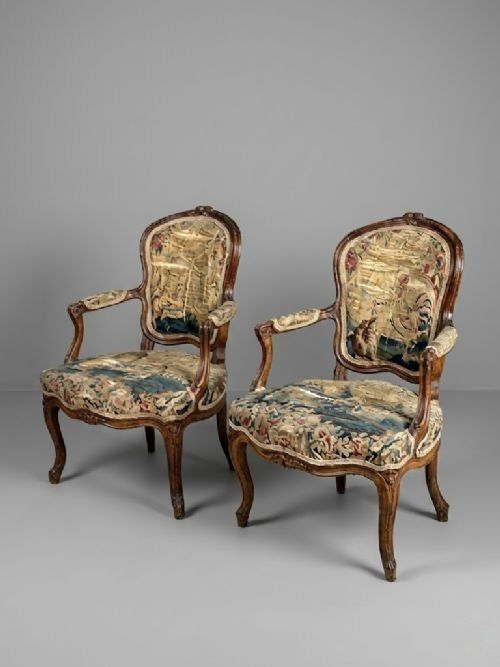
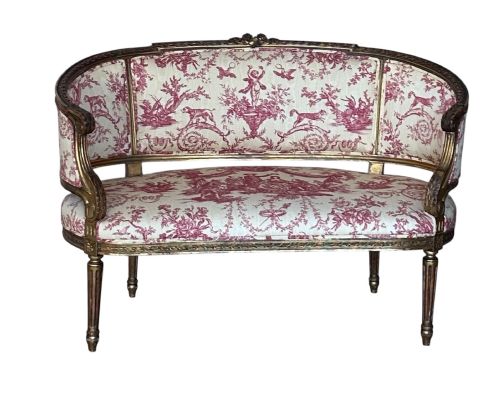
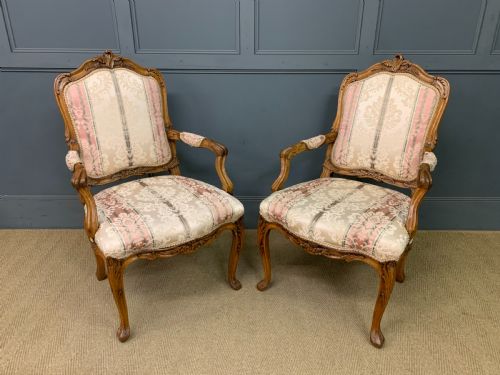
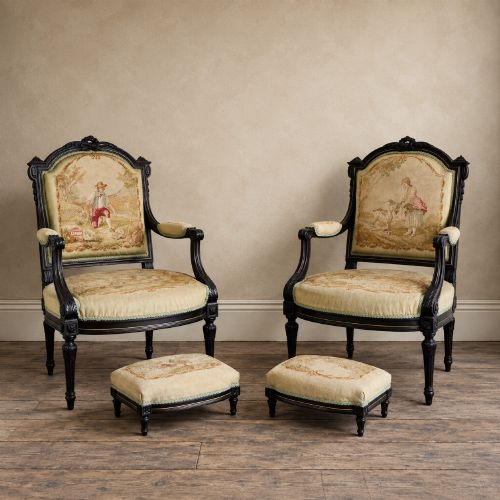
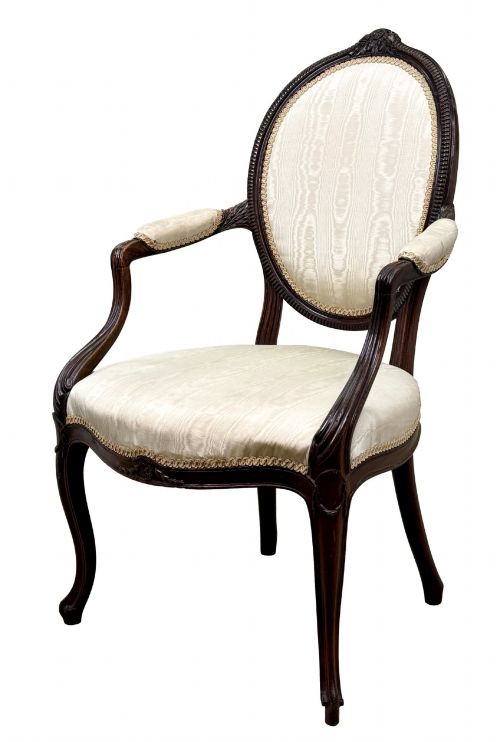
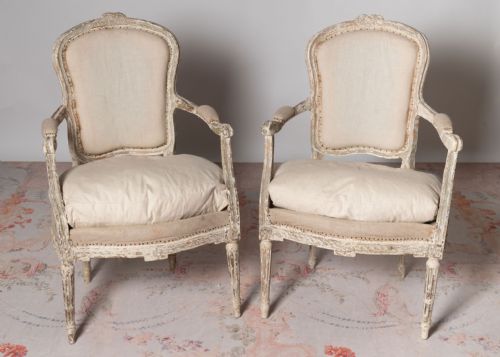
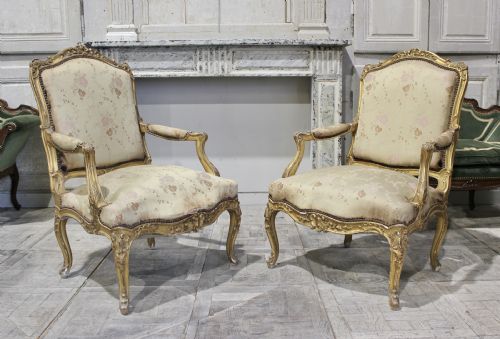
French country salon seats encompass a range of antique seating options, including armchairs, settees, and multi-piece suites designed for drawing rooms and parlours. These pieces frequently appear in revival styles such as Louis XV and Louis XVI, alongside French provincial interpretations dating from the eighteenth century through to the early twentieth century.
Buyers encountering this selection will most commonly find nineteenth-century walnut and painted wood frames, often upholstered in traditional textiles, tapestry, or needlepoint panels. The inventory spans single armchairs, matched pairs, and larger settees suited for interior placement.
Materials and Construction
Cabinetmakers utilised robust timbers like walnut, beech, and mahogany, shaping them through carving to create characteristic curves and structural frames. Gilt-wood and gold leaf finishes also appear alongside painted wooden surfaces, reflecting the decorative preferences of different periods.
Upholstery relied on traditional textile coverings including heavy fabrics, needlepoint panels, and Aubusson tapestries fixed directly to the frames. These materials work together to provide both structural integrity and decorative appeal.
The available inventory includes individual armchairs, pairs, multi-piece salon suites, and compact settees suited for bedroom placement.
Distinguishing Quality in Seating
The degree of hand-carved detail in the wooden frame separates standard production from finer examples, with crisper lines and deeper relief showing superior artisan skill. The choice of original or period-appropriate textiles, such as tapestry or needlepoint, further elevates the stature of a piece.
Proportion and balance define the better items in this category, where the flow of the woodwork complements the overall silhouette. Cohesion within larger seating suites also dictates distinction, particularly when matching armchairs and settees survive together.
The French Country Salon Seats Glossary
- Canape
- A traditional French term for a sofa or settee, usually designed with an upholstered back and seat. These pieces match the aesthetic of contemporary armchairs in a salon setting.
- Giltwood
- Wood that has been coated with a thin layer of gold leaf or metallic paint. This finish enhances the decorative presence of formal nineteenth-century frames.
- Needlepoint
- A type of canvas work embroidery used for upholstery on seats and panels. It provides durable decorative surfaces featuring pictorial or floral motifs.
- Louis XV Style
- A revival design characterised by asymmetric curves, cabriole legs, and rococo floral motifs. This style draws inspiration from the mid-eighteenth-century French court.
French Country Salon Seats: Frequently Asked Questions
How do I clean antique upholstery?
Surface dust should be gently removed using a soft brush or a low-suction vacuum attachment designed for textiles. Avoid using liquid cleaners directly on antique fabrics to prevent water rings and fibre degradation.
For deeper maintenance, consult a professional conservator who specialises in historic textiles and tapestry preservation. Protecting the fabric from direct sunlight prevents fading of delicate threads.
Can I use salon seats daily?
These historic seats function well for everyday use provided they receive gentle treatment and appropriate weight distribution. Regular sitting is acceptable on sturdy frames, though delicate gilt or painted surfaces require care.
Heavily upholstered pieces with original stuffing benefit from mindful use to preserve internal materials. Adding supportive pads can protect fragile antique webbing beneath the seat.
How do I match antique chairs?
Matching antique chairs involves comparing wood types, finish patinas, and decorative carving styles rather than insisting on identical measurements. Walnut and painted finishes each carry distinct visual weights that influence how they sit together in a room.
Pairing items from similar periods ensures stylistic harmony even if the exact maker differs. Upholstery can also be coordinated using complementary fabrics to unify mixed seating.
Where were salon seats placed?
Salon seats originally occupied formal drawing rooms and reception spaces where guests gathered for conversation and entertainment. Settees and armchairs were arranged to encourage social interaction around a central room.
In modern homes, these pieces transition easily into living rooms, bedrooms, or hallways as statement seating. Smaller two-seater settees function well at the foot of a bed or in compact seating areas.