

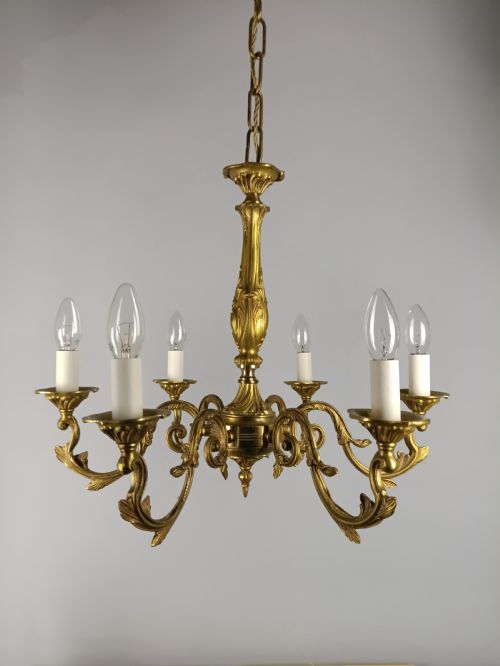
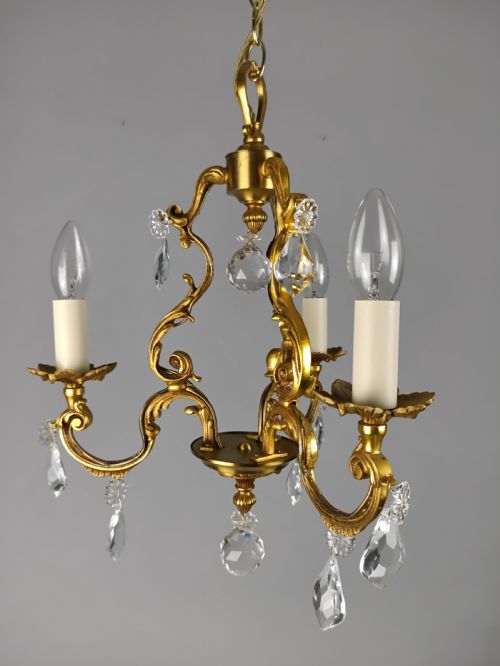


French Country Ceiling Lamp
A french country ceiling lamp brings warmth and antique character to a room through traditional forms and patinated metalwork.
French Country Ceiling Lamp
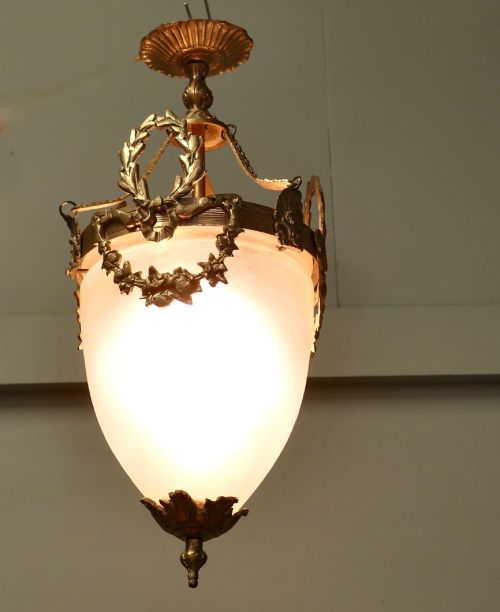
A french country ceiling lamp primarily takes the form of a chandelier suspended to light a principal room, alongside occasional lampshades from the early twentieth century. These fixtures span several decades from the late nineteenth century through to the interwar period of the 1930s.
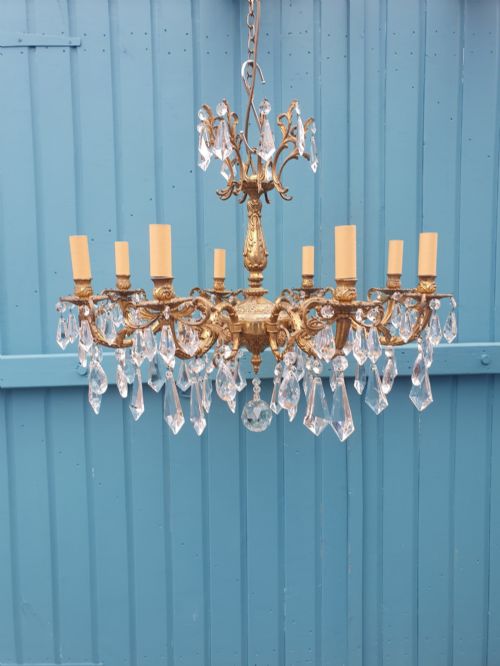
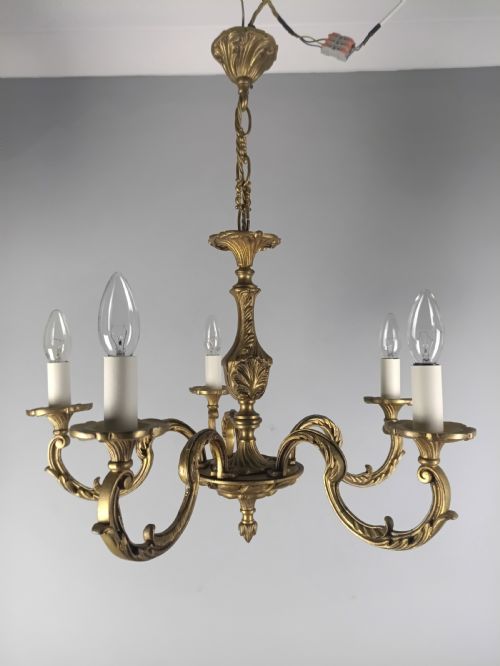
The aesthetic draws heavily on regional traditions and formal revivals, appearing in styles labelled as French Provincial, French Chateau, and French Rococo Revival. Buyers meet multiple multi-arm chandeliers fitted with branches for candles or wired for electricity.
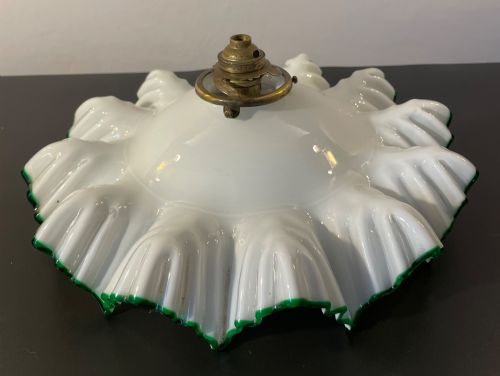
Makers and designers from this tradition utilised characteristic regional motifs, incorporating floral ceramic elements, glass bunches of grapes, and frill lampshades. The resulting objects provide both functional illumination and distinct period decoration.
How they were made
Construction relies upon metals such as brass, gilt brass, gilt metal, iron, and bronze to form the structural arms and central stems of the chandeliers. Gilding and polychrome paint finish the surface metalwork, often paired with hand-painted floral ceramic details.
Light diffusion is achieved through components made from glass, cut glass, and crystal. Artisans hung cut glass drops and moulded glass grape bunches from the metal branches to catch and refract the light.
French Country Ceiling Lamp Retail Price Guide 2026
Typical asking prices for french country ceiling lamp among the pieces listed under this phrase on Sellingantiques today, from the lower quarter to the upper quarter. They describe what is for sale here now, not the wider market.
Materials documented across the inventory include cut glass, crystal, toleware, and various forms of brass and gilt metal.
What varies in quality
Quality differences emerge in the complexity of the metalwork and the weight of the materials used in the frame. Heavier castings in gilt brass or bronze represent a more substantial level of craftsmanship compared to lighter gilt metal constructions.
The grade of the hanging elements also defines the upper tiers of the range. Fixtures adorned with precise cut glass and crystal drops display superior brilliance and clarity against simpler glass components.
The French Country Ceiling Lamp Glossary
- Chandelier
- A branched ceiling-mounted lighting fixture designed to hold multiple bulbs or candles. These pieces form the vast majority of available lighting in this category.
- Toleware
- Painted or lacquered metalware, frequently decorated with floral motifs in polychrome or gilt finishes. It brings a softer, domestic texture to the metal frame.
- Cut glass
- Glass that has been faceted by cutting on a wheel to create sharp geometric patterns. This technique enhances the sparkle of the hanging pendants.
- Crystal
- A high-clarity form of glass with added lead content that increases weight and refractive power. It is utilised for the finest pendant drops.
- Gilt brass
- Brass that has been coated with a thin layer of gold leaf or gilt paint. This treatment provides a rich surface sheen without solid gold costs.
French Country Ceiling Lamp: Frequently Asked Questions
What periods do these lamps come from?
The available lighting spans from the late nineteenth century into the interwar era. Pieces originate primarily from the 1880s through to the 1930s.
During this timeframe, workshops produced both ornate revival styles and simpler regional country variants. The dates reflect the prevailing manufacturing periods recorded in the current selections.
How do I choose the right size?
Consider the physical dimensions and arm count of the chandelier in relation to your room space. Larger fixtures feature up to eight arms and substantial diameters.
Smaller rooms accommodate simpler three-arm or single-light fixtures with cut glass drops. Balance the scale of the ceiling height with the drop length of the chosen piece.
Are these fixtures wired for modern use?
Antique lighting fixtures generally require professional inspection and potential rewiring to meet contemporary electrical standards. The original metal frames and brass branches house the internal wiring pathways.
A qualified electrician can safely adapt the lamp holders for modern domestic power supplies while preserving the antique body.
What materials are most common?
Brass and gilt metal form the primary structural skeleton for the majority of these ceiling lamps. Artisans combined these metals with glass drops and crystal elements.
Additional decorative elements include painted toleware, ceramic floral components, and wrought iron. Each material contributes to the distinct provincial aesthetic.