


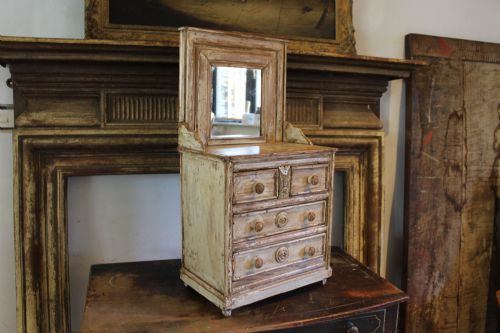
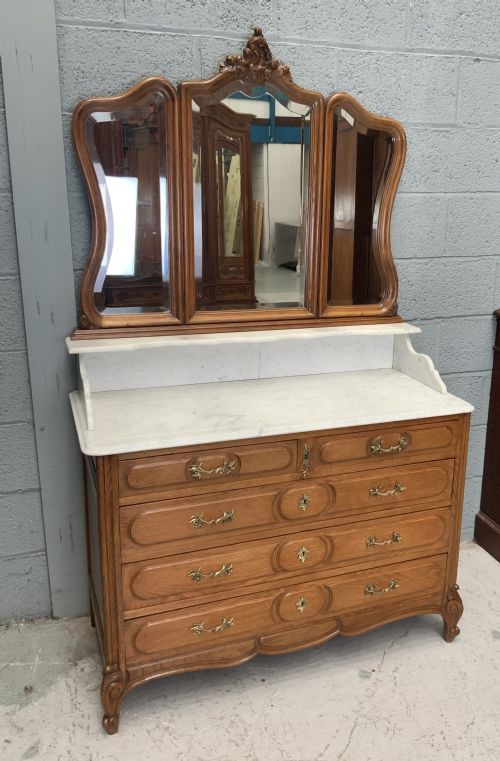
French Commode Table
These pieces unite utility and decoration, bringing a french commode table into a room for storage and surface space.
French Commode Table
A french commode table encompasses chests of drawers, bedside cabinets, and side tables originating from various periods including the eighteenth, nineteenth, and early twentieth centuries.
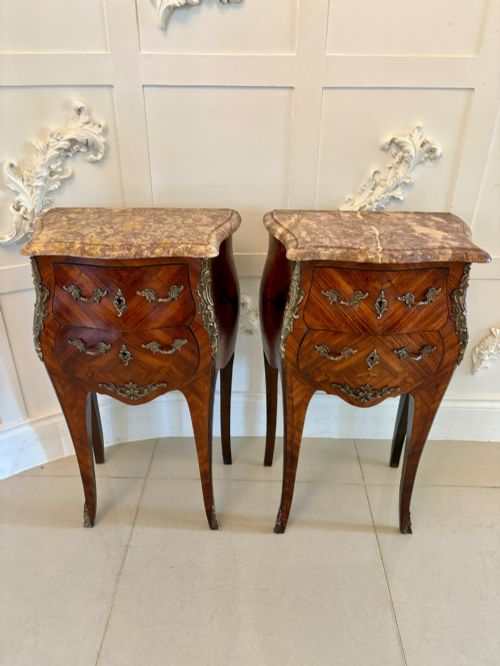
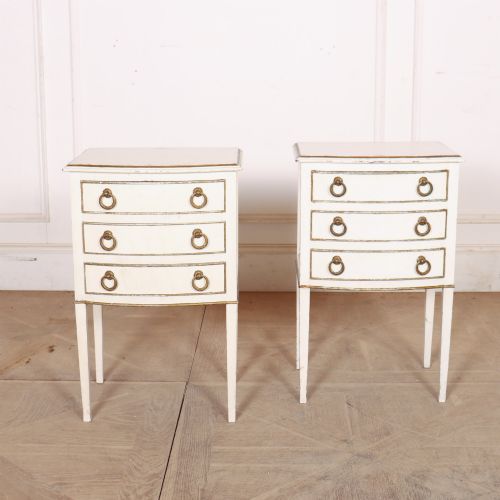
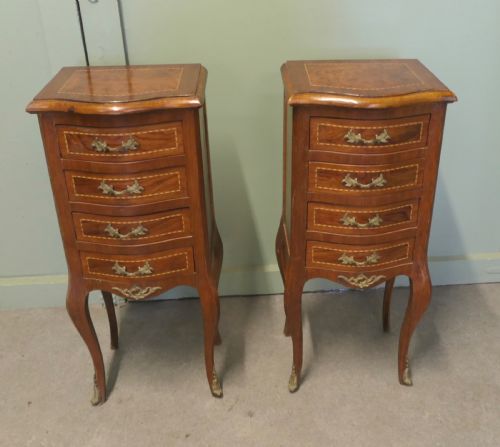
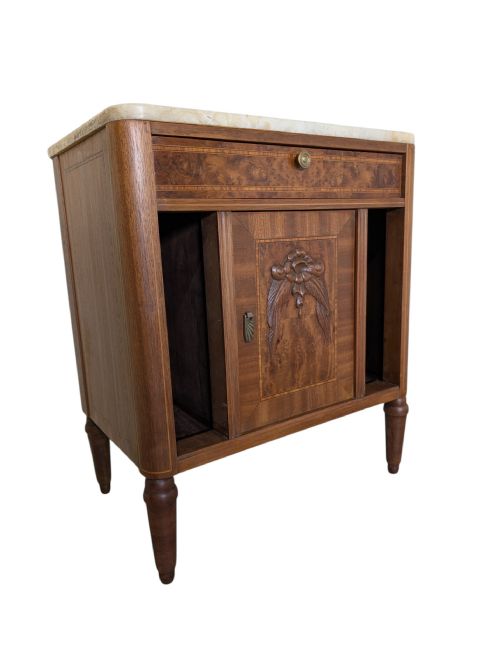
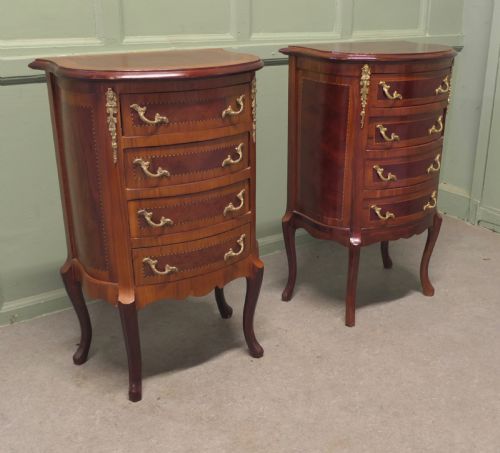
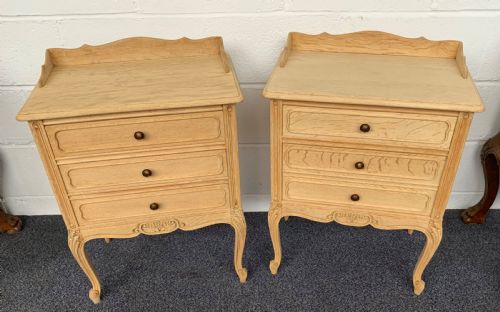
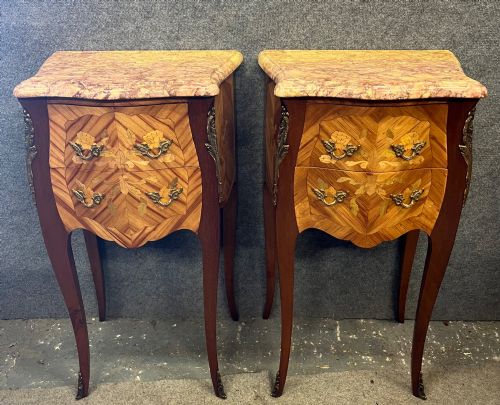
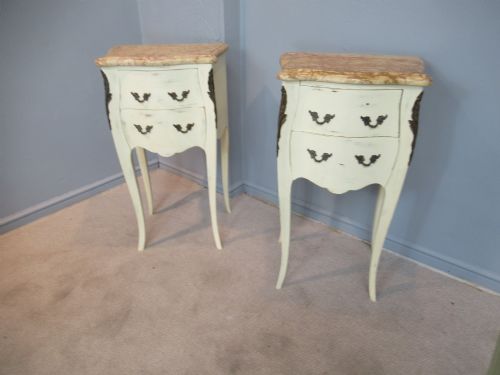
The version most commonly met on this page is the bedside cabinet or small chest, often paired, reflecting the demand for functional bedroom furniture.
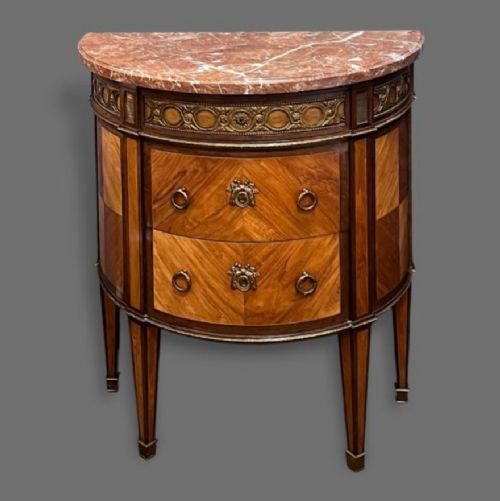
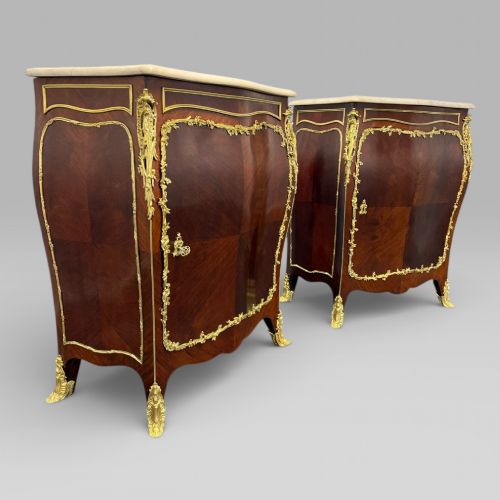
Makers and workshops utilised classic silhouettes such as the bombe shape, demi-lune chests, and Louis XV or Louis XVI styles to shape these pieces.
Materials and Construction
Cabinet makers relied on timber foundations of walnut, kingwood, mahogany, satinwood, and oak, frequently embellished with intricate marquetry and parquetry inlay.
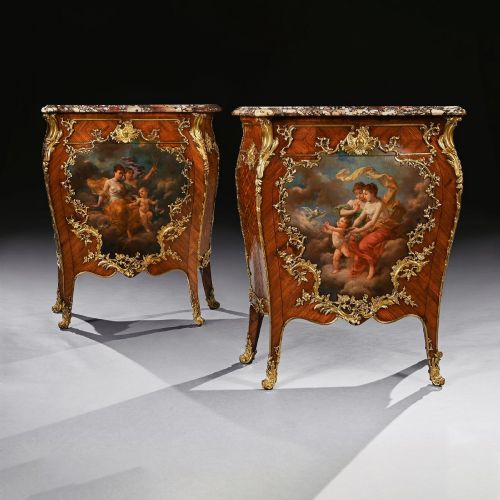
Surfaces often incorporate marble tops, ranging from inset slabs to shaped marble slabs, paired with brass, ormolu, and gilt bronze mounts.
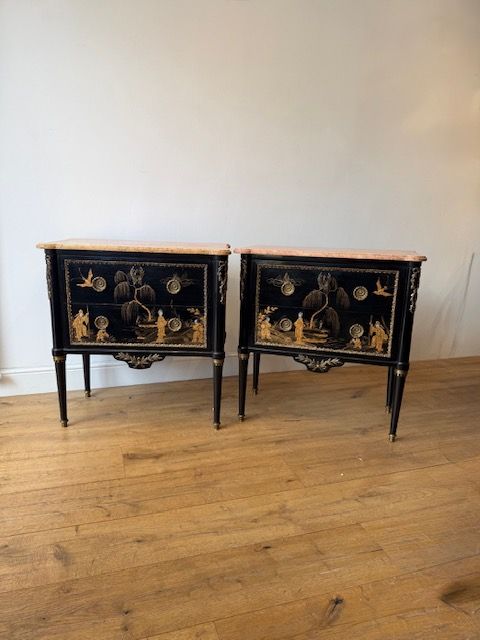
Specialised techniques such as Vernis Martin lacquer and chinoiserie finishes appear on select decorative cabinets from the nineteenth and early twentieth centuries.
Materials span walnut, kingwood, mahogany, satinwood, oak, marble, brass, and glass across various French provincial and revival styles.
Craftsmanship and Detail
Quality separates pieces through the precision of the marquetry inlay and the weight and chasing of the ormolu or gilt bronze mounts.
The selection of timber veneers, such as figured kingwood or matched walnut, dictates the visual depth of the cabinet.
Structural refinement shows in the fitting of marble tops, the movement of serpentine or bombe drawer fronts, and the integrity of internal carcases.
E. Kahn·Sormani
The French Commode Table Glossary
- Bombe
- A bulging, outward-curving chest or cabinet form popular in rococo designs. This convex profile requires precise woodworking to maintain structural balance.
- Ormolu
- Gilded bronze mounts applied to furniture for decoration. Artisans cast and chased these metal elements to accent corners and handles.
- Marquetry
- Fitted wood veneers forming pictorial or geometric patterns on the surface. Craftsmen cut contrasting timbers together to achieve tight joints.
- Demi-lune
- A half-moon shape used for console tables and chests of drawers. This curved form fits flat against a wall.
- Parquetry
- Geometric wood inlay arranged in repetitive patterns like cubes or squares. This technique uses contrasting grain directions to create optical depth.
- Vernis Martin
- A simulated Japanese lacquer developed in eighteenth-century France. This resin-based finish produces a glossy, translucent decorative surface.
French Commode Table: Frequently Asked Questions
How do I choose a bedside cabinet?
Consider the height of your bed and the surrounding furniture scale to select an appropriate bedside cabinet. Many examples appear in matched pairs, offering symmetry for a bedroom layout.
Look at the material palette, such as kingwood or walnut, to match existing timber tones in the room.
What is a petit commode?
A petit commode is a small chest of drawers or bedside cabinet designed for compact spaces. These pieces provide concealed storage alongside a functional surface.
They frequently feature marble tops and decorative mounts characteristic of French revival styles.
How do I care for marble tops?
Marble surfaces require gentle cleaning with a damp cloth and mild soap to preserve the polish. Avoid acidic liquids that can etch the stone over time.
Use coasters and mats to protect the vintage marble from moisture rings and scratches.
How do I identify Louis XV style?
Louis XV style furniture is defined by asymmetrical curves, cabriole legs, and floral marquetry. The aesthetic emerged from the rococo movement, favouring organic forms over rigid symmetry.
Ormolu mounts on these pieces typically echo scrollwork and natural foliage.