



French Commercial Counter
A French commercial counter brings tangible history into a modern room, offering sturdy utility and time-worn character shaped by decades of daily trade.
French Commercial Counter
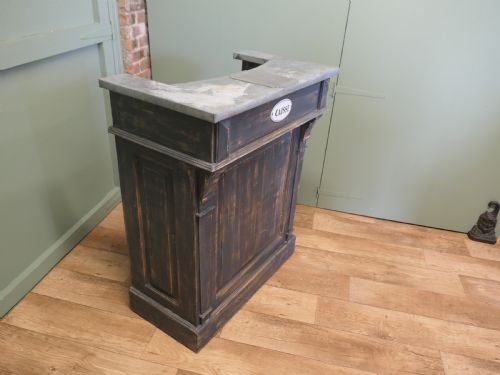
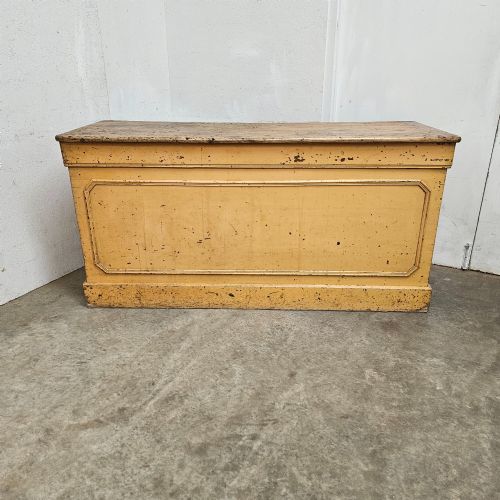
A French commercial counter serves as a substantial focal point, encompassing forms such as shop counters, drapers tables, banks of drawers, and butchers blocks. These pieces originate from various decades spanning the nineteenth century through to the early twentieth century, reflecting the practical needs of past European commerce.
The version most commonly met on this page is the pine or oak drapers table or shop counter, often retaining traces of original paint. Such items bridge the gap between industrial storage and domestic furnishing, providing generous surface area and compartmentalised organisation.
Makers and styles represented in the current selection range from French provincial and country pieces to specific items like butchers blocks by Trussant and Cie. Buyers encounter everything from monumental four-metre tables to glazed patisserie cabinets and banks of twelve drawers.
Materials and Construction
Construction relies heavily on robust timbers like pine and oak, selected for their strength and longevity under heavy daily use. Metal, brass, zinc, and enamel elements appear frequently as functional hardware, protective edging, or specialised surfaces.
Surfaces often display layers of original paint and painted wood, recording the aesthetic shifts and practical maintenance of working French shops over generations. Joinery techniques are straightforward and utilitarian, designed to withstand the rigours of nineteenth-century and early twentieth-century retail environments.
French Commercial Counter Retail Price Guide 2026
Typical asking prices for french commercial counter among the pieces listed under this phrase on Sellingantiques today, from the lower quarter to the upper quarter. They describe what is for sale here now, not the wider market.
Some drapers tables stretch to a monumental four metres, demanding careful measurement of stairwells and doorways before delivery.
Assessing Quality and Character
Quality in a French commercial counter is largely defined by the integrity of its original surfaces and the honesty of its wear. Pieces retaining their authentic paintwork or patinated timber carry a visual depth that later refinishing obscures.
Structural proportion and scale also dictate distinction, from modest console tables to monumental four-metre lengths. The presence of maker stamps or intact original hardware, such as brass pulls and zinc tops, elevates a piece from standard utility to notable craftsmanship.
Trussant and Cie
The French Commercial Counter Glossary
- Drapers table
- A long, narrow table historically used in fabric shops for measuring and displaying textiles. These pieces are characterised by their generous length and lower shelving or banks of shallow drawers.
- Butchers block
- A thick-topped wooden block designed for heavy food preparation, constructed from end-grain timber to absorb repeated impacts. Trussant and Cie is one notable maker associated with these robust pieces.
- Patisserie cabinet
- A glazed display case built to showcase baked goods and pastries in retail settings. They feature glass panels to protect contents while maintaining visibility.
- Bank of drawers
- A multi-drawer cabinetry unit designed for systematic storage of small goods, hardware, or textiles. In commercial contexts, these units maximised inventory organisation behind the shopfront.
French Commercial Counter: Frequently Asked Questions
What is a French commercial counter?
A French commercial counter is a heavy-duty utilitarian furnishing originating from European shops, markets, and workspaces during the nineteenth and early twentieth centuries. These items include shop counters, drapers tables, and banks of drawers built for daily trade.
Today, they are repurposed as kitchen islands, console tables, and statement storage units in residential interiors, appreciated for their functional design and aged appearance.
How were drapers tables used originally?
Drapers tables were utilised in fabric and textile shops to measure, cut, and display bolts of cloth to customers. Their long, narrow proportions and lower shelves made them ideal for holding heavy rolls of material.
In modern settings, these elongated tables function effectively as kitchen prep surfaces, serving buffets, or grand hallway consoles.
How do I live with a painted counter?
Living with a piece featuring original paint involves embracing its history of chips, scuffs, and natural wear as part of its character. Cleaning requires only a soft, dry or slightly damp cloth to preserve the fragile historical surfaces.
Placement away from direct heat sources and harsh moisture ensures the timber and paintwork remain stable over decades of home use.
How do I identify nineteenth century pieces?
Nineteenth century commercial pieces are identified by dense pine or oak construction, hand-cut joinery, and heavy patination accumulated through decades of trade. Hardware such as brass pulls and zinc sheeting often reflect period manufacturing methods.
Examining the underside and drawer interiors reveals tool marks and construction details consistent with pre-industrial and early industrial workshop practices.