

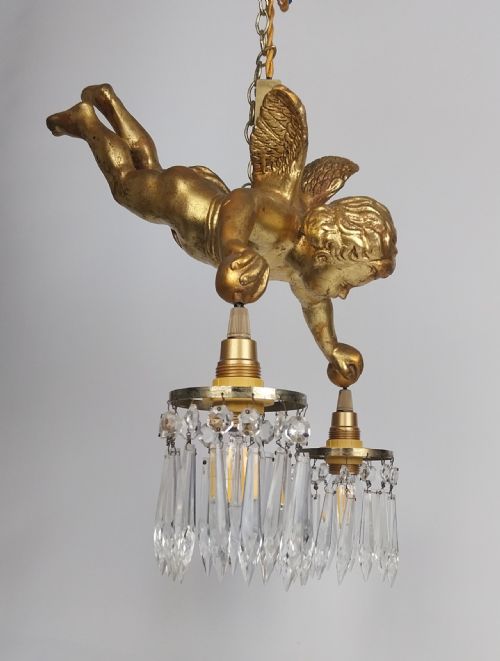


French Cherub Ceiling Light
These French cherub ceiling light fixtures combine gilt metal, bronze, and glass to bring ornate character to a room.
French Cherub Ceiling Light
A french cherub ceiling light brings figurative sculpture and illumination together overhead, featuring cast figures supporting or framing the hardware. Buyers seeking this phrase encounter multi-arm chandeliers and smaller ceiling fittings spanning the nineteenth century through the early twentieth century.
The prevalent forms on this page include Rococo Revival and Neoclassical styles, incorporating putti or winged cherubs alongside glass shades, crystals, or candle-style fittings. These pieces draw on French chateau and Victorian aesthetics to create a decorative focal point in a space.
Makers and artisans utilised durable metals and detailed casting techniques to produce fixtures that vary from intimate three-lamp configurations to substantial eight-light chandeliers. Each piece relies on the interplay between metalwork and glass to shape the light within a room.
Materials and Construction
Foundries shaped these fixtures using bronze, brass, gilt metal, and silver plate, often applying a golden finish to enhance the sculptural details of the putti. Metal components were cast, chased, and assembled to support multiple light arms or central bowls.
Glass elements range from plain panels to frosted glass and cut crystal drops, diffusing the illumination cast by candles or early electric bulbs. Spikes, decorative arms, and hanging swags complete the assembly of these mid-nineteenth to early twentieth-century lights.
French Cherub Ceiling Light Retail Price Guide 2026
Typical asking prices for french cherub ceiling light among the pieces listed under this phrase on Sellingantiques today, from the lower quarter to the upper quarter. They describe what is for sale here now, not the wider market.
Listings on this page span from the mid-nineteenth century up to 1930, utilising bronze, brass, and frosted glass across various chandelier forms.
Assessing Quality and Craftsmanship
The choice of materials also dictates the calibre of the fixture, with heavy gilt bronze and substantial crystal elements sitting above lighter stamped brass or silver-plated alternatives. Heavier casting ensures structural stability across multi-arm chandeliers and complex swag designs.
The French Cherub Ceiling Light Glossary
- Putto
- A plump, naked male child figure frequently depicted in classical art and architectural decoration. These figures appear as cherubs supporting the arms of chandeliers.
- Gilt Bronze
- Bronze metal that has been coated with a thin layer of gold or gold-coloured alloy. This technique provides a durable and lustrous finish characteristic of fine French lighting.
- Rococo Revival
- A nineteenth-century design movement that revived the ornate, asymmetrical scrolls and naturalistic motifs of the eighteenth-century Rococo period. It heavily influences the style of these cherub light fittings.
- Swag
- A decorative chain, garland, or drape of fabric, beads, or metal suspended loosely from two points. In these listings, swag chandeliers feature draped elements alongside the central cherub figures.
French Cherub Ceiling Light: Frequently Asked Questions
How do I date a french cherub ceiling light?
Dating relies on examining the casting techniques, the style of the metalwork, and the assembly methods used on the fixture. Pieces range from mid-nineteenth-century gilt metal and silver-plated examples to early twentieth-century designs influenced by Rococo Revival aesthetics.
Changes in electrical wiring components, where present, and the specific composition of the brass or bronze also help narrow down the period. Comparing the stylistic cues against nineteenth and early twentieth-century design patterns provides a reliable timeline.
What rooms suit a french cherub ceiling light?
These ornate fixtures suit spaces that benefit from traditional decorative focal points, such as formal living rooms, dining areas, or high-ceilinged entrance halls. Their sculptural putti and gilt finishes complement classic architectural details like moulding and ceiling medallions.
Smaller three-lamp configurations fit into more compact areas or bedrooms where a dramatic eight-light chandelier would overwhelm the scale of the room. Careful placement allows the frosted glass and crystal elements to distribute light effectively.
Are these lights wired for modern use?
Many antique fixtures require inspection or rewiring by a qualified electrician to meet current safety standards and local building codes. Adapting older fittings ensures they safely accommodate modern bulbs and household electrical supplies.
Sellers often describe the existing state of the wiring or lamp holders in the listing details. Buyers should plan for professional installation and potential rewiring before hanging the fixture.
What is the difference between brass and gilt bronze?
Brass is an alloy of copper and zinc, valued for its bright golden appearance and durability in cast hardware. Gilt bronze, sometimes called Ormolu, consists of a bronze base covered in a fine layer of gold, offering a deeper and richer hue.
Fixtures described as gilt metal or gilt bronze usually exhibit superior weight and finer chisel work on the cherub figures compared to standard brass alternatives. This difference in material directly impacts the visual warmth of the piece.