

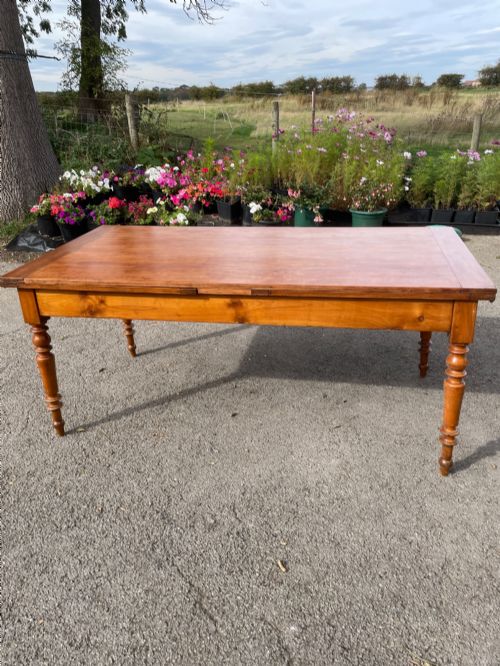
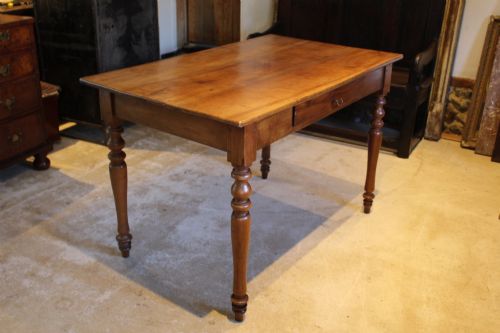
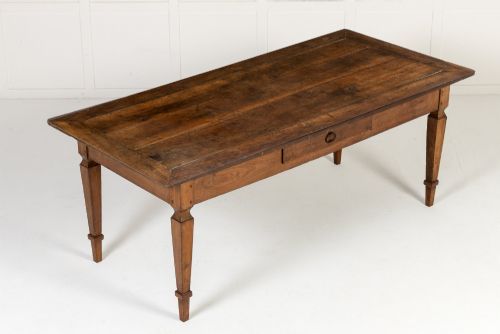
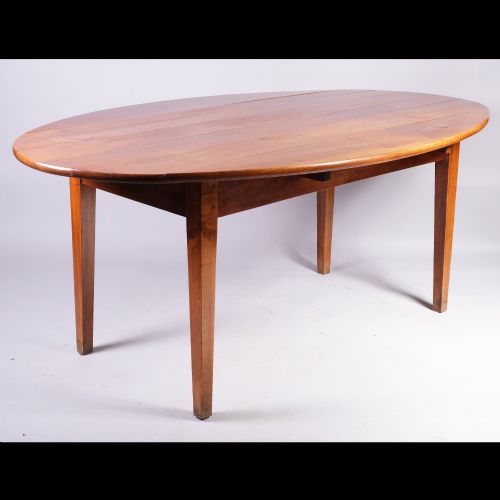
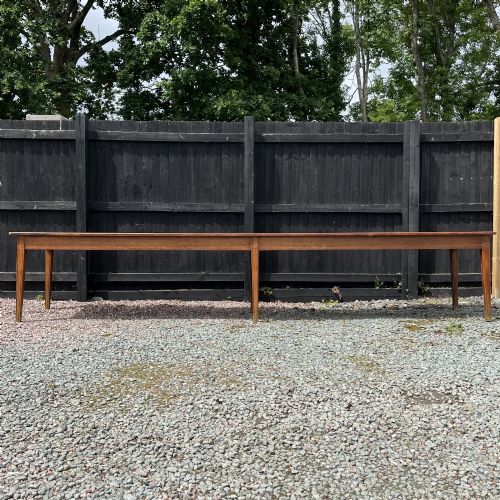


French Cherrywood Dining Table
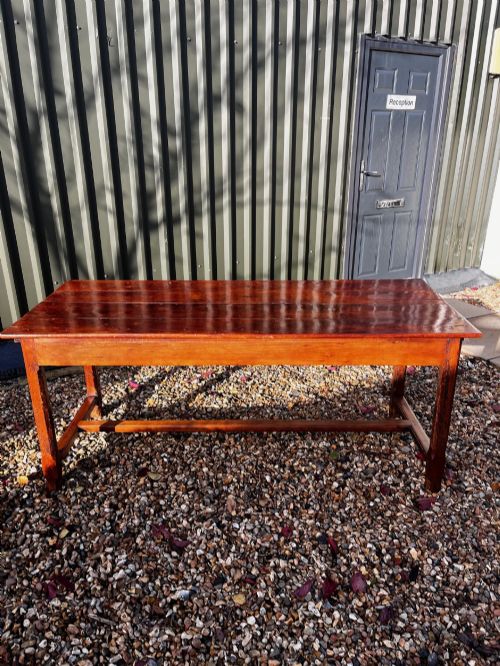
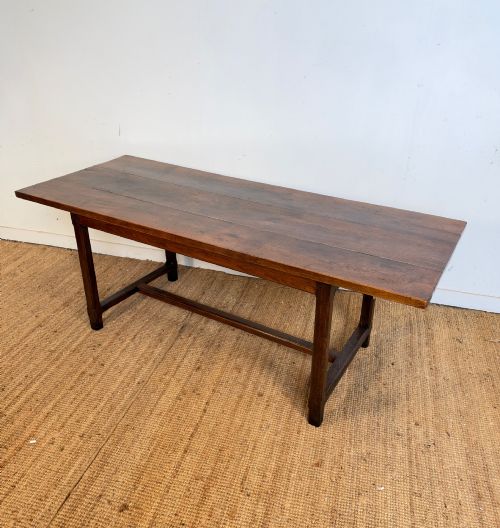
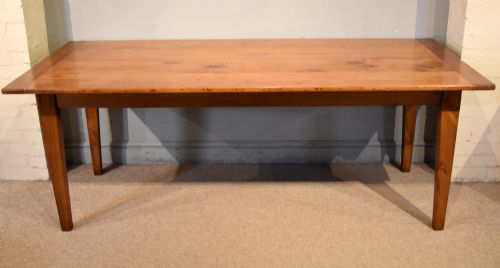
A french cherrywood dining table brings warmth to a room with its rich grain and honest vernacular build.
French Cherrywood Dining Table
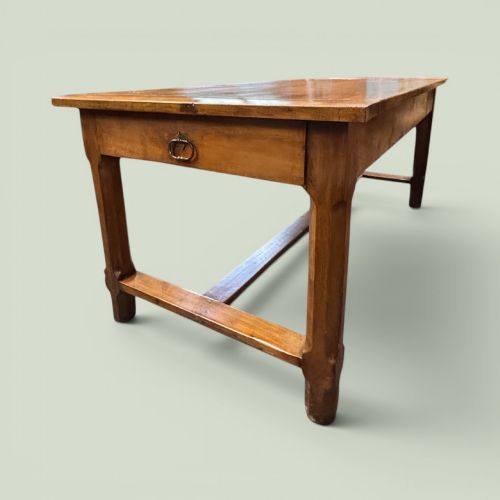
A french cherrywood dining table offers a robust surface rooted in provincial utility and rural tradition. Most pieces found here belong to the nineteenth century, taking the form of farmhouse tables, refectory designs or extending formats.
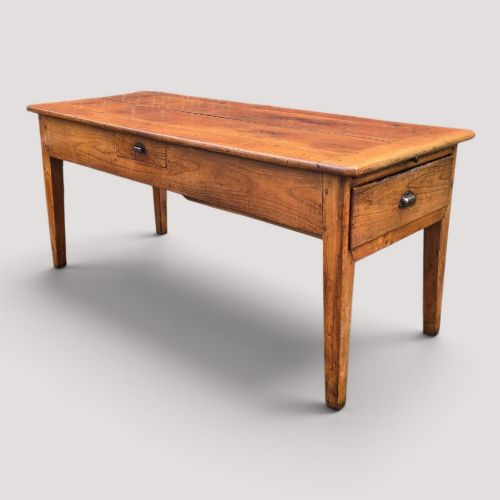
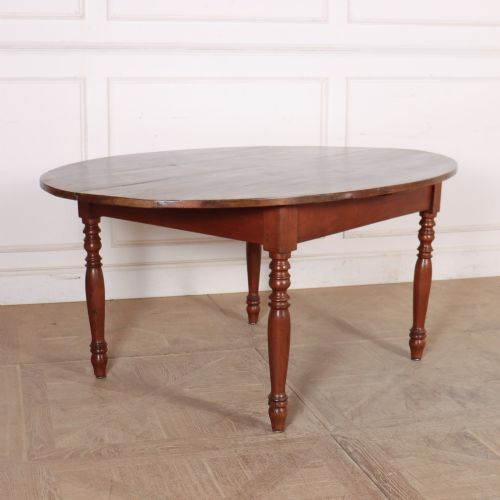
Makers shaped these surfaces for daily domestic labour and gatherings, often incorporating practical additions like drawers or sliding bread boards. Alongside standard four-legged variants, folding vendange tables and tilt-top centre tables appear in the record.
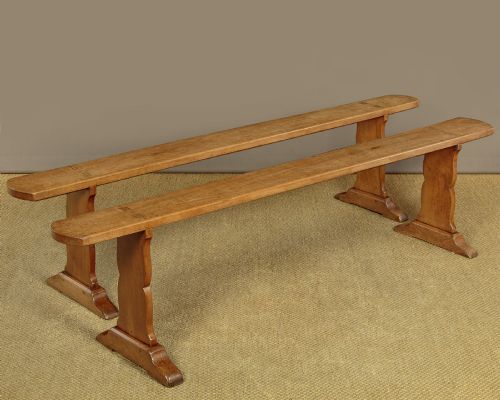
The timber itself defines the aesthetic, carrying a dense warmth that distinguishes these provincial boards from darker oaks and waluts. Buyers encounter rectangular refectory formats most frequently, complemented occasionally by matched benches.
What Varies In Quality
Quality rests on the integrity of the timber and the honesty of the proportions rather than elaborate ornamentation. Superior examples display a deep, faded cherry tone across wide, well-matched boards that form the top.
Construction details dictate distinction, such as the inclusion of smooth-sliding bread boards, integrated drawers, or refined cabriole legs. The presence of original working mechanisms on double extending leaves or folding frames elevates an example further.
French Cherrywood Dining Table Retail Price Guide 2026
Typical asking prices for french cherrywood dining table among the pieces listed under this phrase on Sellingantiques today, from the lower quarter to the upper quarter. They describe what is for sale here now, not the wider market.
Listings feature nineteenth-century pieces alongside eighteenth-century and Edwardian examples, built primarily from cherrywood, fruitwood and oak.
The French Cherrywood Dining Table Glossary
- Bread slide
- A pull-out board positioned beneath the main top, historically used for slicing bread or expanding workspace. It operates on wooden runners built into the apron.
- Cabriole leg
- A curved table leg featuring an outward knee that tapers inward to a simple foot, echoing classical furniture motifs adapted for provincial workshops.
- Refectory table
- A long, narrow dining table traditionally built for communal dining halls and farmhouses. This form prioritises length and stability over decorative carving.
- Vendange table
- A folding table designed for use during grape harvests in France. These pieces feature clever hinge mechanisms that allow flat storage when not in use.
- Fruitwood
- A collective term for timber harvested from fruit-bearing trees such as cherry, pear or apple. It develops a warm hue and smooth texture over decades of use.
French Cherrywood Dining Table: Frequently Asked Questions
How do I clean the surface?
Wipe the cherrywood gently with a soft, slightly damp cloth to remove everyday dust and debris. Avoid harsh chemical sprays that strip the natural wax and dry out the timber.
Maintain the patina by applying a traditional beeswax periodically, buffing the surface lightly after application. Keep the table away from direct heat sources and strong sunlight to prevent warping.
Can I seat eight people comfortably?
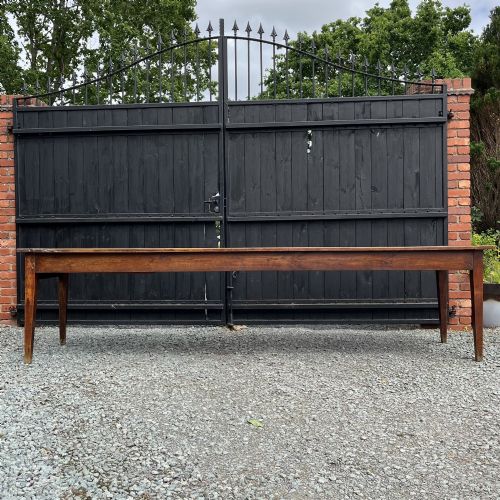
Many nineteenth-century farmhouse and refectory formats easily accommodate eight diners due to their generous proportions and lack of obstructive central legs. Lengths vary significantly, with some extending variants offering extra capacity when needed.
Check the clearance beneath the apron to ensure dining chairs slide underneath properly. Benches also provide flexible seating arrangements along the longer sides.
What is a bread slide used for?
The sliding bread board pulls out from beneath the tabletop to provide an immediate, temporary extension of surface area. Historically, bakers and cooks utilised this extra space for food preparation.
In modern homes, it serves as a convenient shelf for resting serving dishes or expanding workspace during meals. It operates smoothly on internal wooden runners.