


French Chandelier Fixture
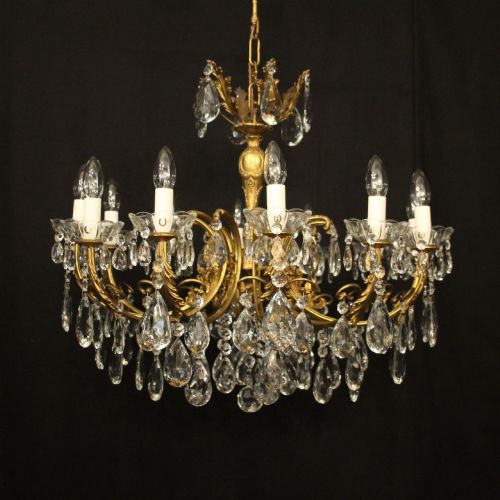
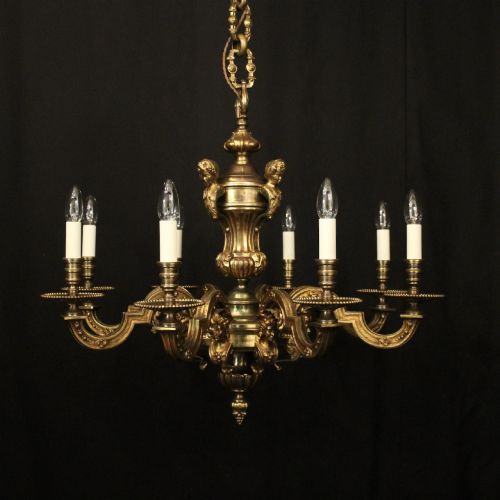
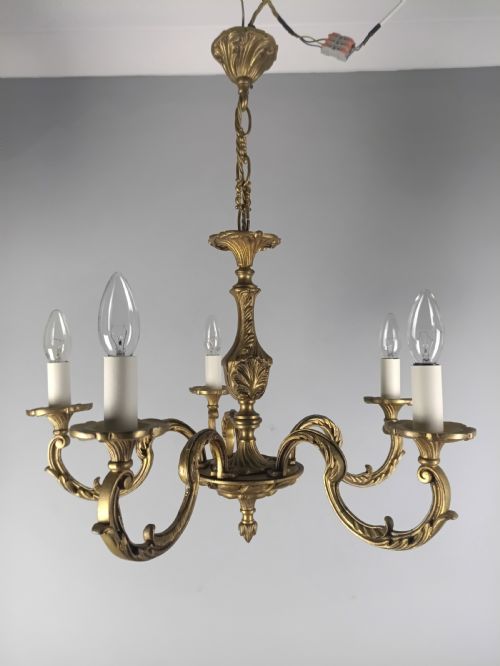
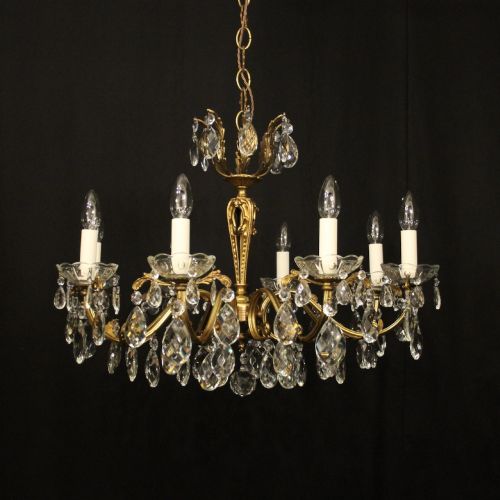
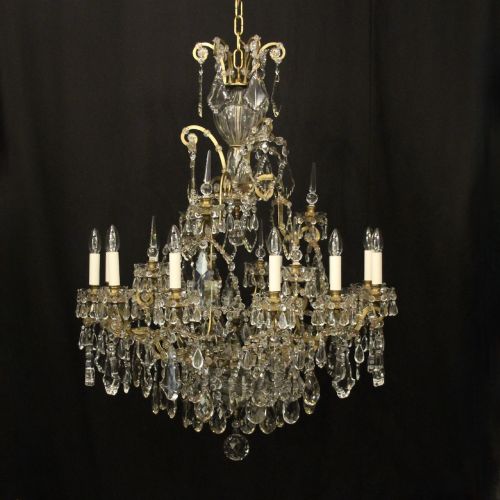
A French chandelier fixture brings weight and candlelit drama to a room, cast in heavy bronze and draped in cut glass.
French Chandelier Fixture
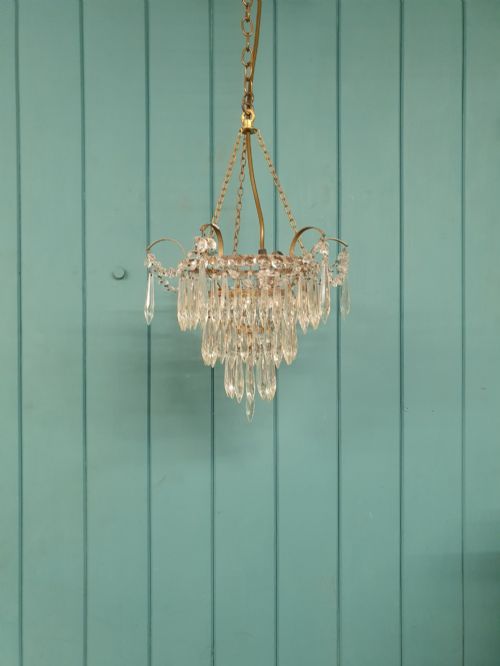
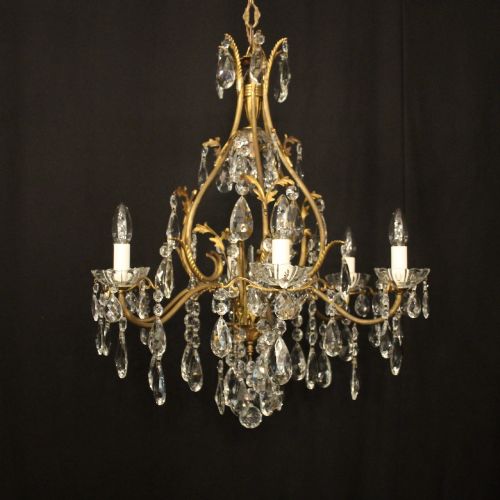
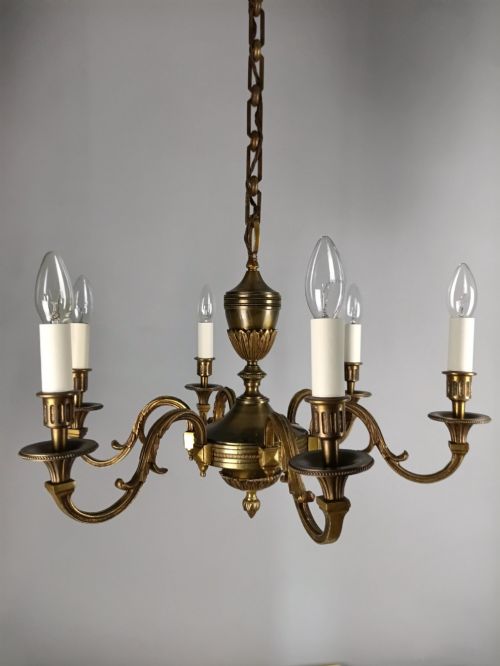
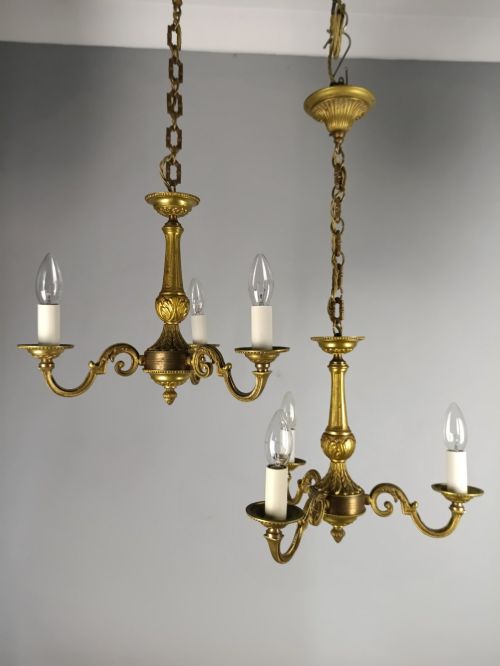
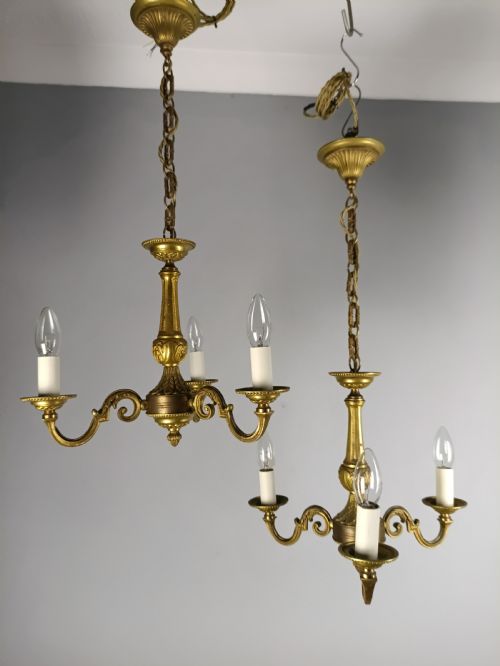
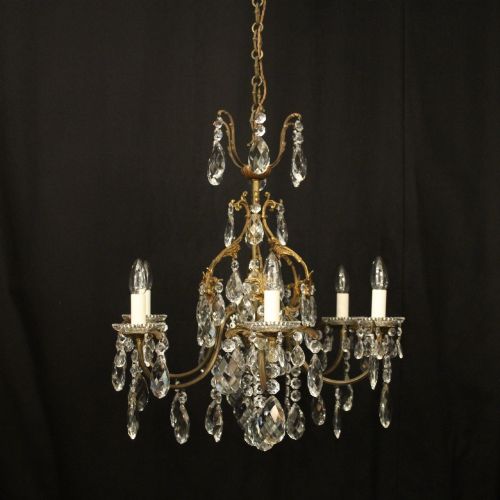
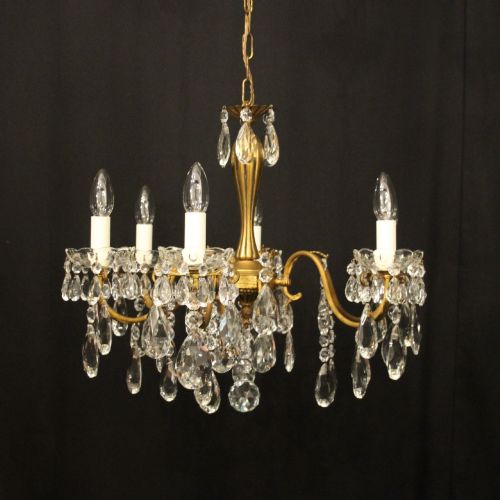
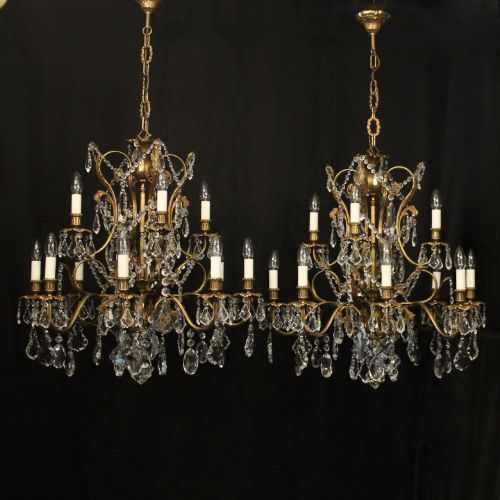
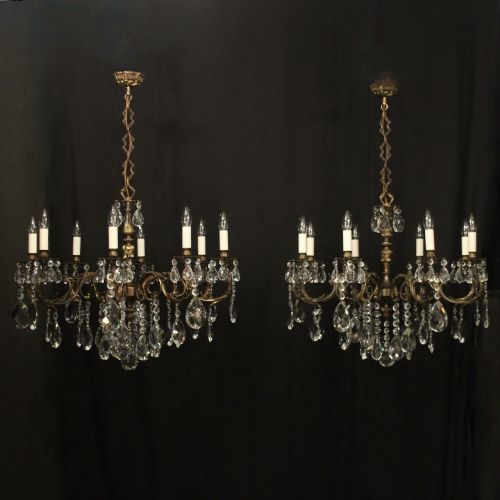
A french chandelier fixture encompasses ceiling lighting from the nineteenth century up to the nineteen-thirties, spanning styles from neoclassical and empire to art deco. Most pieces on this page originate from the early twentieth century or the nineteenth century, taking the form of multi-armed chandeliers, hall lanterns, and birdcage designs.
Buyers encounter gilded bronze, brass, and ormolu frames hung with crystal drops, spikes, and beads. Forms range from simple single-light pendants to grand twelve-light and fifteen-light waterfalls carrying numerous candle arms.
Materials and construction
Metalwork relies on cast bronze, brass, ormolu, and gilded metals, often shaped into elaborate frames with wheatsheaf, lyre, or birdcage motifs. Frames receive gold leaf or gilding to catch ambient light within a room.
Glass and crystal elements include moulded pink glass drops, faceted cut glass beads, and tiered crystal spikes wired or pinned directly to the metal armature.
French Chandelier Fixture Retail Price Guide 2026
Typical asking prices for french chandelier fixture among the pieces listed under this phrase on Sellingantiques today, from the lower quarter to the upper quarter. They describe what is for sale here now, not the wider market.
Listings span periods from eighteen-ninety through the nineteen-thirties, incorporating brass, crystal, cut glass, and gilded bronze.
Judging quality in French chandeliers
Quality rests upon the crispness of the bronze or brass casting and the depth of the gilding. Finer examples display hand-chased details on the metal arms and heavy, lead-rich crystal that refracts light cleanly.
Construction methods distinguish standard production from superior work. Top-tier fixtures use substantial gauge metal frames that support heavy crystal tiers without sagging, whereas lesser pieces rely on thin stampings.
Degué
The French Chandelier Fixture Glossary
- Ormolu
- A gilded bronze technique utilising mercury amalgamation, producing a warm golden finish on nineteenth-century metalwork.
- Tent and waterfall
- A chandelier configuration where strings of crystal beads form an upper tent shape above a cascading lower tier.
- Birdcage
- An open metal framework resembling a cage, densely strung with crystal drops and enclosing central candle lights.
- Wheatsheaf
- A decorative motif formed of bound wheat stalks, frequently seen shaping the central shaft or crest of a fixture.
French Chandelier Fixture: Frequently Asked Questions
How do I clean an antique crystal chandelier?
Cleaning requires a soft cloth and a gentle solution applied by hand to each individual crystal drop. Dismantling the entire frame is unnecessary for routine maintenance.
Harsh chemical sprays damage historic gilding and metal patination. Wipe brass and bronze components with a dry cloth only.
What height should I hang a chandelier?
Placement depends on whether the fixture hangs over a dining table or in an open hallway. Clearance must allow people to pass underneath safely.
Over a table, the bottom of the fixture typically sits around thirty inches above the wooden surface.
Are these fixtures wired for modern electricity?
Most antique pieces undergo rewiring to accept standard modern bulbs while retaining their original candle tubes and sockets. Adaptation preserves the historical exterior.
Installation requires a competent electrician to ensure the ceiling can support the substantial weight of bronze and crystal.
How do I tell nineteenth century from 1930s pieces?
Nineteenth-century pieces tend to feature heavy cast ormolu, neoclassical motifs, and dense crystal draping. Heavier metal casting defines this earlier era.
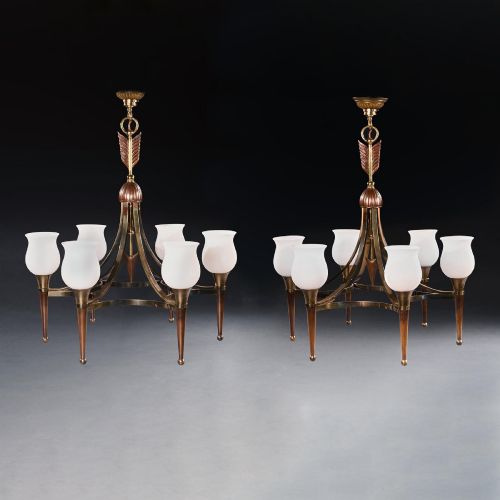
Nineteen-thirties fixtures often introduce streamlined shapes, simpler brass arms, or art deco glass shades alongside traditional crystal designs.