



French Caned Settee
A french caned settee brings open cane panels and carved frames into a room, offering elegance alongside comfortable seating.
French Caned Settee
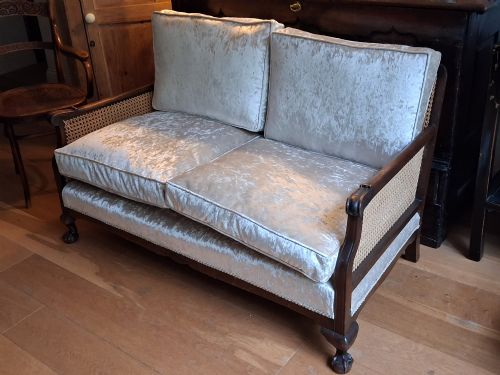
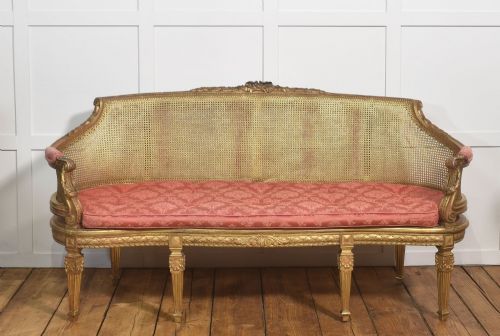
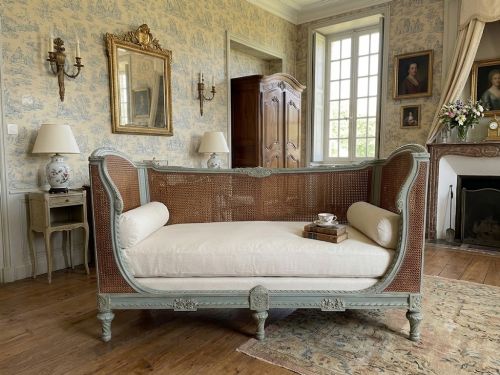
A french caned settee combines traditional seating forms with woven canework panels set into wooden frames. These pieces appear in styles such as Louis XVI, Louis XV, and Gustavian, reflecting historical European design preferences.
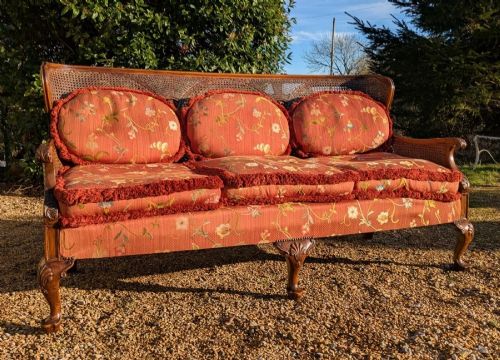
The selection on this page ranges from nineteenth century antiques to early twentieth century revivals. Buyers encounter daybeds, two seater window sofas, and larger couches featuring open cane backs and sides.
Originating largely from French and broader continental traditions, these settees serve as both functional seating and decorative furniture. Many examples incorporate upholstered cushions in fabric to complement the exposed woodwork.
How they were made
Maker construction relies on solid timber frameworks shaped from walnut, beech, and giltwood. Craftsmen carved these woods into classical profiles, applying paint, gold leaf, or natural finishes to the exposed surfaces.
Panels of cane were hand woven directly into the frames or recessed channels to create breathable, patterned backrests and sides. Additional comfort came from loose feather cushions placed on the seats.
French Caned Settee Retail Price Guide 2026
Typical asking prices for french caned settee among the pieces listed under this phrase on Sellingantiques today, from the lower quarter to the upper quarter. They describe what is for sale here now, not the wider market.
Listings span several eras, recording pieces from the eighteenth century through to the 1930s in walnut, beech, and giltwood.
What varies in quality
Quality depends upon the crispness of the wood carving and the tightness of the cane weave. Finer examples display deeply sculpted details and perfectly uniform canework that remains taut across the frame.
The choice of base material also defines the tier of the piece, with solid walnut and gilded surfaces sitting apart from simpler painted pine or beech. Original finishes and intact structural joinery distinguish superior items.
The French Caned Settee Glossary
- Cane
- Woven material made from rattan peel, used to create light yet strong panels in chair backs and settes. This technique allows for airflow and visual lightness in heavy wooden furniture.
- Canapé
- The French term for a sofa or settee, often applied to decorative seating from the eighteenth and nineteenth centuries. These pieces typically feature upholstered seats and elaborate frames.
- Bergère
- An enclosed upholstered armchair or sofa featuring built in upholstered sides. The style originated in France and frequently incorporates exposed wood and loose cushions.
- Giltwood
- Timber coated with a thin layer of gold leaf or gilt paint for a decorative metallic finish. This treatment was common on formal French revival furniture.
- Gustavian
- The Swedish interpretation of French neoclassical design, characterised by lighter painted finishes and restrained classical carving. This style emerged during the late eighteenth century.
French Caned Settee: Frequently Asked Questions
What is a french caned settee?
A french caned settee is an antique seating piece featuring woven cane panels within a carved wooden frame. These sofas often draw on Louis styles and date from the nineteenth or early twentieth centuries.
They combine the open texture of canework with upholstered cushions, creating a lighter visual profile than solid wood or fully upholstered couches.
How do I care for cane furniture?
Cane requires moderate humidity to prevent the natural fibres from drying out and snapping. Keep these settees away from direct heat sources and harsh sunlight.
Dust the woven panels regularly with a soft brush and avoid placing excessive weight on the cane without proper cushion support.
Where should I place a settee?
These settees suit living rooms, bedrooms, or large hallways where their decorative frames remain visible. Because many designs feature patterned cane backs, they work well when positioned away from walls.
Consider pairing them with complementary period armchairs or placing a window sofa in a bright alcove.