


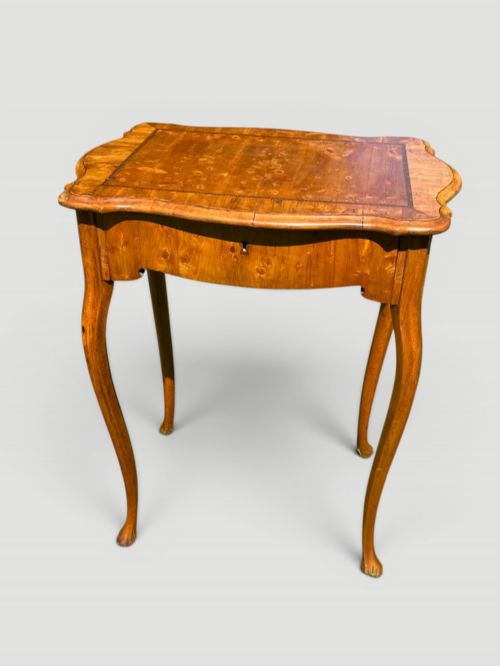


French Burr Walnut Side Table
A french burr walnut side table brings rich, swirling grain and continental elegance into a room.
French Burr Walnut Side Table
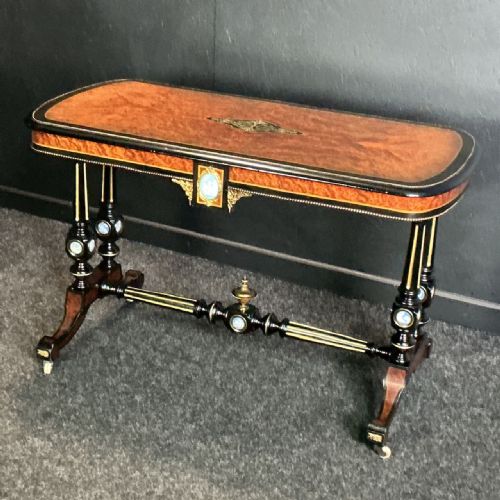
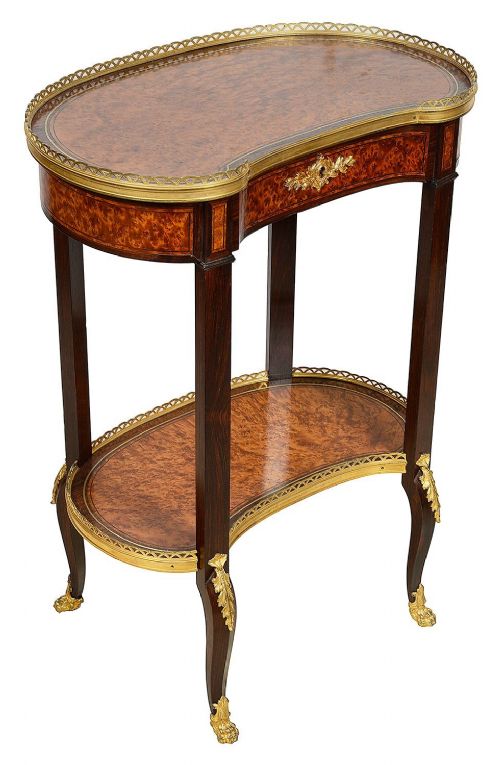
A french burr walnut side table combines functional surface area with highly figured wood veneers sourced from the root growth of the walnut tree. These pieces span from the mid-nineteenth century into the early twentieth century, taking forms such as freestanding centre tables, writing desks, and tiered étagères.
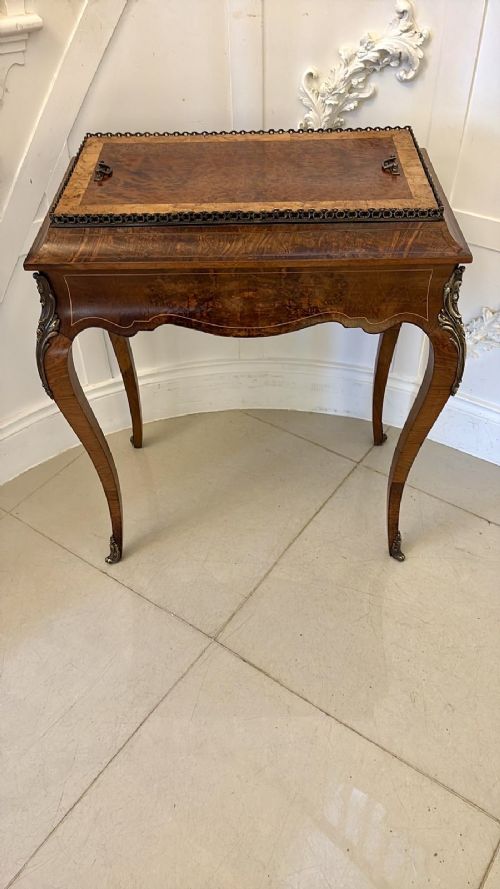
The aesthetic leans heavily towards revival styles, notably Louis XV and Louis XVI, characterised by serpentine lines and elegant curves. Buyers encounter compact occasional pieces alongside larger writing tables featuring marquetry and shaped tops.
What varies in quality
The grade of the burr walnut veneer dictates much of the visual impact, with tighter, more complex grain patterns commanding greater visual presence. The crispness and weight of the cast ormolu mounts also signal the standard of the original workshop.
Construction methods reveal the underlying standard, seen in the precision of the marquetry inlay and the stability of the shaped timber frames. Pieces that retain their original fitted interiors or matching pairs show greater integrity.
French Burr Walnut Side Table Retail Price Guide 2026
Typical asking prices for french burr walnut side table among the pieces listed under this phrase on Sellingantiques today, from the lower quarter to the upper quarter. They describe what is for sale here now, not the wider market.
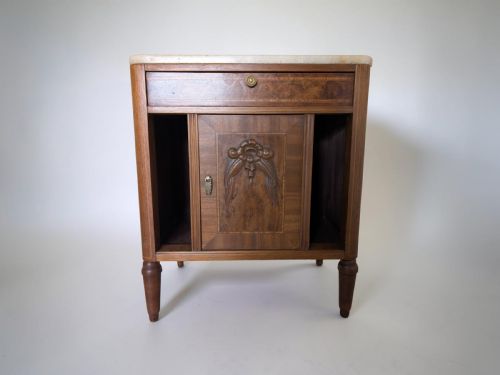
Listings feature burr walnut side tables alongside related forms such as jardinière stands, writing desks, and bedside cabinets.
Tehan
The French Burr Walnut Side Table Glossary
- Burr walnut
- A wood veneer taken from the wart-like growths on walnut trees, producing a dense cluster of swirling knots and rings. This timber provides the striking decorative patterns seen on the surface of these tables.
- Ormolu
- Gilded bronze used for decorative mounts and edgings on furniture. The metal is cast and then treated with a gold amalgam to create a bright metallic finish.
- Marquetry
- Inlaid patterns of wood veneers applied to a furniture structure to form pictures or decorative designs. Craftsmen carefully cut contrasting timber pieces to fit flush within the surface.
- Bureau plat
- A type of freestanding writing table featuring a flat top and one or more drawers in the frieze. These tables originated in France and often stand on slender cabriole legs.
- Gueridon
- A small, round table supported by a central column or multiple legs, originating in seventeenth-century France. Nineteenth-century interpretations frequently employ burr walnut veneers.
French Burr Walnut Side Table: Frequently Asked Questions
How do I date a french burr walnut side table?
Dating relies on examining the construction methods, secondary woods, and stylistic revival cues visible on the piece. Nineteenth-century examples often feature hand-cut dovetails and heavy oak or mahogany carcases.
Later interpretations from the early twentieth century may show machine-sawn elements or different internal framing techniques while maintaining earlier stylistic influences.
Where should I place a centre table?
Centre tables are designed to be viewed from all angles, making them ideal for the middle of a principal room rather than pushed against a wall. They function well holding table lamps or decorative objects.
Ensure there is sufficient clearance to walk around the piece comfortably within your room layout.
How do I care for burr walnut veneer?
Keep walnut furniture away from direct sunlight and heat sources to prevent the thin veneer from drying out or splitting. Dust regularly with a soft, dry cloth rather than using silicone sprays.
Occasional application of appropriate wax polish maintains the moisture and lustre of the French polished surface.