





French Burr Walnut Chest
A french burr walnut chest brings rich grain and Continental elegance into a room.
French Burr Walnut Chest
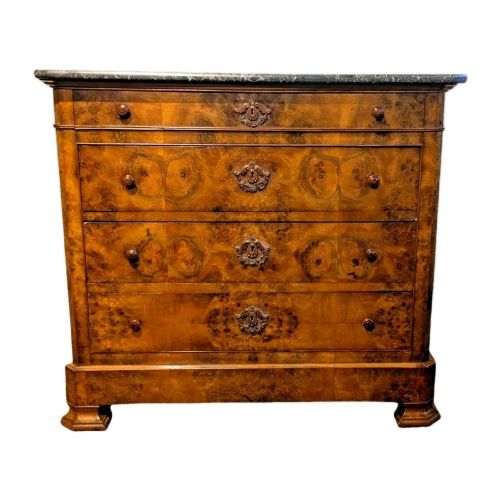
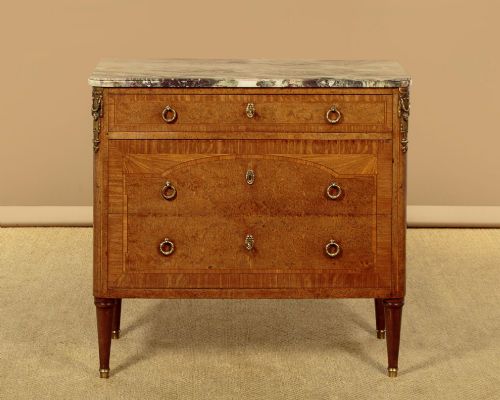
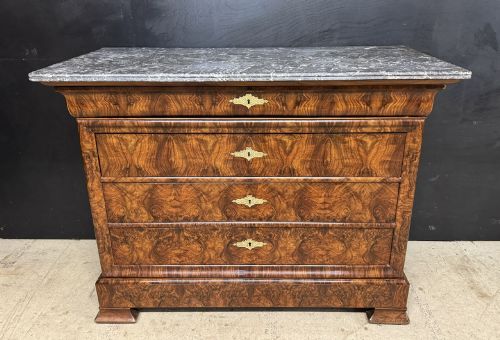
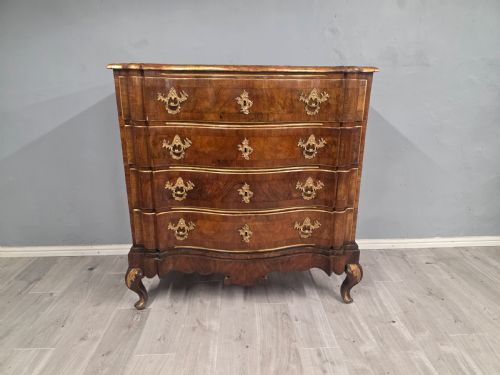
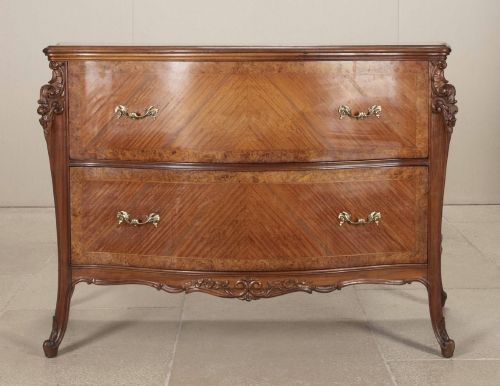
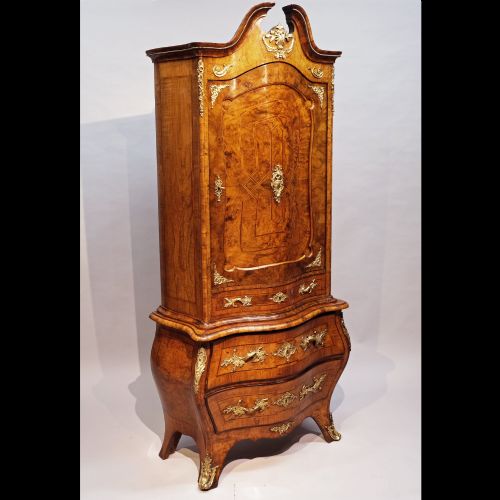
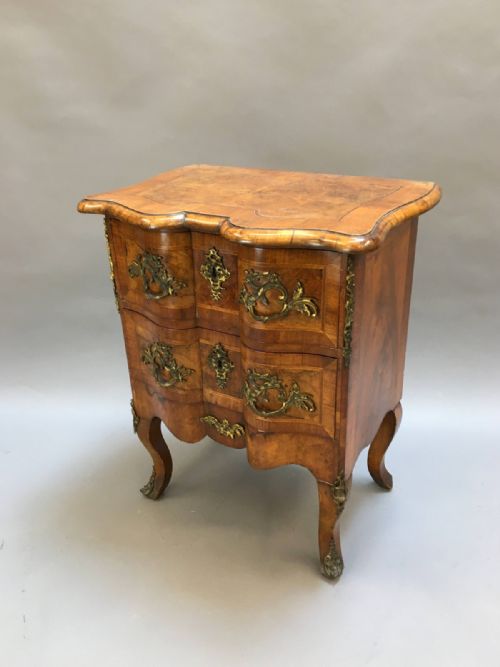
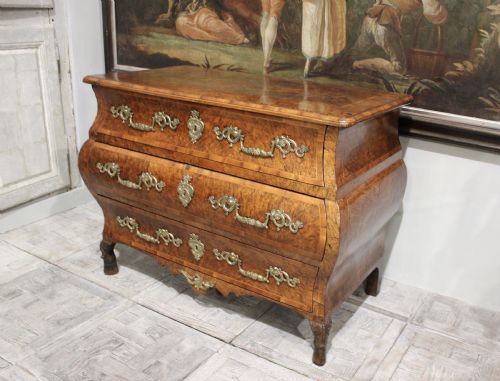
A french burr walnut chest encompasses a range of storage pieces, from low commodes to tall chests and bedside tables, originating primarily from the eighteenth and nineteenth centuries. These pieces serve as functional furniture while displaying the distinctive figured grain of the walnut timber.
Commodes and bedside chests dominate the selections available, often featuring multiple drawers and occasionally incorporating marble tops or ormolu mounts. Makers utilised styles spanning Louis Philippe, Rococo, Empire, and Victorian influences to shape these storage items.
The objects stem from French workshops and wider continental European traditions, appearing alongside English interpretations of similar forms. Buyers seeking this phrase typically encounter nineteenth-century commodes with bookmatched veneer patterns.
Materials and construction
Cabinet makers applied burr walnut veneer over solid timber carcases, arranging the figured grain to create symmetrical patterns across drawer fronts. This method highlighted the natural swirls and knots of the walnut growth.
Many examples incorporate marble tops, brass hardware, and ormolu mounts to accent the polished wood surfaces. Marquetry details and satinwood stringing occasionally appear on nineteenth-century pieces to frame the primary walnut veneers.
French Burr Walnut Chest Retail Price Guide 2026
Typical asking prices for french burr walnut chest among the pieces listed under this phrase on Sellingantiques today, from the lower quarter to the upper quarter. They describe what is for sale here now, not the wider market.
A liquor cave inside a velvet-lined tantalus box proves that nineteenth-century hosts took their evening spirits quite seriously.
Distinctions in quality
The visual impact of a french burr walnut chest relies heavily on the selection and matching of the veneer. Superior pieces display harmonious grain patterns across every drawer front, whereas lesser examples show mismatched timber sections.
Execution of decorative mounts, such as ormolu and brass handles, marks the difference between standard production and top-tier workshop output. Refined carving and precise marquetry also separate finer commodes from simpler utility furniture.
The French Burr Walnut Chest Glossary
- Burr walnut
- Timber sliced from the abnormal growth of a walnut tree, producing swirling patterns of grain. This decorative wood veneer commands attention on high-end commodes.
- Commode
- A low chest of drawers originating in France. These storage items frequently feature marble slabs and decorative mounts.
- Ormolu
- Gilded bronze mounts applied to furniture edges and feet. French cabinet makers utilised this material extensively during the nineteenth century.
- Semainier
- A tall, narrow chest of drawers traditionally designed with seven tiers, one for each day of the week. This form provides vertical storage in compact bedroom spaces.
- Marquetry
- Inlays of various wood veneers arranged in pictorial or geometric patterns. Artisans applied these designs to enrich the surfaces of cabinets and chests.
French Burr Walnut Chest: Frequently Asked Questions
How do I date a burr walnut chest?
Dating relies on observing construction methods, timber thickness, and stylistic clues such as Louis Philippe or Empire proportions. Hardware styles and secondary woods inside the drawers also point to specific decades.
Nineteenth-century pieces often display machine-sawn elements, whereas eighteenth-century examples show hand-planed timbers. Comparing the carcass construction to established stylistic periods helps narrow the origin.
Are marble top commodes French?
Many commodes featuring marble tops originate from France, particularly those produced during the nineteenth century. These stone surfaces provided durable, practical tops for bedroom furniture.
Not all marble-topped chests are French, as Italian and English cabinet makers also adopted the fashion. Examining the overall form and veneer style confirms the likely regional origin.
Where should I place a bedside chest?
Bedside chests function well beside larger beds where their height matches the mattress level. Their drawers offer discreet storage for small personal items.
In living spaces, smaller bedside chests serve as lamp tables or occasional surfaces next to seating. The decorative grain of burr walnut allows these smaller pieces to act as focal points.
What is a Wellington chest?
A Wellington chest is a tall, narrow set of drawers secured by a locking hinged side pilaster bar. This design prevented unauthorized access to the contents of the drawers.
Originating in the nineteenth century, these pieces provide substantial vertical storage with a small floor footprint. Walnut and burr walnut versions appear frequently among Victorian bedroom furniture.