

French Buffet Cabinet
A french buffet cabinet brings generous storage and rich regional character to a dining space or hallway.
French Buffet Cabinet
A french buffet cabinet is a substantial storage piece originating from rural and urban European traditions, commonly taking the form of low sideboards, enfilades, and tall deux corps cupboards. Buyers seeking this phrase typically encounter robust oak, walnut, and cherry wood constructions dating from the eighteenth and nineteenth centuries.
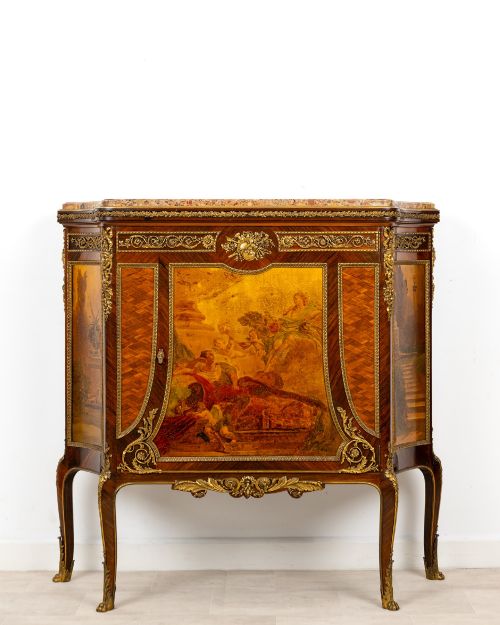
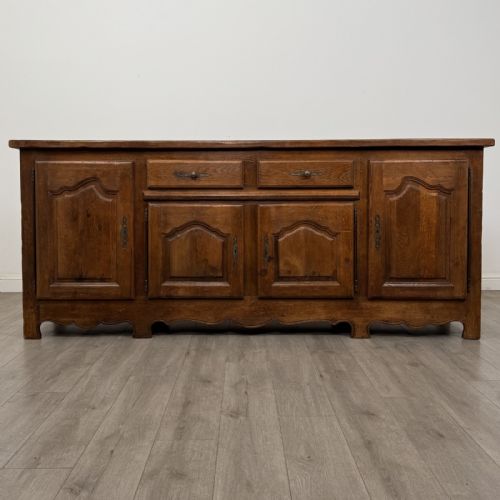
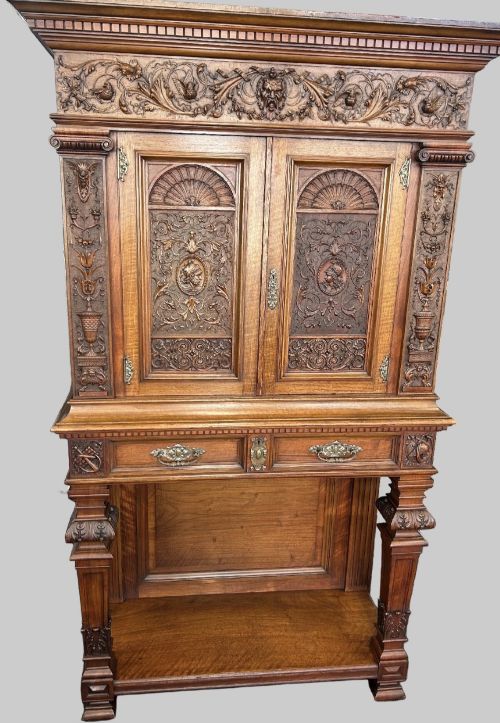
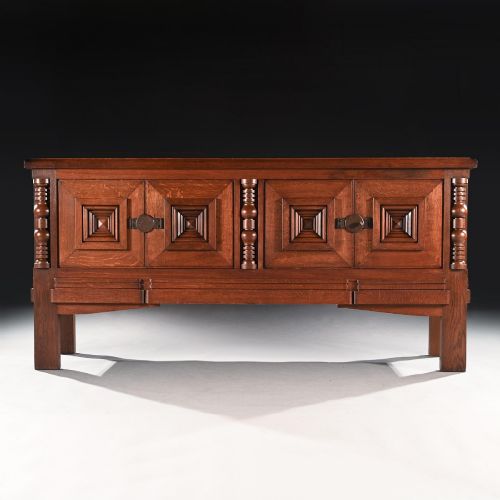
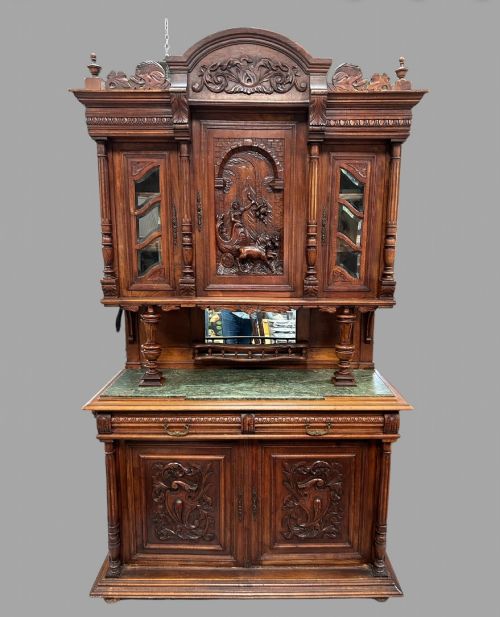
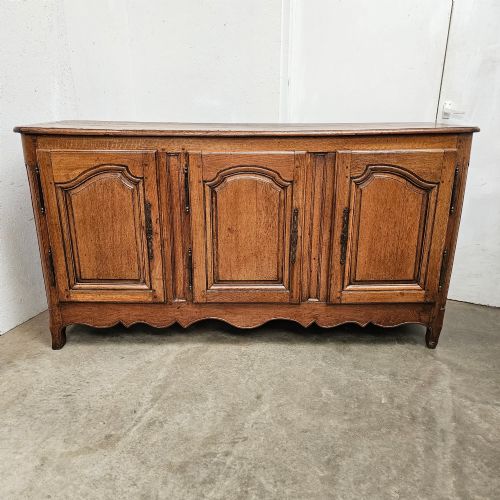
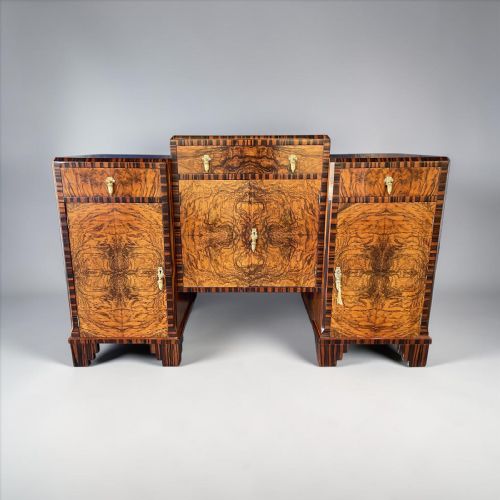
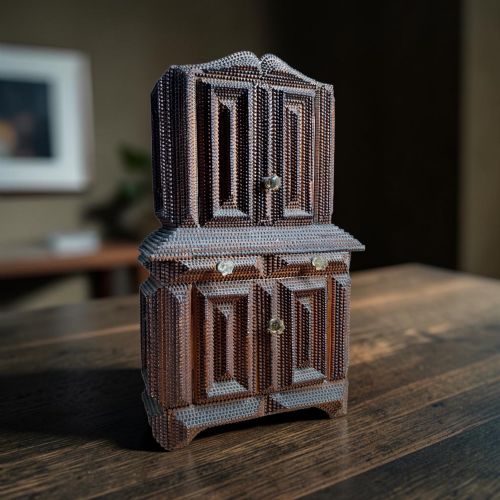
The selections on this page range from provincial kitchen dressers and low sacristy cabinets to ornate Louis XV marble-topped sideboards and geometric Art Deco designs. Regional pieces often feature deep carvings, panelled doors, and iron or brass hardware suited to traditional interiors.
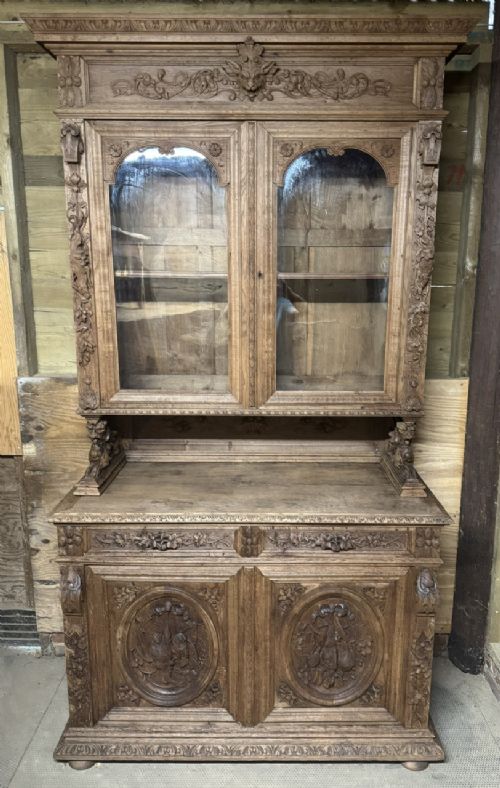
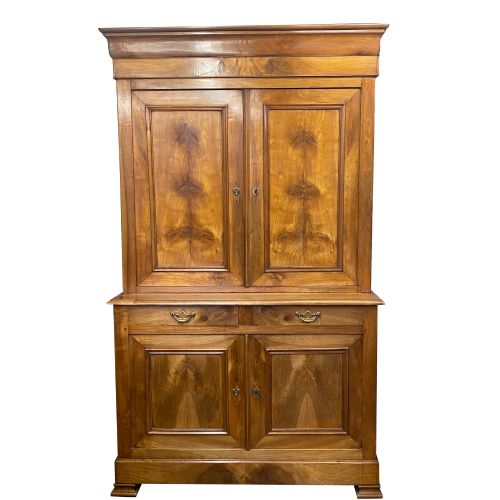
Form follows function across these variants, balancing enclosed cupboard space with drawers for linen or cutlery. Taller examples divide into two distinct sections, providing display capacity above and heavy storage below.
How they were made
Cabinetmakers relied primarily on solid timbers including oak, walnut, ash, and cherry, often shaped with hand tools for mortise and tenon joinery. Surface enrichment included intricate carving, burr walnut veneers, and marquetry inlays.
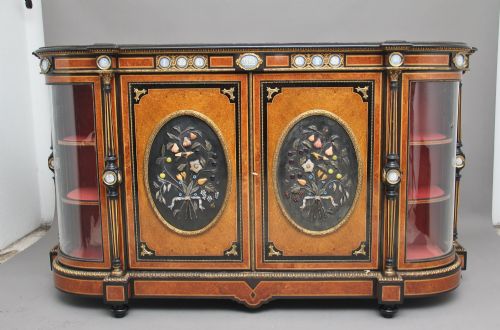
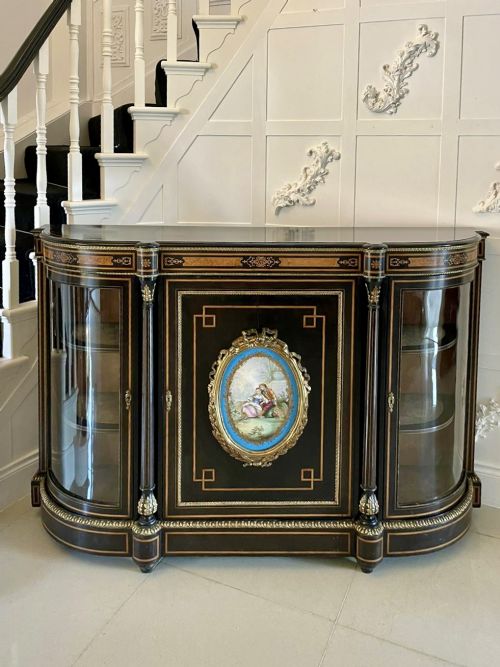
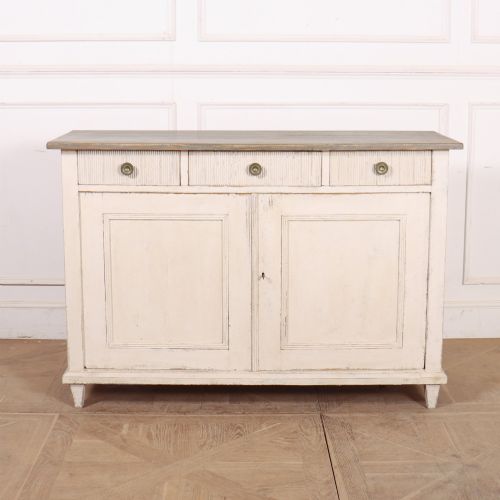
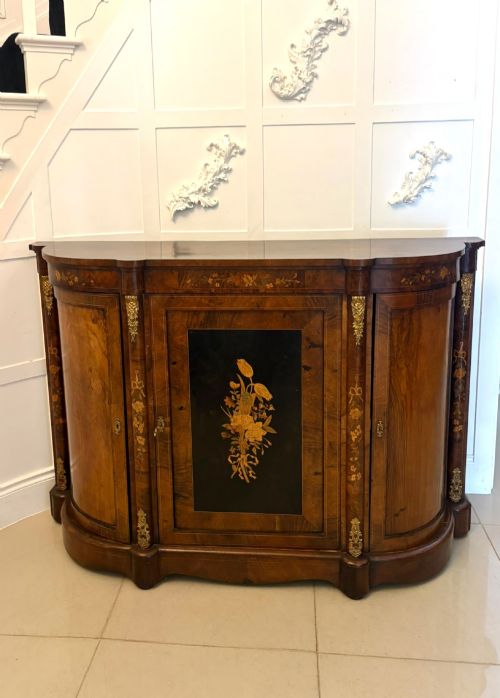
Higher-end urban examples incorporated contrasting ebonised woods, amboyna, and gilt ormolu mounts, paired with polished marble tops. Provincial pieces prioritised durable local hardwoods finished with wax or simple painted surfaces.
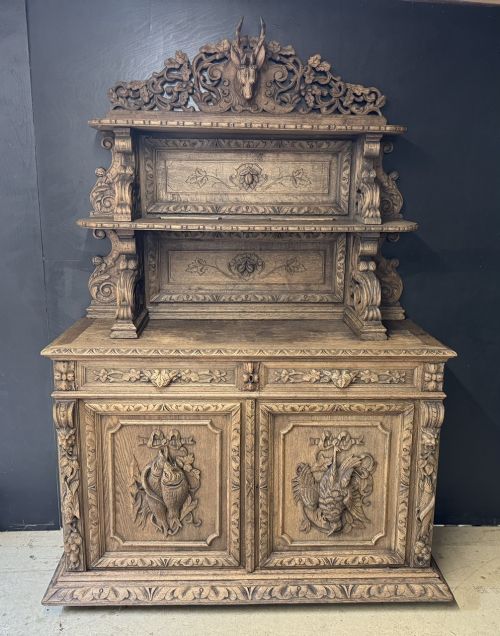
Hunting cabinets frequently sport carved game birds and wild boar heads to oversee your dining.
What varies in quality
Quality rests upon the selection of timber and the crispness of the hand-carved detailing. Heavy oak and walnut pieces with deep relief work and well-balanced proportions sit at the higher end of the scale.
Original hardware, intact marble slabs, and secondary woods matching the primary timber indicate superior construction. Simpler pine or utility pieces display more straightforward regional building methods.
Gillows·Charles Dudouyt
The French Buffet Cabinet Glossary
- Enfilade
- A long sideboard featuring three or more doors in a continuous line. This form originated in grand European reception rooms.
- Deux corps
- A tall two-part cupboard comprising a smaller upper cabinet resting on a deeper base. These storage units often utilise pegged joints.
- Ormolu
- Gilded bronze mounts applied as decorative accents to furniture. This technique appears frequently on nineteenth-century credenzas.
- Marquetry
- Decorative patterns formed by fitting together thin slices of veneer. Floral and geometric motifs often embellish cabinet doors.
- Buffet à deux corps
- A large regional storage cupboard built in two separable sections. Eighteenth-century examples typically employ solid oak or cherry.
French Buffet Cabinet: Frequently Asked Questions
What is a french buffet cabinet used for?
These pieces function primarily as dining room storage for tableware, linen, and dry goods. Their broad surface tops also provide space for serving food or displaying decorative objects.
In contemporary homes, they serve equally well in hallways or living rooms to anchor a room and conceal clutter.
How do I tell an eighteenth-century piece apart?
Early pieces from the eighteenth century usually display hand-planed surfaces, pegged joinery, and dense local hardwoods like oak or cherry. Their proportions tend to be utilitarian and heavy.
Later nineteenth-century iterations often introduce machine-sawn elements, exotic veneers, or revival styling such as Renaissance and Louis XV motifs.
Will a marble top add weight?
Marble tops add considerable weight to a cabinet, making these pieces exceptionally heavy and stable. They provide a durable, heat-resistant surface historically used for food preparation.
When moving marble-topped buffets, the stone slab typically lifts off the wooden base to ease transport.
How do I care for a vintage wood finish?
Maintain waxed wooden surfaces by applying a natural beeswax polish occasionally to nourish the dry timber. Avoid placing these cabinets near direct heat sources to prevent the wood from splitting.
Clean marble tops gently with warm water and mild soap, avoiding acidic substances that etch the stone.