

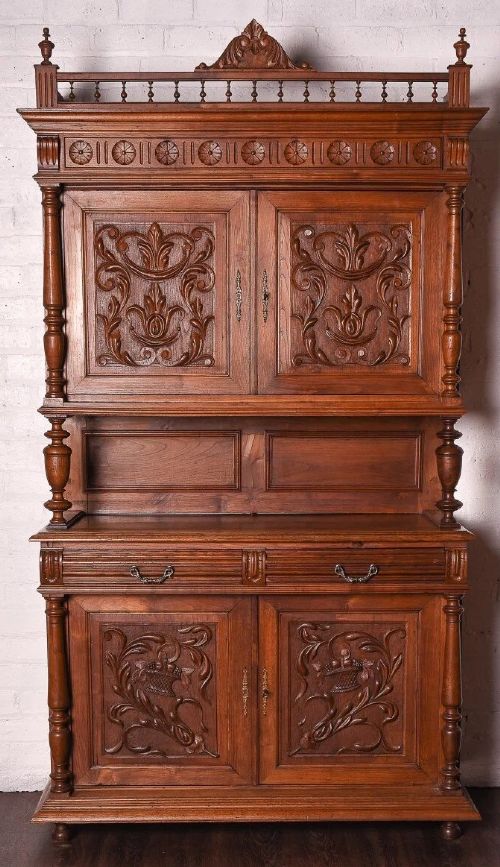


French Buffet and Hutch
These french buffet and hutch pieces bring enduring provincial character and substantial storage to a room through traditional regional joinery.
French Buffet and Hutch
When you search for a french buffet and hutch, you are looking at substantial two-part storage furniture combining a lower serving base with an upper display or enclosed cabinet. These architectural storage pieces originate from various French regions, showcasing distinct local cabinetmaking traditions.
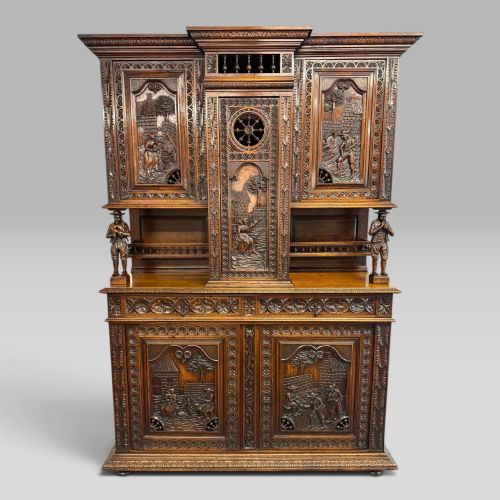
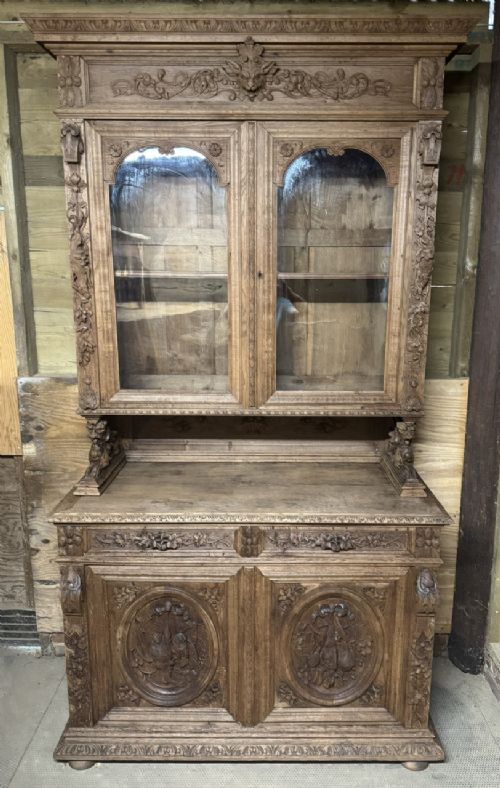
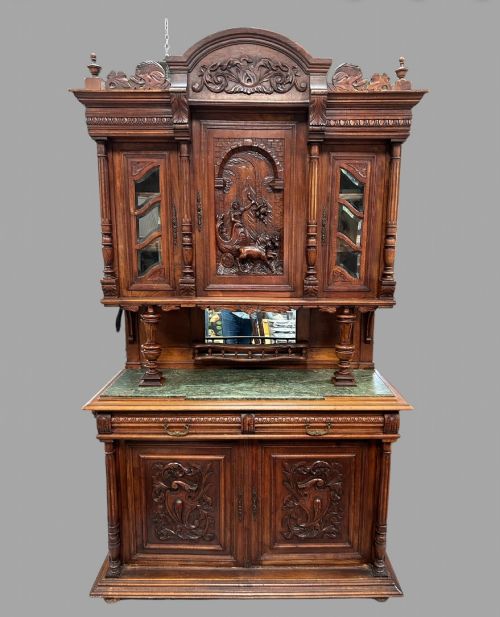
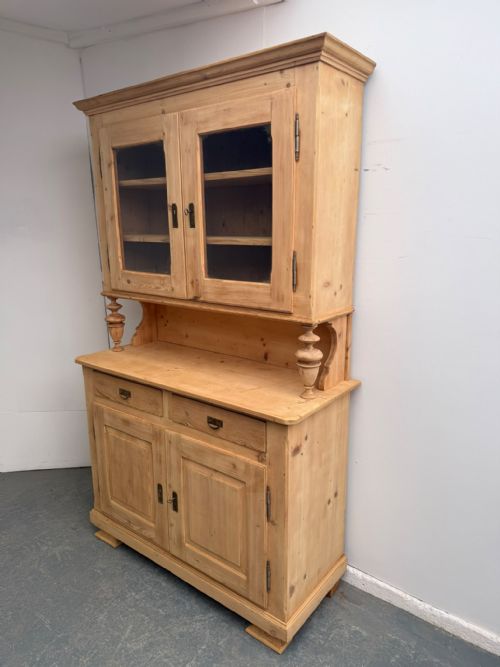
The examples available here span several distinct periods, most notably featuring 18th century and 19th century regional pieces alongside Victorian interpretations. Regional variants range from heavily carved walnut hunting styles and Breton cabinets to simpler painted country dressers and rustic pine kitchen furniture.
Most pieces follow traditional two-body construction, known in France as buffet a deux corps or buffet vaisselier, where a deeper lower cupboard supports a slightly shallower upper section. This stepped architectural profile provides both enclosed storage for tableware and open or glazed display space for everyday crockery.
Materials and construction methods
Regional cabinetmakers constructed these storage units predominantly in solid hardwoods, using local walnut, oak, cherrywood, and pine. Walnut and oak provide the structural integrity required for deeply carved panels, while softer woods like pine serve in simpler country pieces intended for paint or wax finishes.
Construction relies on traditional joinery techniques including pegged mortise and tenon joints, hand-planed panels, and pegged door frames designed to accommodate seasonal wood movement. Hardware typically consists of forged iron hinges and brass escutcheons or drop handles.
Surface treatments vary from polished wood grains and bleached finishes to original historic paint layers and folk art tramp art carving. Each surface reflects the utilitarian demands of rural kitchens and dining halls where these heavy cabinets stood.
French Buffet and Hutch Retail Price Guide 2026
Typical asking prices for french buffet and hutch among the pieces listed under this phrase on Sellingantiques today, from the lower quarter to the upper quarter. They describe what is for sale here now, not the wider market.
Current listings feature regional oak, walnut, cherrywood, and pine pieces spanning the sixteenth through the nineteenth centuries.
Assessing quality in regional cabinetry
Quality in a french buffet and hutch rests upon the crispness of the hand-carved ornamentation and the balance of proportions between the upper and lower sections. Finer regional pieces display deeply undercut foliage, animal motifs, or architectural mouldings integrated directly into the solid wood framing rather than applied as separate decoration.
The integrity of the timber selection and the retention of original structural elements, such as backboards, hardware, and interior shelving, heavily influence the character of each piece. Subtle variations in the thickness of panel timbers and the neatness of dovetailing inside drawers reveal the level of care invested by the original provincial workshop.
The French Buffet and Hutch Glossary
- Buffet a deux corps
- A traditional two-part cupboard featuring a lower cabinet base beneath a matching upper section. This format forms the backbone of formal dining room storage in French provincial interiors.
- Buffet vaisselier
- A regional French dresser combining a lower storage buffet with upper shelving or glass-fronted cabinets intended for displaying crockery. These units served as both practical storage and a display of household standing.
- Breton
- Pertaining to the distinctive furniture style of the Brittany region in northwest France. Pieces from this tradition often feature characteristic panel carvings, spindle galleries, and maritime motifs.
- Tramp art
- A folk art style of woodwork created by chip-carving small layers of salvaged wood into geometric patterns. This technique appears on vernacular cabinets and folk art furniture.
- Hunting style
- A heavily carved decorative theme incorporating game, foliage, hounds, and rustic woodland trophies. This revival style gained popularity during the nineteenth century.
French Buffet and Hutch: Frequently Asked Questions
What is a french buffet and hutch used for?
These large storage combinations served historically to store and display household tableware, linens, and provisions in provincial dining rooms and kitchens. The lower cupboards held heavier pots and stores, while the upper shelves displayed serving dishes.
Today, they function as substantial architectural storage cupboards in contemporary dining rooms, kitchens, or living spaces, offering generous display and enclosed storage capacity.
How do I date an antique french dresser?
Dating relies on examining the timber species, tool marks left by hand planes, joinery methods, and the style of hand-carved ornamentation. Eighteenth-century examples often display simpler, pegged board construction and regional patination, whereas nineteenth-century pieces frequently embrace revival motifs and machine-assisted preparation.
Hardware styles, including hand-forged iron hinges and regional brass pulls, also provide reliable clues to the era of manufacture, though fittings are sometimes replaced over centuries of use.
Are these pieces made of solid wood?
Yes, traditional provincial pieces are constructed from solid regional timbers such as oak, walnut, cherrywood, and pine. Cabinetmakers selected these dense hardwoods to support the heavy cornices and deep relief carvings characteristic of regional workshops.
Because they utilise solid planks rather than modernveneers, these cabinets respond to ambient humidity changes, which accounts for the traditional use of panel-and-frame construction to prevent warping.
How do I care for an antique wooden cabinet?
Maintain the timber by dusting regularly with a dry cloth and occasionally applying a traditional beeswax polish to nourish dry wood surfaces. Avoid placing antique wooden furniture near direct heat sources or in fluctuating humidity to prevent timber splitting.
Ensure heavy upper sections are properly anchored to wall studs if required, given the top-heavy nature of large two-part dressers and hutches.