




French Bronzed Mantle Clock
A french bronzed mantle clock brings nineteenth-century drawing rooms into focus with patinated metal and disciplined mechanical timekeeping.
French Bronzed Mantle Clock
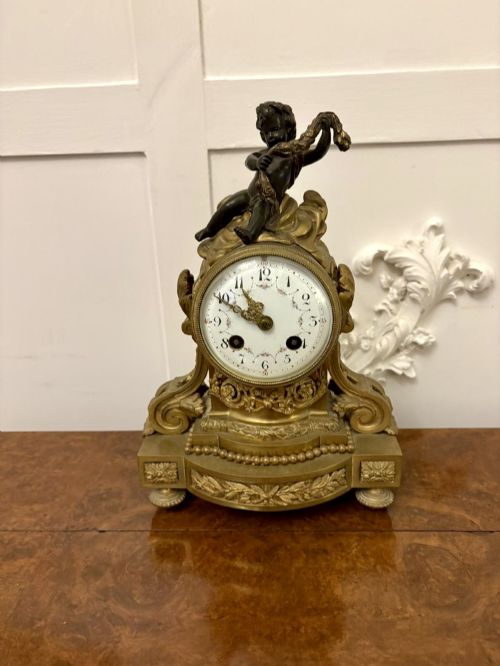
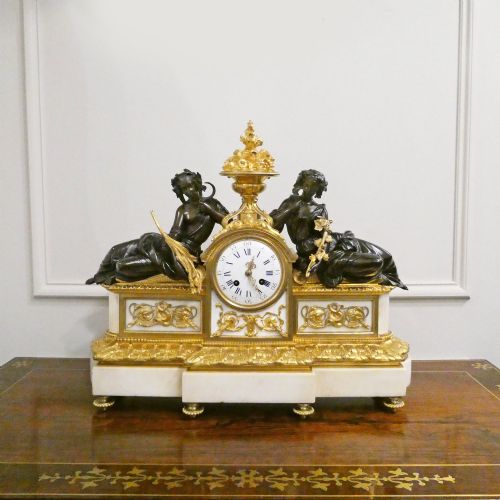
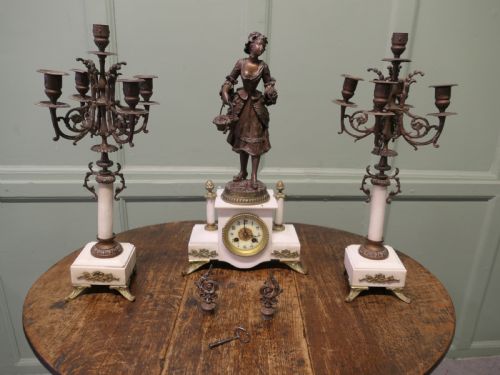
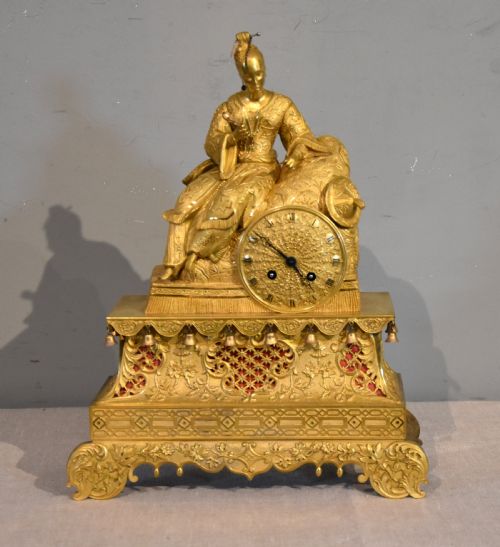
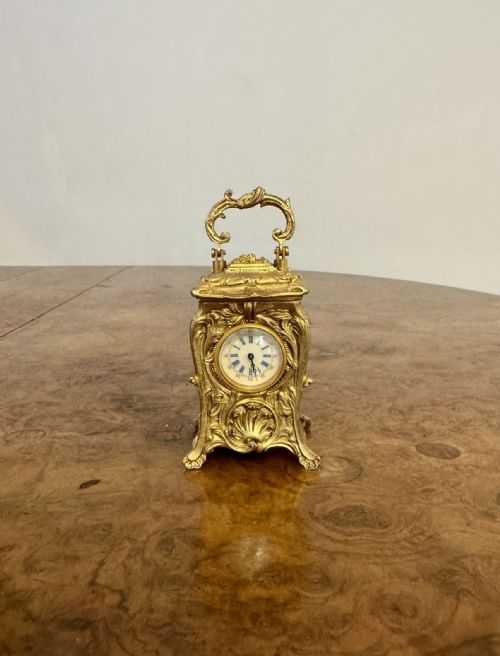
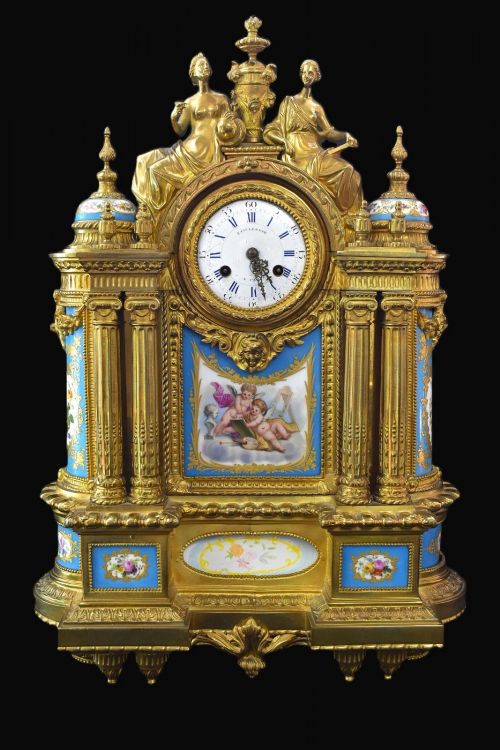
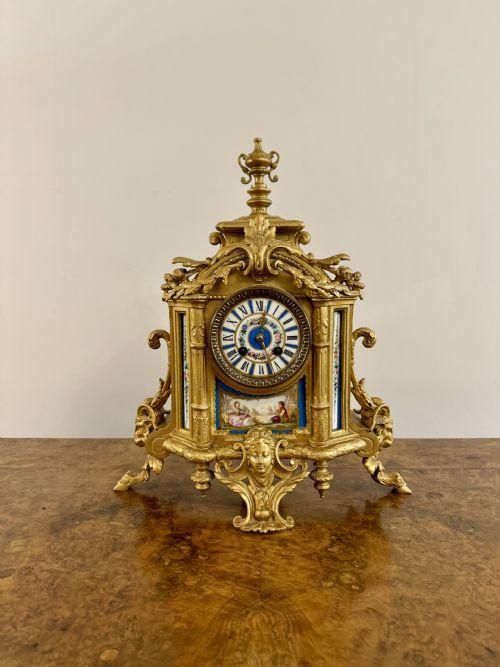
A french bronzed mantle clock draws on nineteenth-century domestic design, ranging from classical portico shapes to elaborate figural compositions. Pieces meeting this description combine cast metal bodies with visible dial work, often accompanied by matching garniture sets.
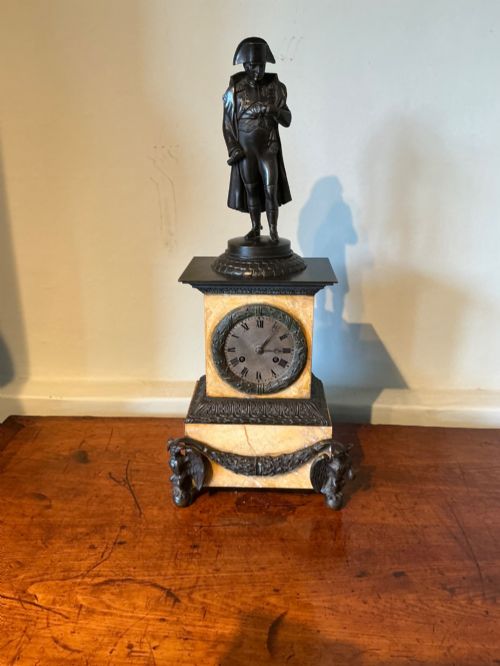
Makers working within the Victorian and earlier periods utilised marble, ormolu, and porcelain alongside bronze to construct domestic timepieces. The selection on this page demonstrates styles from French Rococo Revival and Louis XVI Revival to Empire and Charles X.
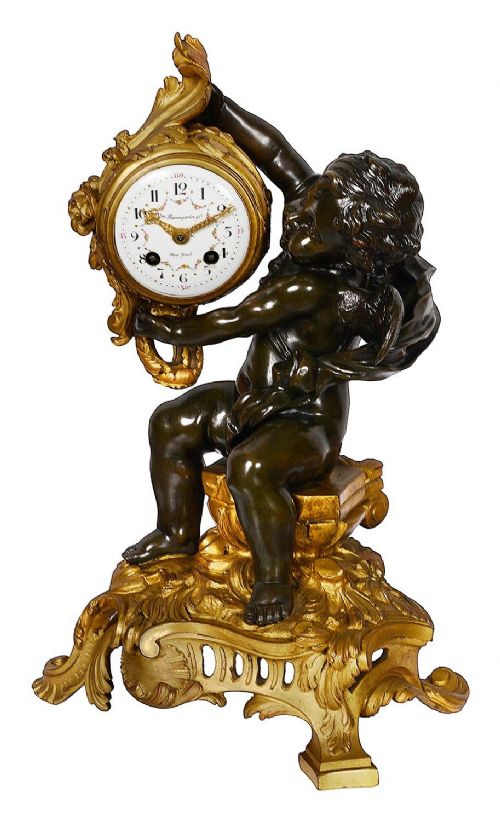
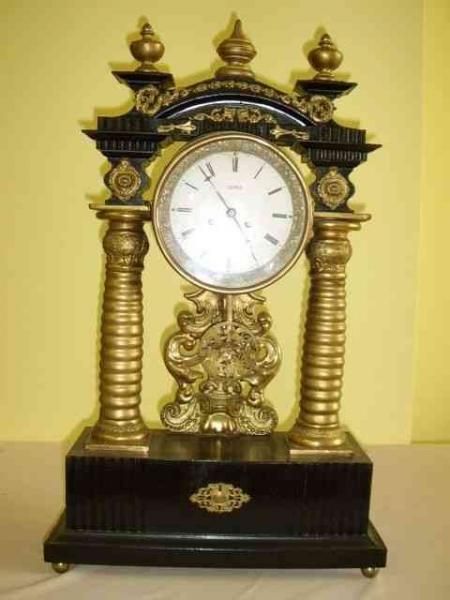
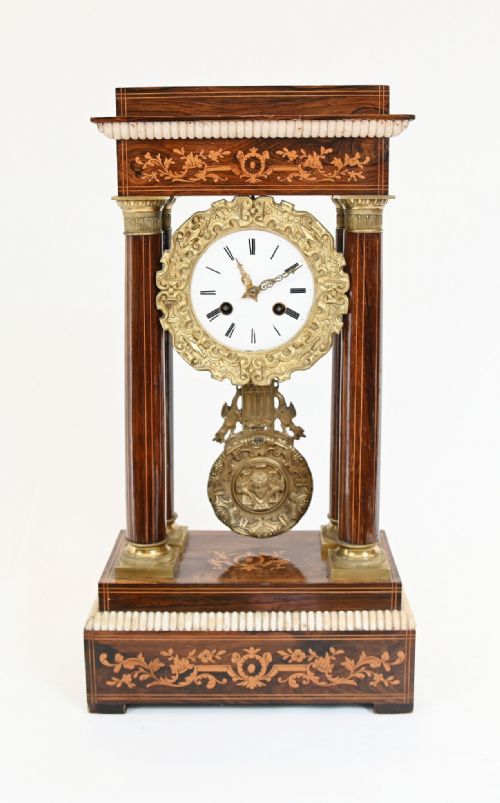
The objects take several forms, including drum head clocks, four-glass enclosures, and architectural portico arrangements. Buyers encounter figures of Napoleon, cherubs, and animal subjects integrated directly into the clock housings.
Craft and Detail
The refinement of the cast bronze figures and the crispness of the chasing separate standard timepieces from exceptional examples. High-grade works display sharply articulated details on subjects like cherubs and lions, whereas lesser items show softer contours.
The integration of materials dictates the overall calibre of the piece, particularly where porcelain plaques and marble bases meet the metal mounts. Signed movements and complex complications such as musical cylinders indicate higher workshop standards.
Listings feature periods from the eighteenth century through the Victorian era, utilising bronze, marble, ormolu, and porcelain.
Vincenti·Etienne Lenoir·Philippes Paris·Japy Freres·Breguet
The French Bronzed Mantle Clock Glossary
- Ormolu
- Gilded bronze produced by applying a mercury and gold amalgam to a cast bronze base. This technique creates a durable golden surface seen on nineteenth-century French clock mounts.
- Garniture
- A matching set of decorative objects, usually comprising a central clock flanked by two candelabras or urns. These sets were designed to sit together on a mantelpiece.
- Portico clock
- A monumental clock built within a architectural frame of four columns supporting a lintel. The pendulum often hangs visibly within the open central space.
- Champleve
- An enamelling technique where troughs are dug into a metal surface and filled with vitreous enamel before firing. It appears frequently on later nineteenth-century dials and bezels.
- Boulle
- A marquetry method using brass and tortoiseshell inlaid in intricate patterns across wooden surfaces. It takes its name from the master cabinetmaker Andre-Charles Boulle.
French Bronzed Mantle Clock: Frequently Asked Questions
How do I wind an antique clock?
Most mechanical clocks utilise a key inserted into winding holes on the enamel dial face. Turning the key tensions the internal springs or lifts the driving weights.
Care must be taken not to overwind the movement, as this can damage the mainsprings. Consulting a professional horologist for initial setup ensures proper handling.
What is a clock garniture?
A clock garniture is a matched set consisting of a central mantel clock and two matching side pieces, such as candelabras or urns. These sets provided a unified decorative scheme for nineteenth-century mantelpieces.
The side pieces repeat the materials and motifs of the main clock, such as bronze mounts or porcelain panels. They were arranged symmetrically in formal reception rooms.
How do I date a French clock?
Dating relies on stylistic clues, materials, and maker signatures stamped on the backplate of the movement. Periods like the Charles X era or the Victorian decades feature distinct decorative vocabularies.
Revival styles often point to mid-to-late nineteenth-century production. Examining the casting quality and type of enamel dial also helps narrow the decade.
Where should I place my clock?
Clocks require a stable, level surface away from direct sunlight, drafts, and sudden temperature fluctuations. Mantelpieces and sturdy console tables provide suitable locations.
A level foundation is essential for the pendulum to beat evenly and keep accurate time. Wall brackets or heavy furniture prevent vibrations from disrupting the escapement.