



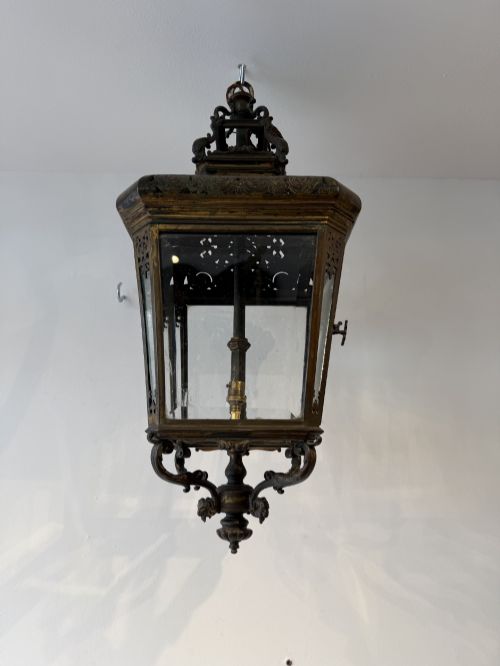


French Bronze Hanging Lamp
A french bronze hanging lamp brings a distinct focal point to high ceilings, offering warm illumination through metalwork and glass.
French Bronze Hanging Lamp
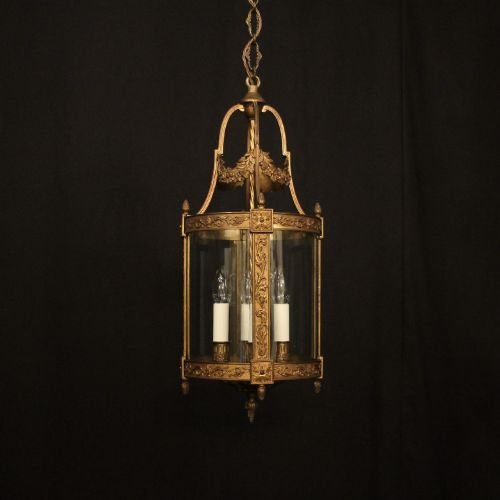
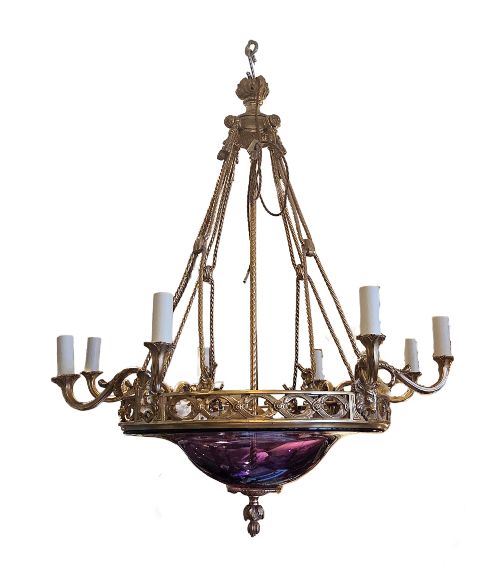
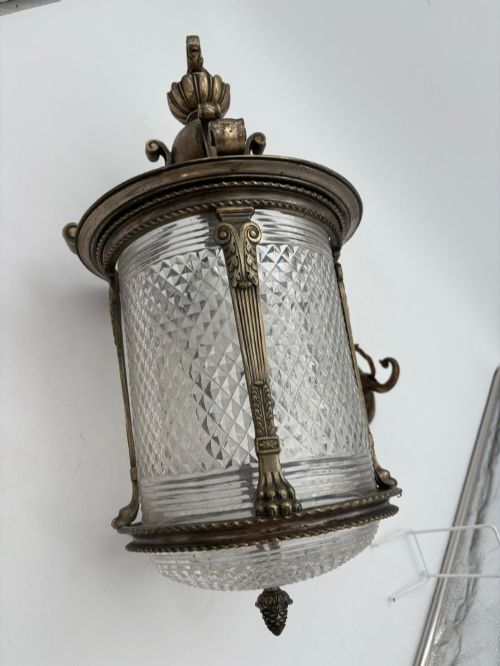
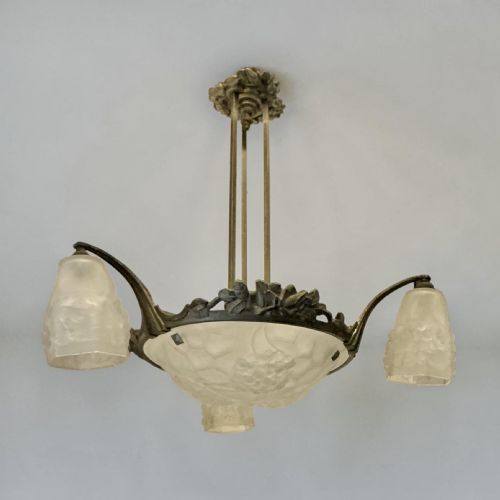
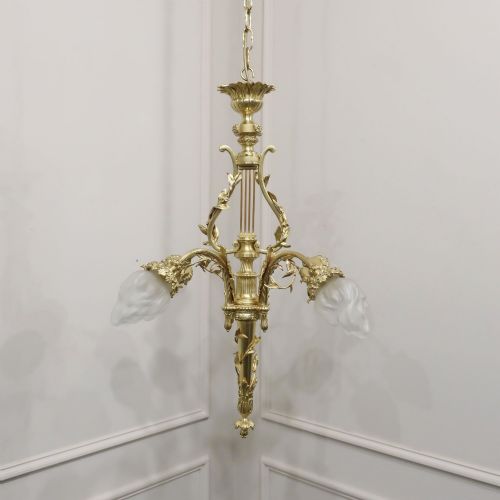
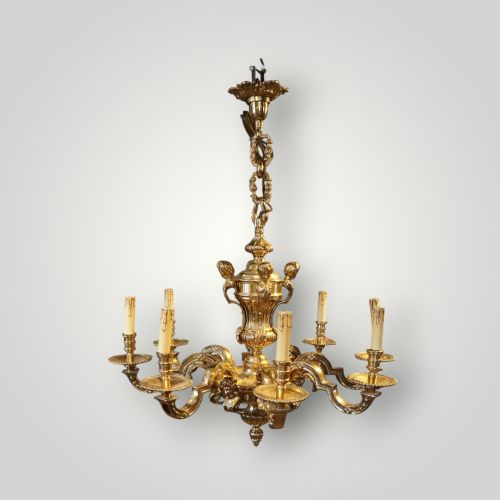
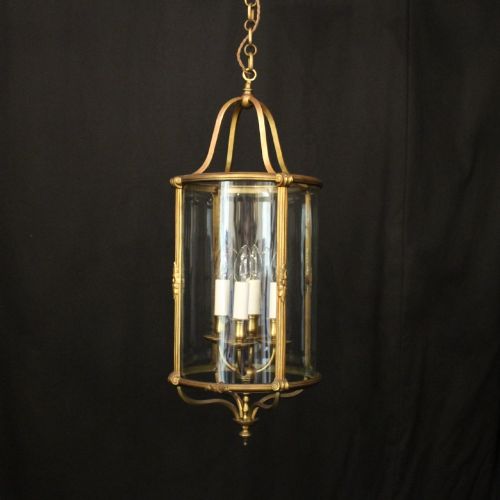
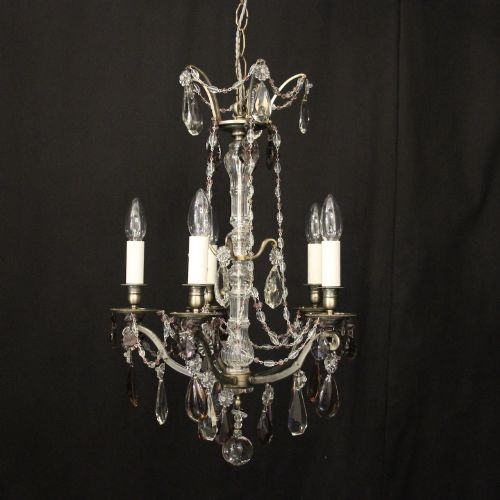
A french bronze hanging lamp encompasses overhead fittings such as chandeliers, pendant lights, hall lanterns, and ceiling lights designed to suspend from the ceiling. These pieces range from substantial multi-light chandeliers down to single-bulb lanterns and bowls.
The selections span several periods, featuring 19th Century examples alongside 1900, 1910, 1920, and 1930 creations. Styles shift from ornate revival designs to geometric Art Deco forms.
Buyers will encounter diverse forms on this page, notably multi-arm crystal chandeliers and enclosed bronze lanterns. Each variant uses cast metal paired with glass elements to direct light downwards.
Construction and materials
The primary structure relies on bronze, gilt bronze, gilded brass, and general metal alloys cast into complex frames. Artisans shaped these metals to form structural arms, decorative coronas, and supportive chains.
Glass integrates heavily into the construction, appearing as clear crystals, frosted shades, and moulded bowls. These transparent and translucent components refract the internal light across the room.
French Bronze Hanging Lamp Retail Price Guide 2026
Typical asking prices for french bronze hanging lamp among the pieces listed under this phrase on Sellingantiques today, from the lower quarter to the upper quarter. They describe what is for sale here now, not the wider market.
Materials appearing across the inventory include gilt bronze, brass, frosted glass, and cut crystal arranged in various chandelier and lantern configurations.
Assessing quality and execution
The refinement of the metal casting dictates the calibre of each piece, distinguishing sharp, hand-chased foliage from soft, repetitive machine production. Better examples display crisp detailing along the bronze arms and mounts.
The integration of crystal and glass elements establishes another tier of craftsmanship. Superior fixtures utilise cut crystals and thick, uniform glass drops that secure firmly to the metal framework.
Degué
The French Bronze Hanging Lamp Glossary
- Gilt bronze
- Bronze that has been coated with a thin layer of gold or gold leaf to produce a bright, enduring surface finish.
- Crystal
- High-clarity lead glass cut into precise facets to maximise light refraction and sparkle.
- Hall lantern
- An enclosed hanging light fixture originally designed to illuminate entrance halls and corridors.
- Frosted glass
- Glass treated to create a textured, opaque surface that diffuses light evenly.
- Lyre
- A symmetrical, stringed-instrument motif frequently incorporated into neoclassical chandelier frames.
French Bronze Hanging Lamp: Frequently Asked Questions
How do I hang a heavy chandelier?
Heavy chandeliers require direct anchorage to ceiling joists using a rated steel hook and electrical box. Professional installation ensures the weight distributes safely without straining the wiring.
Once secured, the hanging height is adjusted via the suspension chain to sit comfortably above eye level within the space.
What rooms suit a hall lantern?
Hall lanterns work effectively in entranceways, stairwells, and narrow corridors where overhead clearance matters. Their enclosed designs protect the light source while casting directional illumination.
In larger rooms, smaller lanterns function well in corners or above reading areas to create layered lighting schemes.
How do I clean crystal drops?
Crystal drops benefit from gentle washing with warm water and mild soap while still attached to the frame, or removal for individual cleaning. Using a soft cloth prevents scratching the polished surfaces.
Allowing the crystals to air dry completely restores their reflective clarity before turning the illumination back on.
How do I identify Art Deco lighting?
Art Deco lighting relies on geometric lines, symmetrical forms, and stylised motifs rather than the ornate curves of earlier revival styles. These pieces often pair bronze metalwork with frosted or moulded glass shades.
Date markers for this aesthetic typically point towards the interwar decades, reflecting modern industrial influences of the era.