




French Brass Plant Stand
A French brass plant stand brings polished metal and classic Continental form to a corner, holding greenery or standing alone as a display surface.
French Brass Plant Stand
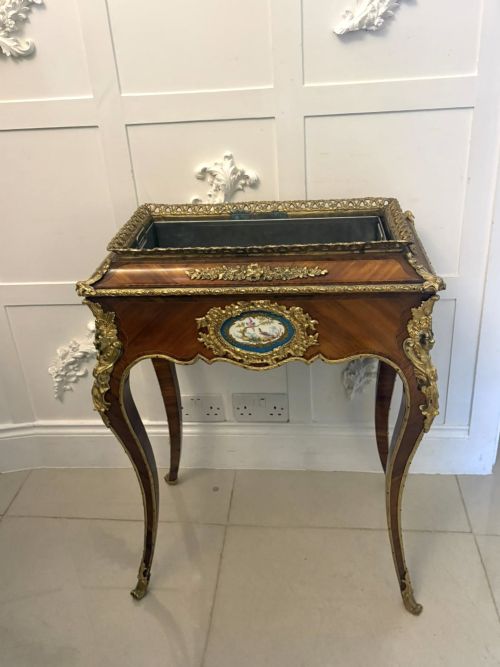
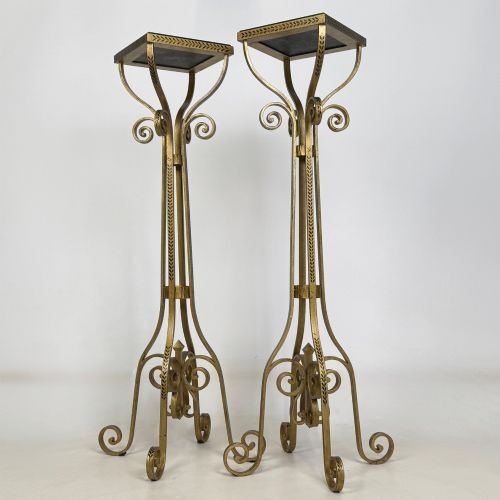
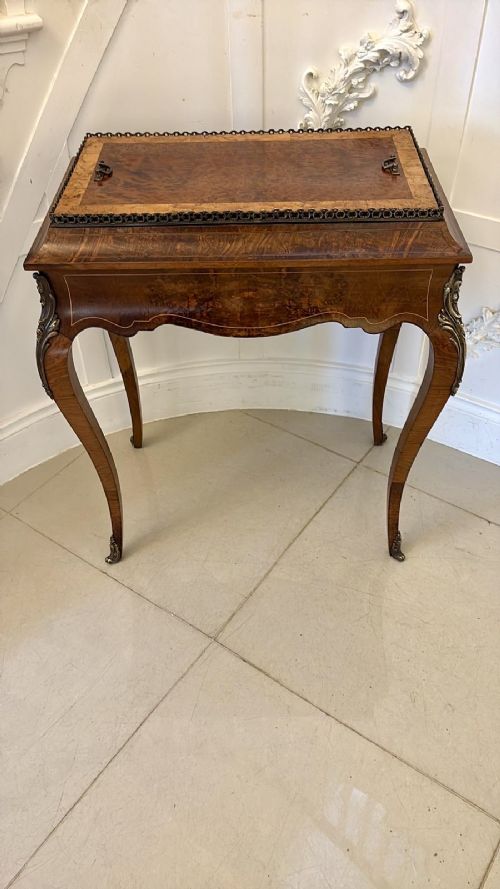
A french brass plant stand is designed to elevate potted plants, foliage, or floral arrangements using sturdy metal frames combined with decorative surfaces. The selection encompasses forms ranging from dedicated planter columns and jardiniere tables to multi-tiered etageres and occasional tables adapted for botanical display.
Most examples hail from the nineteenth century into the early twentieth century, reflecting Victorian, Edwardian, and various French revival aesthetics. Buyers frequently encounter pieces associated with Napoleon III, Louis XV, Louis XVI, and Empire styles, demonstrating how Continental design influenced British and French interiors alike.
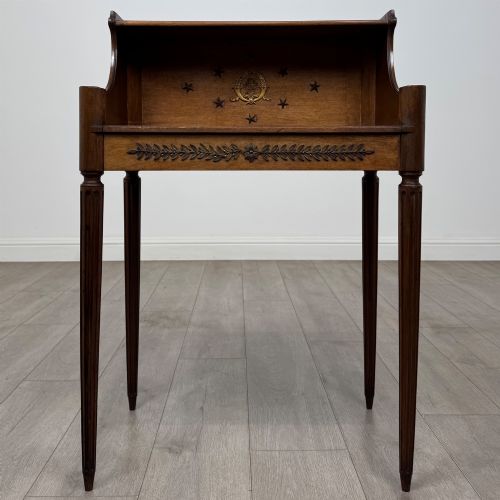
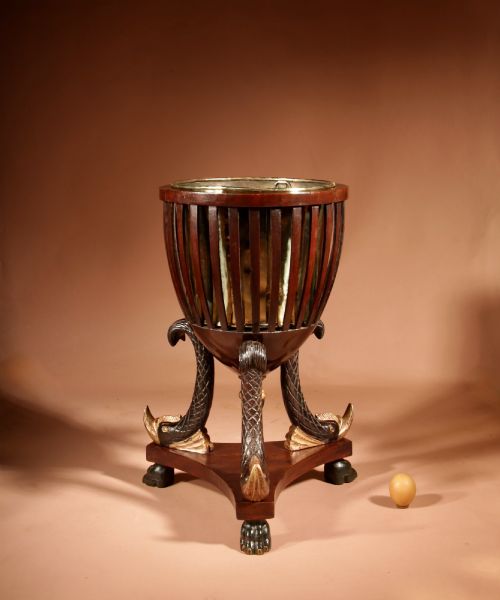
Beyond traditional plant holders, the inventory includes allied forms such as side tables, wine coolers, gueridons, and pedestals. These pieces share common structural traits, utilising metal mounts and galleries to secure planters or display objects safely atop timber or stone columns.
How they were made
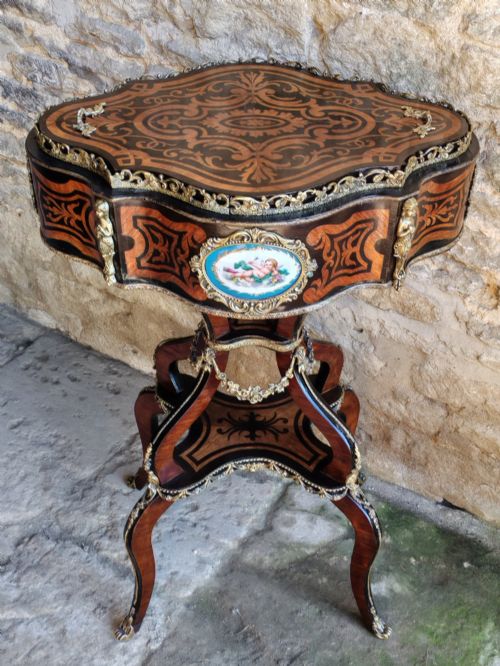
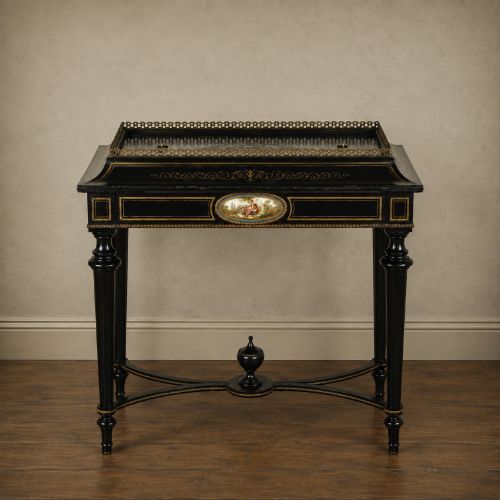
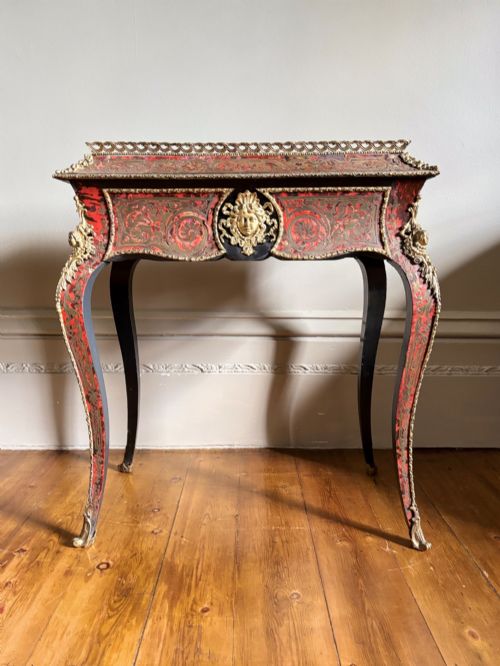
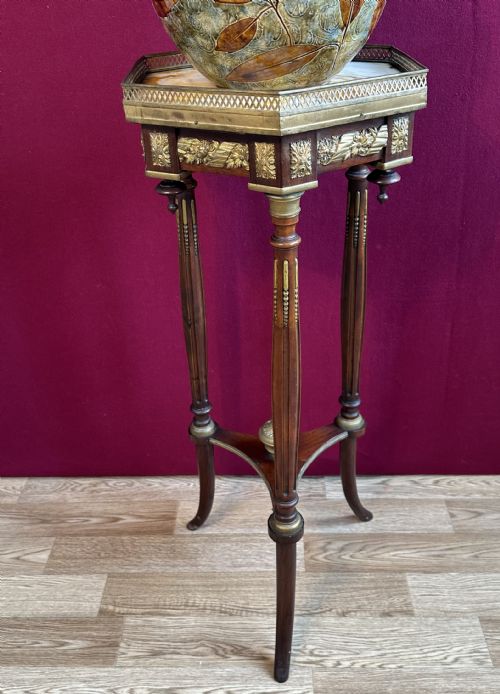
Construction relies heavily on structural hardwoods like mahogany, walnut, satinwood, and ebonised wood, frequently enhanced by intricate marquetry, parquetry, or brass inlay. Ormolu and gilt brass mounts provide structural accents and decorative borders, framing the timber and highlighting the joinery.
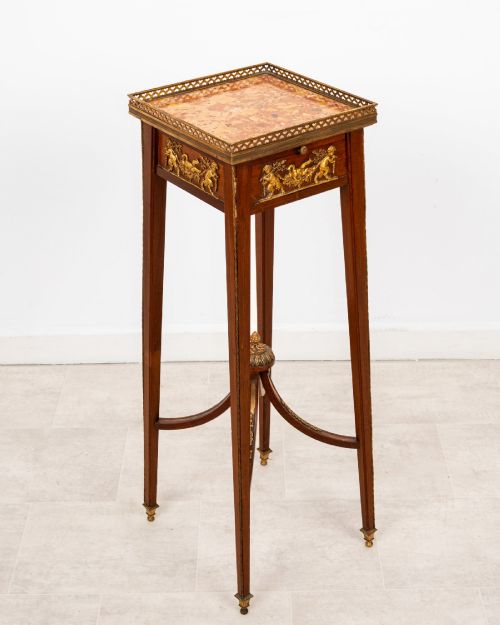
Insets of white, rouge, or dark marble, onyx, and occasionally painted porcelain plaques or tiled surfaces form the practical tops designed to withstand moisture from plants. These stone or ceramic slabs are typically secured with raised brass galleries or pierced bronze mounts to prevent pots from sliding.
Materials across these listings span brass, ormolu, marble, onyx, and various timbers including mahogany, walnut, satinwood, and ebonised wood.
What varies in quality
Quality rests in the crispness of the brass casting and the depth of the chasing on ormolu mounts, where finer pieces display sharp relief and hand-finished detail rather than smooth, factory-cast uniformity. The integration of materials also dictates standing value, distinguishing simple turned frames from elaborate stands featuring detailed parquetry, inlaid veneers, and heavy bronze mounts.
The choice of top surface signals the grade of the piece, with solid marble or onyx slabs and hand-painted porcelain plaques sitting at the higher end of the scale compared to standard timber tops. Additionally, the rigidity of the multi-tiered structure and the precision with which brass galleries fit the stone or wood reveal the standard of workshop assembly.
François Linke
The French Brass Plant Stand Glossary
- Jardiniere
- An ornamental stand or container specifically designed to hold plants or flowers. These items often incorporate waterproof metal liners or inset trays.
- Ormolu
- Gilt bronze or brass mounts applied to furniture and decorative objects. The technique gives a rich gold-coloured finish that resists tarnishing.
- Gueridon
- A small French table supported by one or more columns or figures. They frequently feature round marble tops surrounded by pierced brass galleries.
- Etagere
- A piece of furniture consisting of open shelves for displaying small objects. In French designs, these tiers are often supported by brass columns.
- Boulle
- A type of marquetry using brass and tortoiseshell inlaid into wood. It was popularised during the reign of Louis XIV and revived in later centuries.
French Brass Plant Stand: Frequently Asked Questions
What is a french brass plant stand used for?
These stands are primarily built to hold potted plants, ferns, or floral arrangements off the floor. The waterproof tops and raised metal galleries protect surrounding surfaces from moisture and keep pots secure.
Beyond botanical use, they function well as display surfaces for decorative objects, lamps, or small sculptures. Their compact footprints make them versatile additions to corners and narrow hallways.
Are these plant stands sturdy enough for heavy pots?
Most antique stands are structurally robust, utilising dense hardwoods and heavy brass or bronze frames to support weight. The addition of stone slabs like marble or onyx provides a stable, solid base for larger planters.
However, delicate etageres or small occasional tables with slender legs are better suited for lighter decorative arrangements rather than massive terracotta pots. Checking the rigidity of the joints helps determine safe weight limits.
How do I care for marble and brass?
Clean marble tops using a damp cloth and mild, pH-neutral soap, avoiding acidic cleaners that can etch the polished stone surface. Promptly wipe away standing water to prevent staining.
Dust brass mounts gently with a soft dry cloth to preserve their patina, steering clear of harsh metal polishes that can strip original gilding. Waxing the timber elements periodically keeps the wood nourished.