




French Brass Hearth Screen
These french brass hearth screen examples combine practical spark protection with ornate metalwork, bringing decorative warmth to a fireplace.
French Brass Hearth Screen
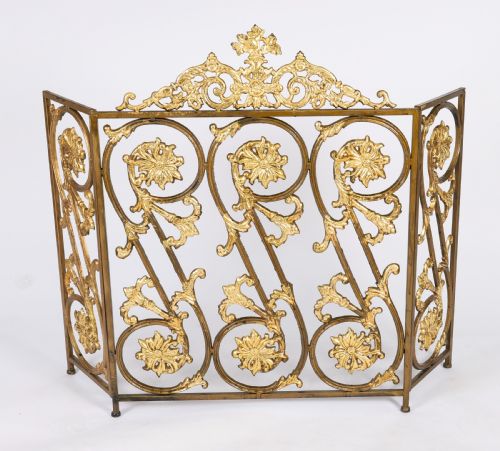
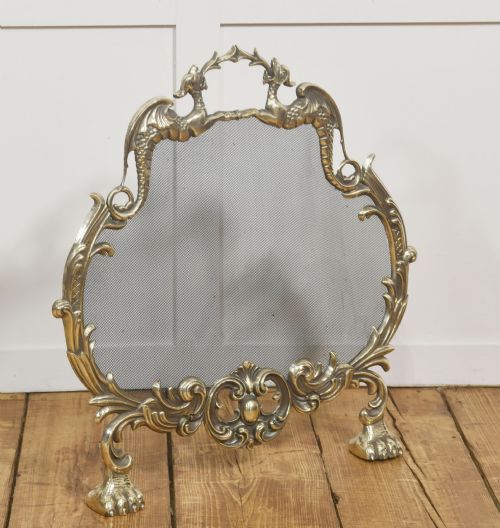
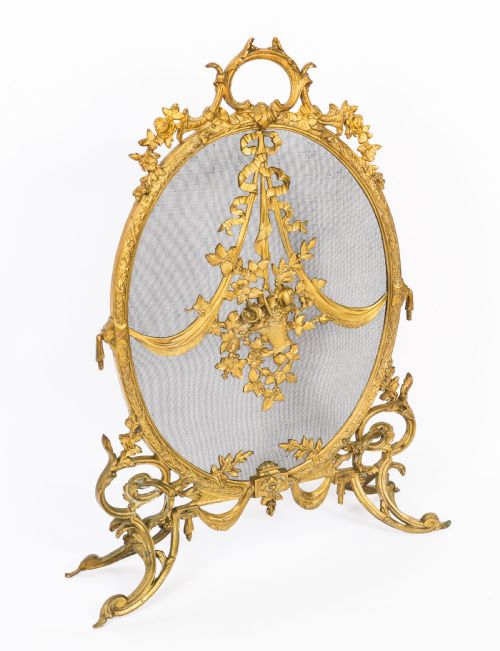
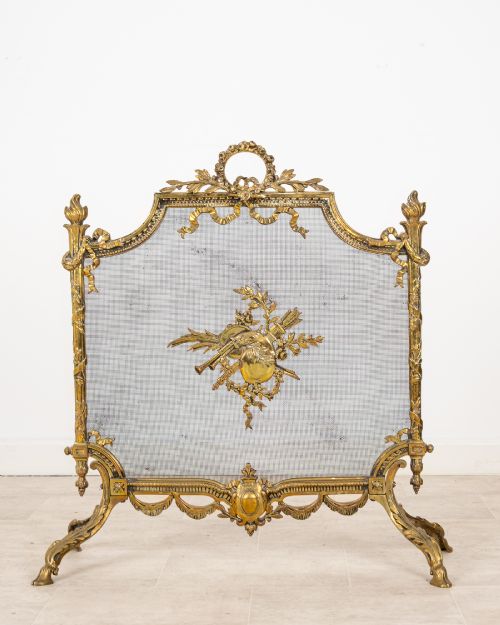
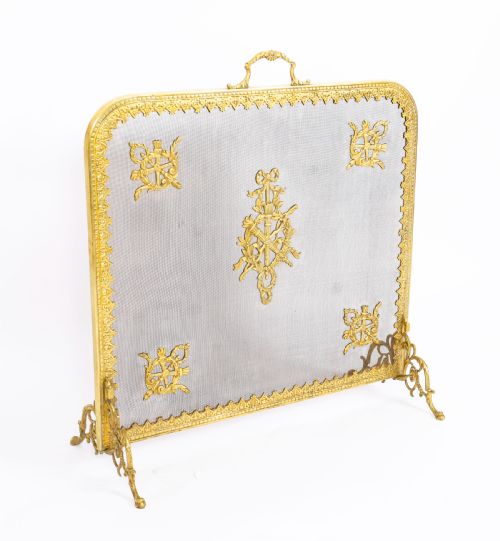
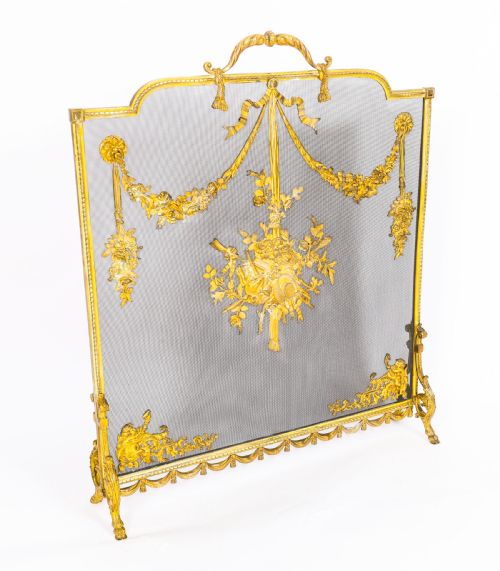
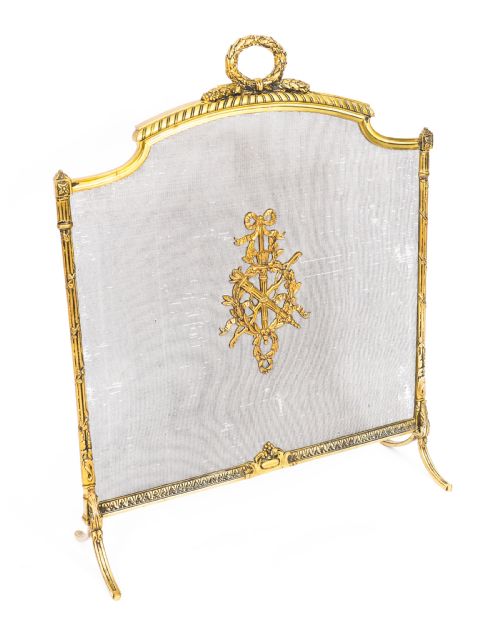
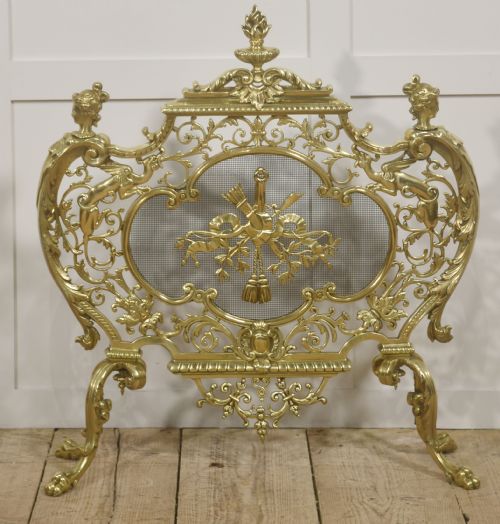
A french brass hearth screen acts as a decorative guard placed before an active fireplace to catch stray sparks. These pieces emerge in various revival styles including French Rococo Revival, Louis XVI, and French Empire Revival forms.
Materials and construction
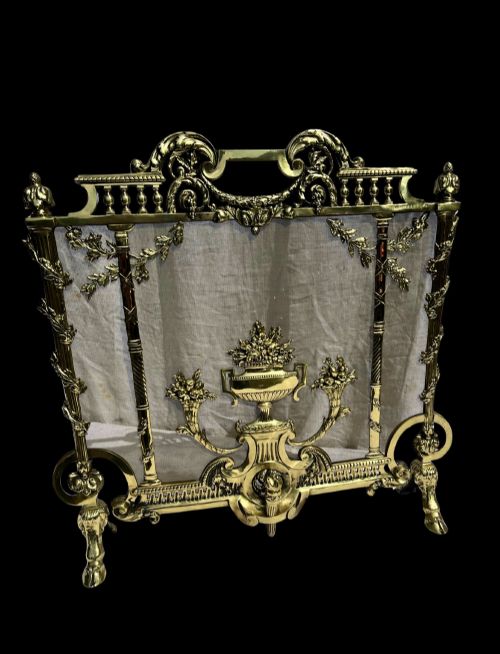
Workshops utilise cast brass, gilt bronze, and ormolu to build substantial frames adorned with intricate scrollwork, floral motifs, and classical trophies. Many examples incorporate fine wire mesh or steel mesh panels fitted securely within the metal framework.
Makers employ piercing and casting techniques to achieve elaborate openwork patterns, whilst gilding provides a bright surface finish. Folding multi-panel variations utilise integrated hinges that allow the guards to adjust their width.
The listings show pieces spanning the Victorian era through the early twentieth century, constructed from brass, wire mesh, and gilt bronze.
Assessing craftsmanship
The standard of a french brass hearth screen depends on the depth and crispness of the cast ornamentation. Superior examples display sharply defined floral, musical, or classical trophy details rather than softened or flattened casting marks.
Substantial weight and sturdy hinge construction separate better pieces from lighter alternatives. The quality of the mesh integration and the richness of the original gilding or bronze patination further distinguish finer items.
The French Brass Hearth Screen Glossary
- Gilt bronze
- Copper alloy covered with a thin layer of gold, providing a durable metallic sheen. This material appears frequently in nineteenth-century decorative fireplace accessories.
- Ormolu
- Synonym for gilded bronze used extensively in French furniture and metalwork mounts. The technique creates a rich, golden appearance on ornamental frames.
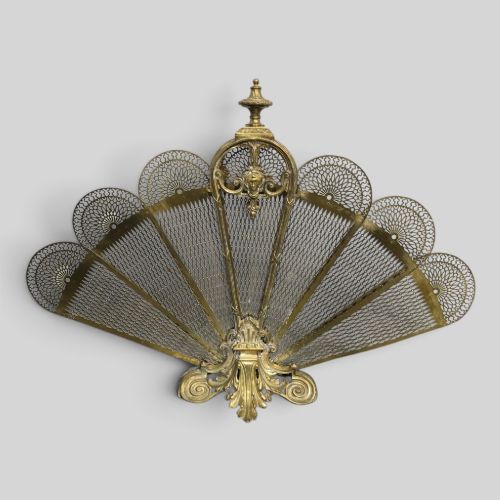
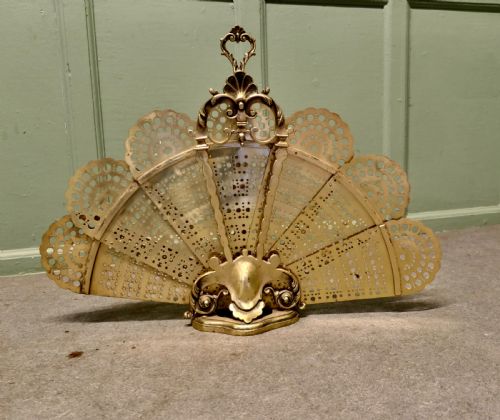
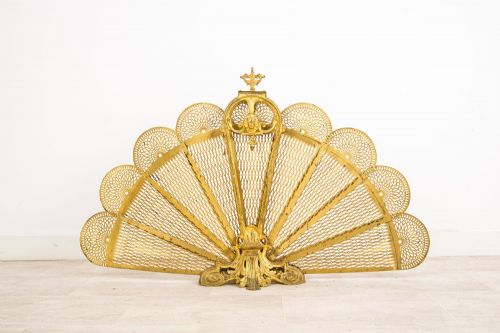
- Peacock fan screen
- A folding guard featuring multiple metal blades that spread outward like a tail. These expand to block the hearth opening and fold flat when not in use.
- Rococo revival
- A nineteenth-century design movement mimicking the asymmetrical scrolls and shell motifs of the eighteenth century. This style dominates many nineteenth-century hearth guards.
- Spark screen
- A fine mesh barrier designed to catch embers escaping from an open fire. These functional panels sit behind the decorative frame.
French Brass Hearth Screen: Frequently Asked Questions
How do I clean a brass fire screen?
Dust the metal gently with a soft dry cloth to remove surface particles.
Avoid abrasive polishes that might strip remaining gilt layers or alter the historic bronze patination.
Can I use these screens with a real fire?
Most pieces feature mesh panels specifically intended to catch sparks and embers from active hearths.
Verify that the folding mechanisms and mesh remain secure before placing the guard near high heat.
What is a peacock fire screen?
This design consists of overlapping metal segments that pivot from a central base to form a fan shape.
Users can expand the panels to cover wide fireplace openings or collapse them for compact storage.
How do I identify a 19th-century piece?
Nineteenth-century examples frequently exhibit heavy cast brass or gilt bronze frames with hand-chased detailing.
Look for specific revival motifs such as Louis XVI styling or classical trophies characteristic of that era.