
French Brass Chandelier Drops
French brass chandelier drops bring together gilt metalwork and cut glass in decorative hanging light fittings.
French Brass Chandelier Drops
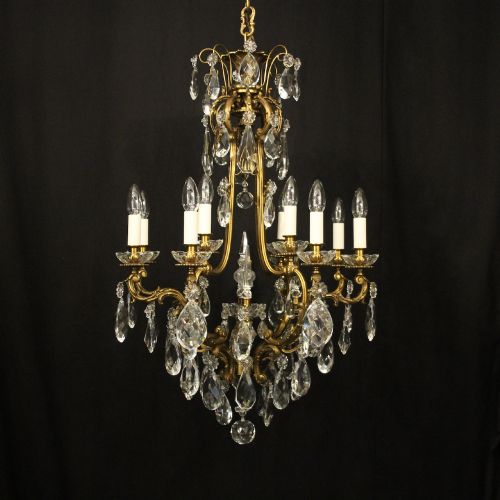
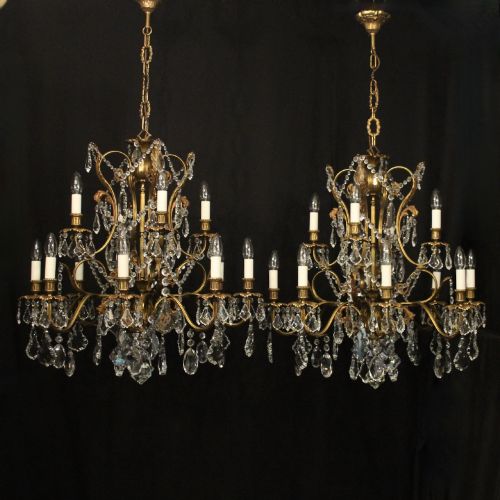
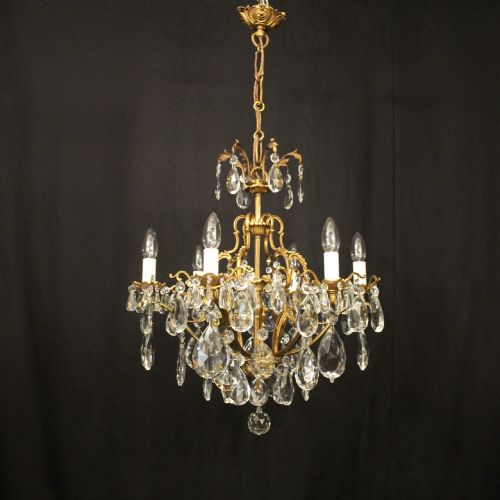
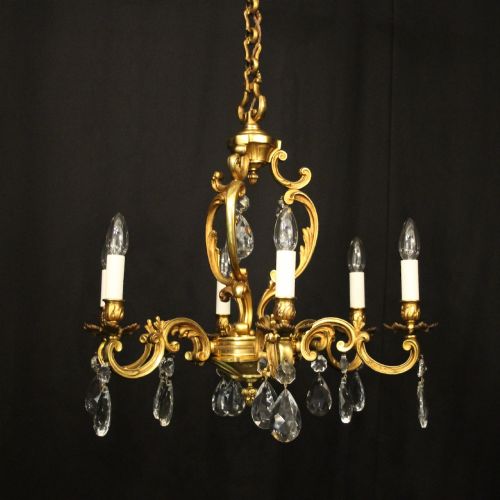
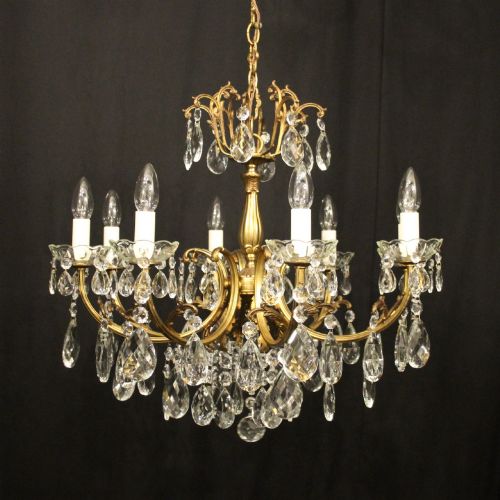
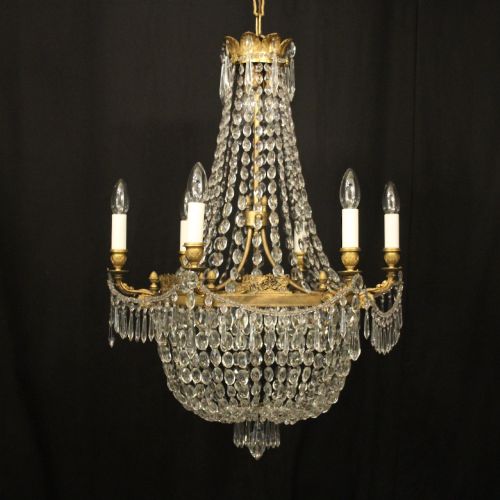
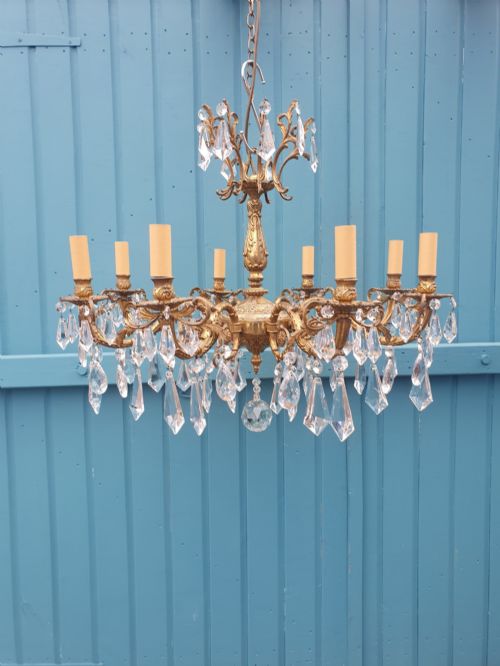
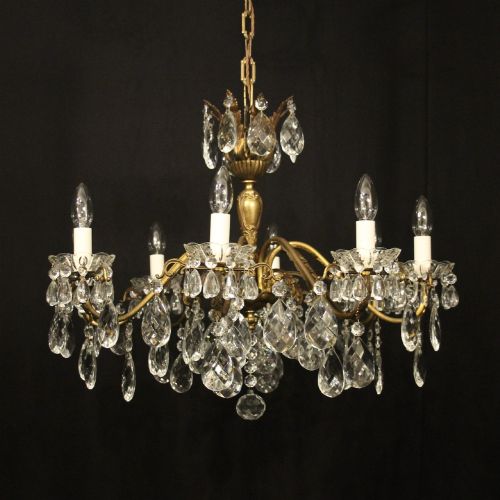
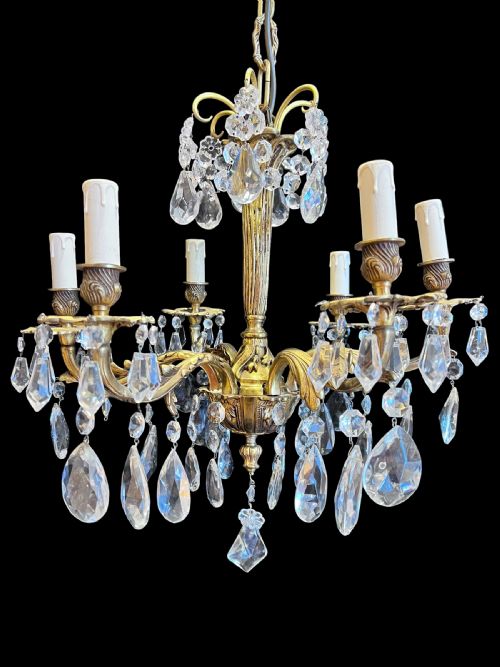
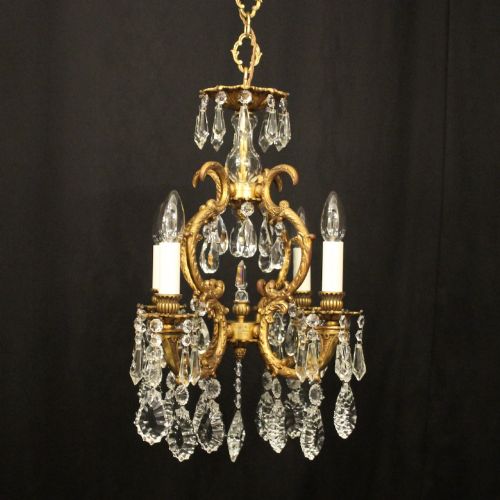
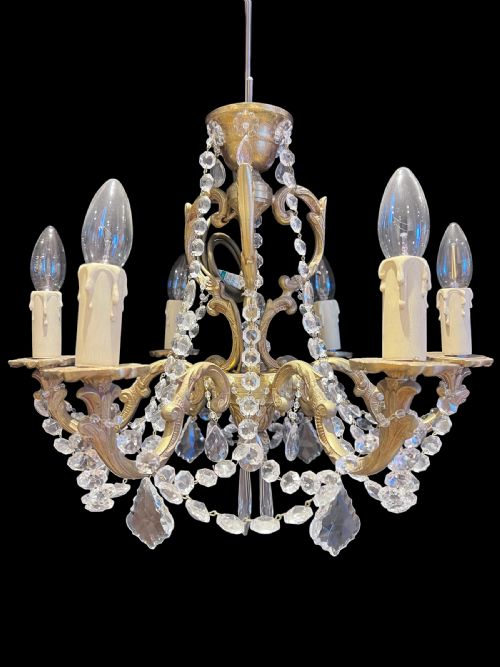
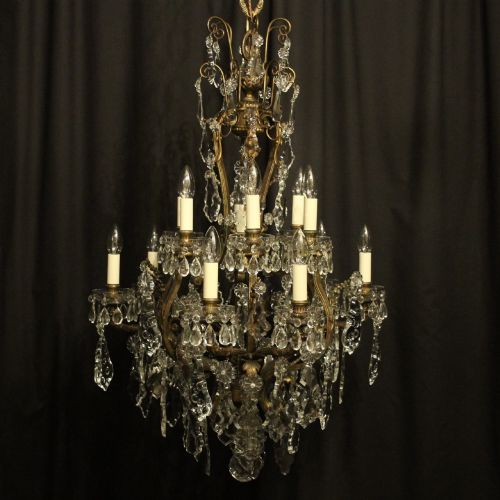
French brass chandelier drops comprise lighting fixtures and hanging components spanning the nineteenth century, Edwardian era, and the early decades of the twentieth century. These pieces encompass multi-light chandeliers, wall sconces, and ceiling lights styled in French Empire, Rococo Revival, and Chateau traditions.
Materials and construction
Makers utilised cast and formed brass, gilt bronze, and gilded brass to build structural frames, arms, and mounts. These metal elements provide the foundational skeleton for complex multi-light ceiling fixtures and wall sconces.
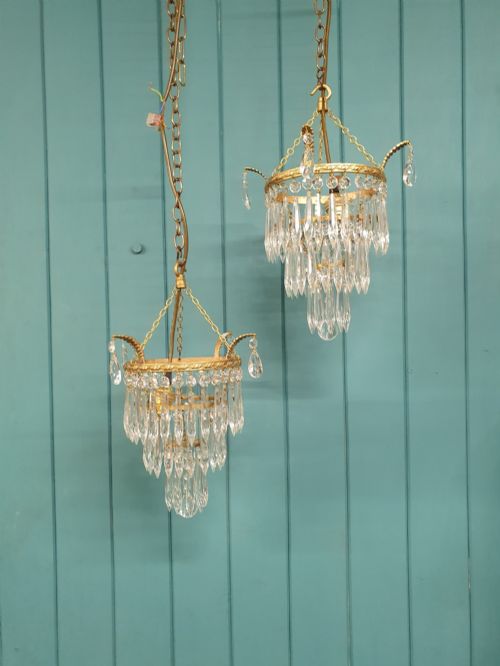
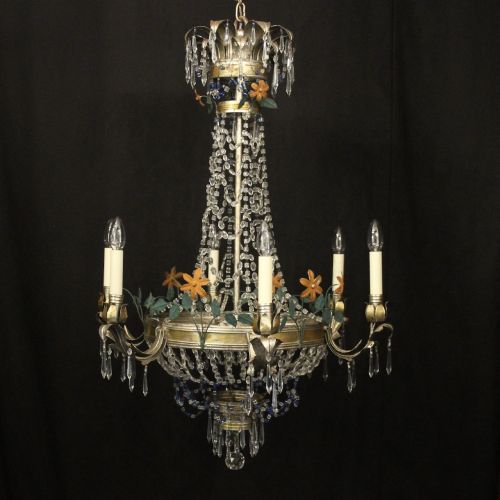
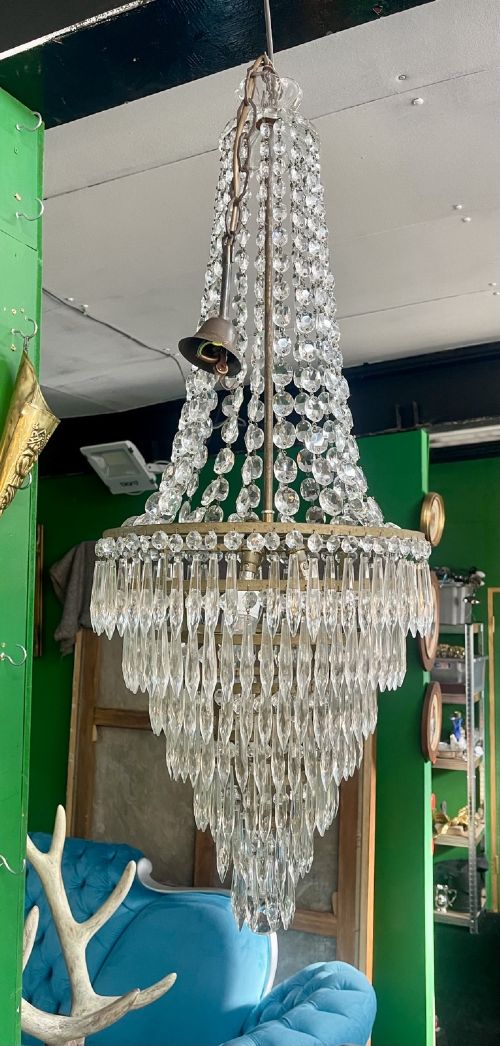
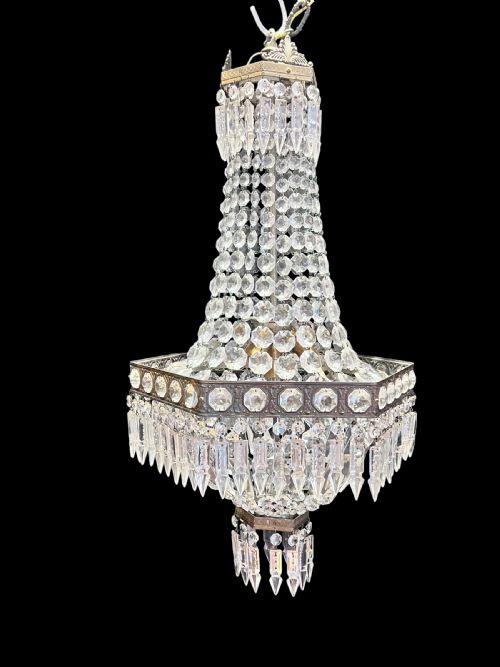
Glass and crystal elements, including cut glass lustres, prisms, spikes, and coloured crystals, are suspended from the metal frames using wire connections. Configurations such as tent and waterfall, birdcage, and bag designs integrate numerous individual glass drops to refract light.
Some chandeliers include winged cherub figures keeping watch above the candle arms.
Distinctions in quality
Quality separates fixtures by the precision of the metalwork casting and the depth of the gilding on bronze and brass frames. Finer examples display crisper detail in decorative elements such as leaf motifs and cherub figures.
The clarity and cutting of the glass and crystal components dictate the upper tiers of the range. Hand-cut crystal prisms and coloured crystal drops with sharp facets create superior light refraction compared to simpler pressed glass alternatives.
The French Brass Chandelier Drops Glossary
- Tent and waterfall
- A lighting configuration where a dome or tent of strung crystals at the top cascades downwards into a wider waterfall of hanging drops.
- Bag chandelier
- A style featuring a flattened or rounded bag-like net of crystals suspended beneath a brass or gilt frame.
- Lustre
- A cut glass pendant or hanging droplet suspended from a chandelier to reflect and multiply light.
- Gilt bronze
- Metal cast in bronze and treated with a gold-coloured finish, often referred to as ormolu in period pieces.
- Spike
- A linear, pointed cut glass crystal drop hung in clusters from Edwardian and early twentieth-century frames.
French Brass Chandelier Drops: Frequently Asked Questions
How do I hang a heavy French brass chandelier?
These lighting fixtures require secure ceiling joist attachment due to the combined weight of cast brass frames and dense crystal drops. Professional installation by an electrician ensures the electrical wiring safely supports multi-light configurations.
Larger chandeliers benefit from steel ceiling hooks rated specifically for the total weight of the metal and glass components. Adjusting the suspension height depends on ceiling clearance and the room function.
What periods do these chandeliers come from?
The listings span the nineteenth century, Edwardian period, and the 1920s and 1930s. Design influences draw heavily from French Empire and Rococo styles.
Distinguishing between periods involves examining the casting techniques of the brass and the specific cuts of the crystal drops. Edwardian pieces often include smaller spike and bag designs, while nineteenth-century items showcase heavier gilt bronze frames.
How should I clean crystal chandelier drops?
Maintenance involves gentle cleaning of individual glass and crystal lustres while they remain attached to the frame, or removing them for soaking in warm soapy water. Using a specialist glass cleaner prevents residue buildup on the cut facets.
Brass frames require dusting with a soft cloth to protect the gilt finish without abrasive chemical contact. Regular upkeep maintains the light refraction of the glass drops.