



French Brass and Glass Box
These french brass and glass box pieces are gleaming repositories for personal treasures, combining polished metalwork with clear panes to hold jewellery and keepsakes.
French Brass and Glass Box
When you search for a french brass and glass box, you encounter items designed to display and protect small valuables, trinkets, and personal items. These pieces span the nineteenth century, including Victorian and Napoleon III periods, drawing upon French Rococo Revival and Belle Epoque styles.
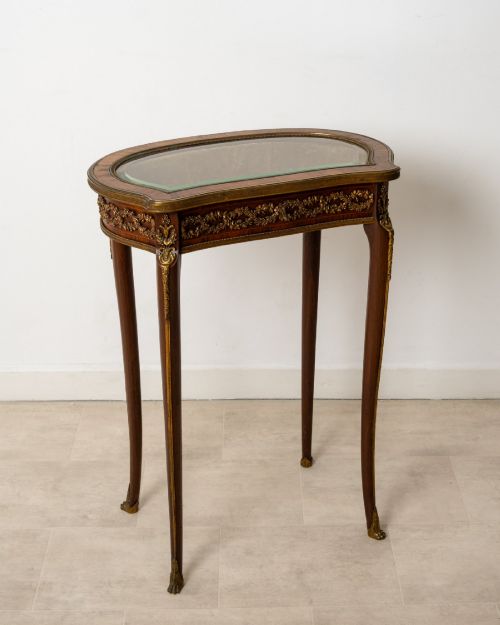
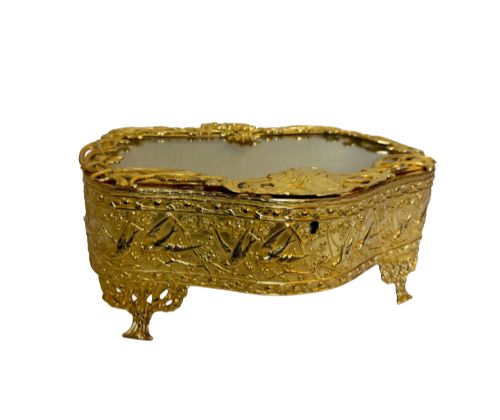
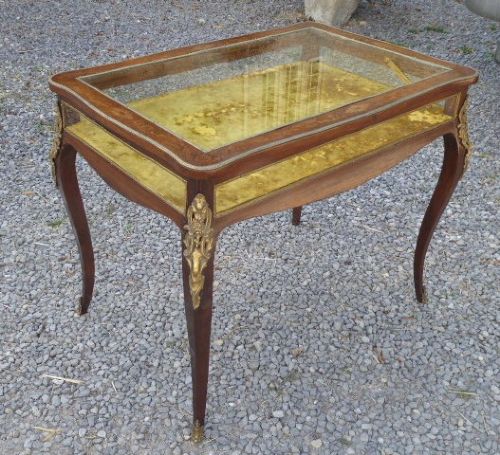
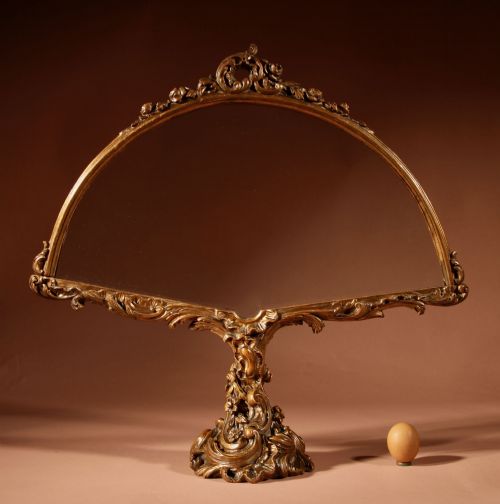
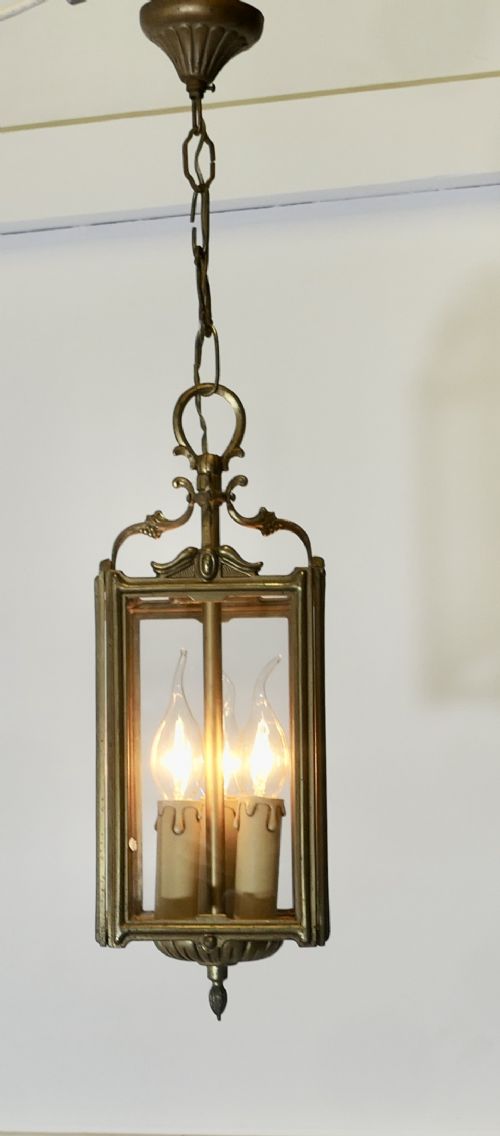
The selection ranges from smaller trinket and jewellery boxes to larger bijouterie tables, display cases, and caskets housing perfume bottles. Many examples feature glazed panels framed in brass, ormolu, and gilt metal, often resting on wooden chassis made of kingwood, mahogany, or rosewood.
You also find specialised items like desk accessories, clocks, and tantalus sets that incorporate the characteristic glass and metal construction. The domestic role of these items was to showcase prized possessions on dressing tables and drawing room cabinets.
Materials and construction
Makers constructed the structural framework of these items using cast brass, ormolu, and gilt metal to hold fitted glass panes securely. Woods such as mahogany, kingwood, and rosewood frequently form the base or secondary framing, sometimes decorated with marquetry, inlay, or Boulle work.
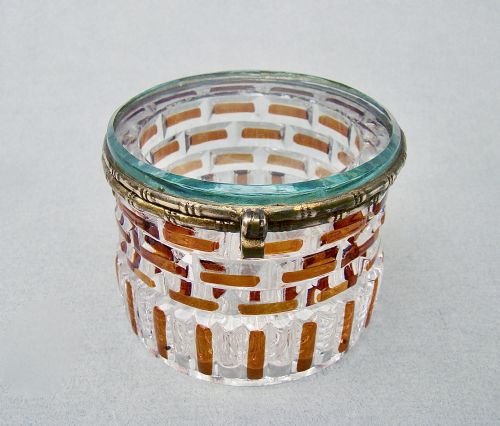
Glass elements include clear, amber, and etched panels, alongside specialised components like Baccarat crystal bottles and enamelled porcelain details. Metal mounts are chased and gilded, joining glass walls to sturdy wooden or metal bases with internal linings of velvet or silk.
Several boxes contain their original Baccarat perfume scent bottles, ready for a scent that vanished over a century ago.
Assessing quality and craftsmanship
The standard of a piece depends on the weight and crispness of the brass or ormolu mounts, where finely chased foliage and ornate cast details separate superior items from simpler production. Heavier gauge metalwork and thick bevelled glass panes indicate careful manufacture.
Internal elements such as original silk or velvet linings, intact hinges, and tight joinery in the underlying mahogany or kingwood cabinetry distinguish finer examples. The presence of specialised glass, such as Baccarat crystal scent bottles within a casket, elevates the standing of the object.
The French Brass and Glass Box Glossary
- Bijouterie table
- A glass-topped display table used for exhibiting small ornaments, medals, and jewellery. These tables often stand on slender cabriole legs with gilt metal mounts.
- Ormolu
- Gilded bronze used extensively for decorative mounts on furniture and decorative objects. The technique involves applying a gold amalgam to bronze before heating.
- Boulle
- A form of marquetry utilising brass and tortoiseshell inlaid in intricate patterns. It appears on the wooden components of nineteenth-century French desk sets and caskets.
- Napoleon III style
- A nineteenth-century French aesthetic characterised by eclectic revivals of past royal styles, particularly Louis XIV, XV, and XVI designs. It favours rich materials and elaborate ornamentation.
- Tantalus
- A locking wooden or metal stand holding decanters visible behind bars. This design prevented unauthorized access to liquor while displaying the bottles.
French Brass and Glass Box: Frequently Asked Questions
What is a bijouterie table?
A bijouterie table is a raised display case with glazed top panels supported on legs, designed for showing off small collections of jewellery and trinkets.
These pieces were placed in nineteenth-century salons so guests could inspect precious objects without handling them directly.
How do I clean the glass and brass?
Clean the glass panes with a soft cloth and mild glass cleaner, taking care to keep moisture away from the metal mounts and wooden frames.
Polish the brass or ormolu gently with a dry microfibre cloth to avoid removing the surface gilding.
Are these boxes fragile?
The glass panels and delicate brass hinges require careful handling, particularly when moving larger caskets or display tables.
Placing them on stable, level surfaces protects the structural joints and prevents the glass from shifting in its frame.
How do I date a piece?
Dating relies on stylistic clues like Napoleon III or Art Nouveau motifs, combined with construction methods and wood types.
Nineteenth-century examples often display hand-chased ormolu mounts and specific lock mechanisms characteristic of the period.