

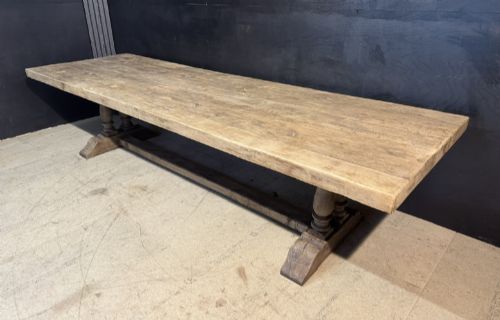
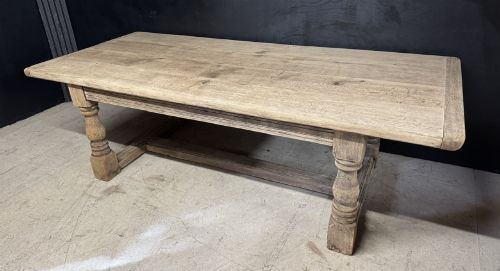
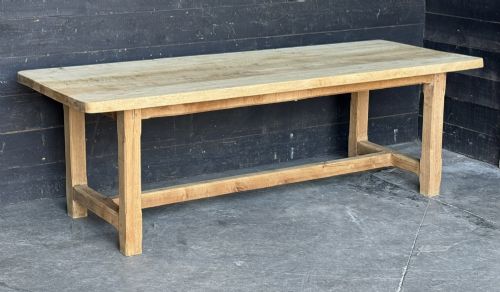
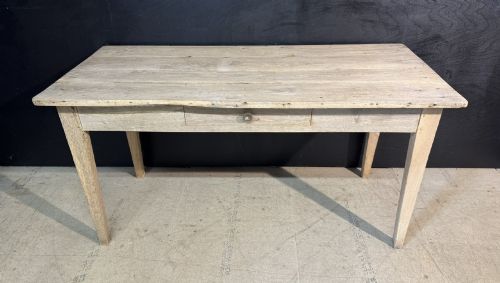
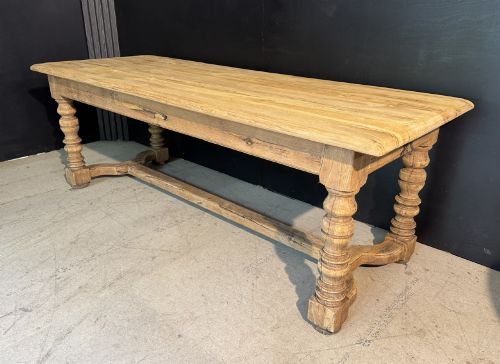


French Bleached Oak Farmhouse Dining Table
A French bleached oak farmhouse dining table brings rustic warmth and provincial character to any interior scheme.
French Bleached Oak Farmhouse Dining Table
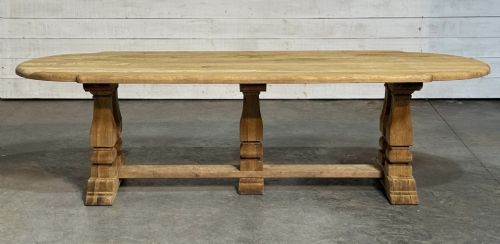
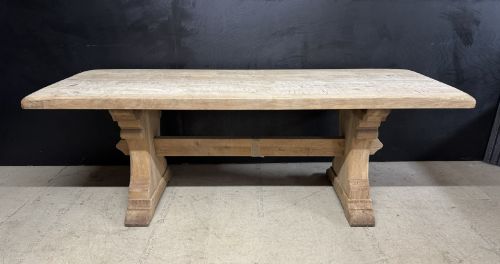
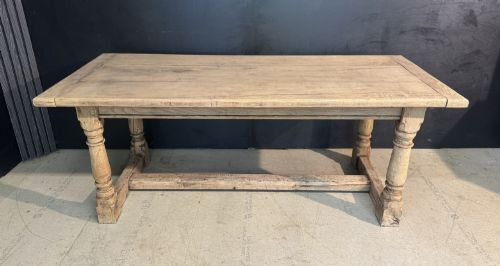
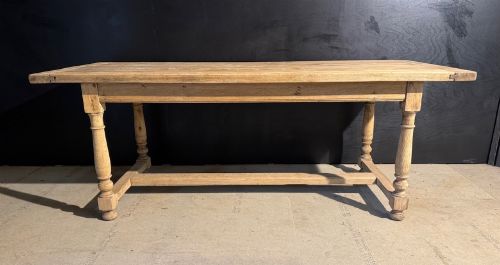
A French bleached oak farmhouse dining table is a substantial dining or kitchen surface originating from provincial France. These pieces typically date from the nineteenth century or around 1920, reflecting long-established regional woodworking traditions.
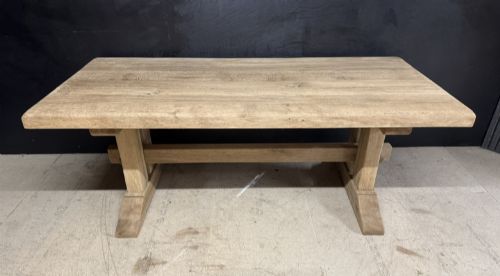
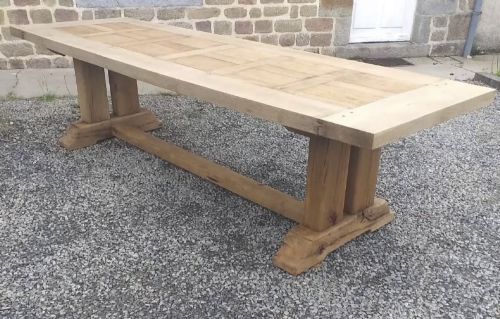
The versions most commonly met on this page combine sturdy oak construction with a softened, lime-washed or bleached surface tone. They manifest in rustic farmhouse, French provincial, and French country styles, often built on a large scale to accommodate family gatherings.
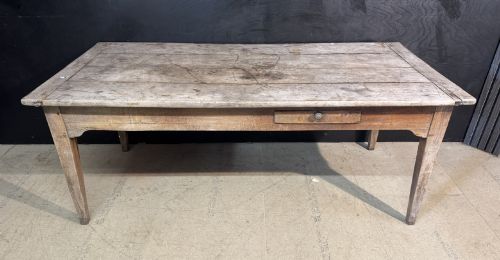
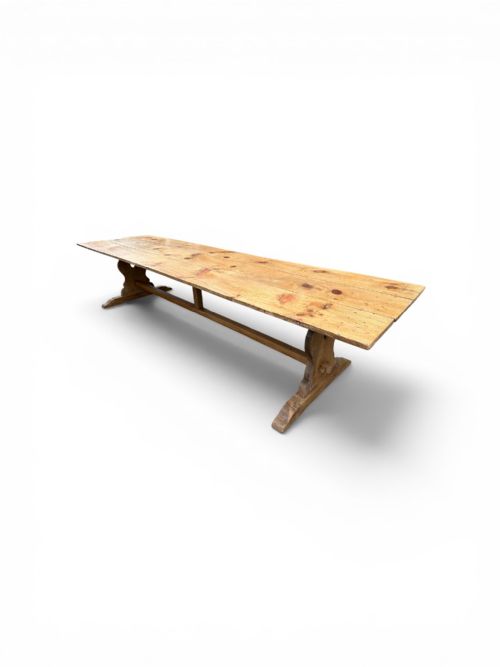
Beyond standard dining tables, related forms include console tables, scrub top kitchen tables, and trestle designs incorporating pine, iron, or timber elements. Some examples feature practical additions such as drawers integrated into the apron.
How they were made
Construction relies primarily on solid oak and timber, frequently supported by internal pine components or metal hardware. Cabinetmakers built these tables to withstand daily domestic use, employing heavy planks for tops and robust stretchers for stability.
The characteristic light finish is achieved through bleaching or scrubbing the timber, which lightens the natural dark grain of the oak. This treatment strips away old surface dirt while preserving the durable qualities of the underlying wood.
French Bleached Oak Farmhouse Dining Table Retail Price Guide 2026
Typical asking prices for french bleached oak farmhouse dining table among the pieces listed under this phrase on Sellingantiques today, from the lower quarter to the upper quarter. They describe what is for sale here now, not the wider market.
Some nineteenth-century kitchen tables carry the faint, permanent stain of spilled red wine from long-forgotten French harvests.
What varies in quality
Quality in these tables rests upon the selection of timber and the integrity of the original construction. Solid oak examples with thick tops and well-proportioned legs stand apart from lighter builds or those incorporating mixed secondary woods.
The execution of the bleached finish also determines the overall appeal, with superior pieces showing an even, light tone that enhances the grain without masking the natural texture of the historic timber.
The French Bleached Oak Farmhouse Dining Table Glossary
- Bleached oak
- Oak timber that has been chemically or physically treated to lighten its natural colour. This process produces a pale, scrubbed appearance popular in provincial interiors.
- Scrub top
- A plain wooden tabletop left unvarnished and pale from frequent vigorous washing. It is a traditional feature of kitchen and farmhouse tables.
- Trestle table
- A table consisting of two or more support frames connected by a horizontal beam. This design maximises legroom along the length of the surface.
- Provincial
- Pertaining to the regions of France outside Paris. It denotes furniture made locally for country homes rather than urban salons.
- Apron
- The structural wooden framing mounted beneath the tabletop. It connects the legs and occasionally houses integrated drawers.
French Bleached Oak Farmhouse Dining Table: Frequently Asked Questions
How do I clean a bleached oak table?
Wipe the surface regularly with a slightly damp cloth to remove everyday dust and debris. Avoid harsh chemical cleaners that can strip the pale treatment from the timber.
For stubborn marks, use a mild soap solution and dry the area thoroughly afterwards. Applying a clear wax occasionally helps protect the wood from accidental spills.
Are these tables suitable for daily dining?
These pieces were built specifically for heavy domestic use in kitchens and dining rooms. Their solid construction handles daily meals and family gatherings with ease.
Using placemats and coasters helps prevent heat rings and moisture damage on the antique surface. The robust timber actually gains character from gentle signs of everyday life.
How can I tell the period of a table?
Dating relies on examining the construction methods, tool marks, and hardware used in the frame. Nineteenth-century examples often display hand-cut joints and greater timber patination.
Pieces from around 1920 generally reflect traditional provincial designs while maintaining slightly more uniformity in their manufacturing. Comparing the leg profiles and stretcher arrangements also aids identification.
Do these tables fit modern dining spaces?
The neutral, light tone of bleached oak allows these tables to blend seamlessly into contemporary interiors. They provide a warm, tactile contrast against minimalist or modern decor.
Their generous proportions make them ideal focal points for open-plan kitchens or spacious dining rooms. Pairing them with contrasting chairs creates an eclectic, lived-in aesthetic.