



French Bleached Oak Desk
A French bleached oak desk offers a pale, weathered surface that grounds a room without heavy dark timber.
French Bleached Oak Desk
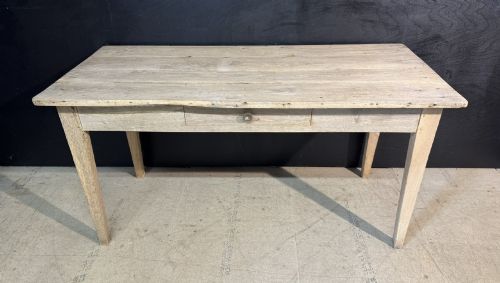
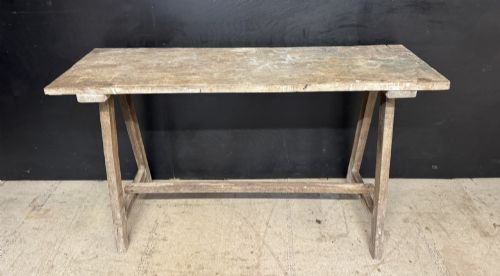
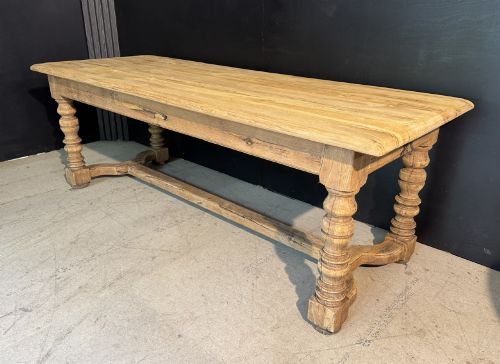
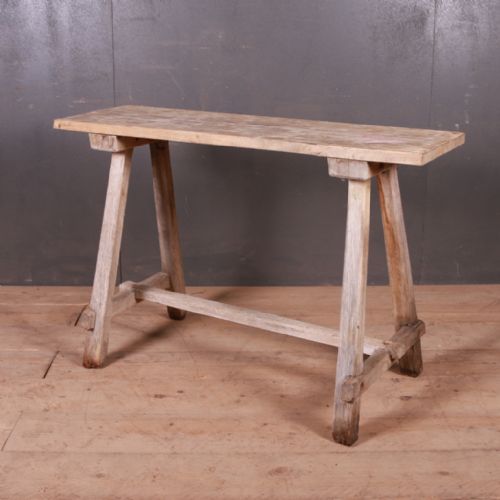
When you search for a french bleached oak desk, you are looking at sturdy wooden tables and trestles adapted for writing and daily work. The examples seen here span the nineteenth century and the early twentieth century, carrying labels like French provincial, rustic farmhouse, and French country industrial.
You are most likely to meet substantial dining tables, console tables, and trestle tables rather than purpose-built bureau desks with fitted pigeonholes. These forms arrive from French provincial and country traditions, where solid oak and timber frames served heavy daily use in farmhouses and laundries before finding new life as workspaces.
How they were made
Makers built these pieces primarily from solid oak and native timber, sometimes combining pine for secondary framing and iron or metal for structural reinforcement. The surfaces underwent a bleaching process to lighten the dark grain of the wood while retaining the underlying texture.
Construction methods rely on traditional joinery suitable for heavy tables, incorporating trestle supports, thick timber tops, and occasionally integrated drawers. Iron and metal braces provide additional stability to the substantial wooden frames.
French Bleached Oak Desk Retail Price Guide 2026
Typical asking prices for french bleached oak desk among the pieces listed under this phrase on Sellingantiques today, from the lower quarter to the upper quarter. They describe what is for sale here now, not the wider market.
What varies in quality
The distinction between ordinary utility tables and finer pieces rests in the balance of the proportions and the uniformity of the bleached finish. Superior examples maintain crisp lines in the timber and stable joints without excessive structural intervention.
The treatment of the oak surface defines the visual character, where an even bleached tone enhances the natural grain rather than masking it behind heavy pigment. The integration of functional elements like drawers demonstrates careful provincial craftsmanship.
The French Bleached Oak Desk Glossary
- Bleached oak
- Oak timber treated with chemical agents to lighten its natural dark colour while preserving the grain texture. This finish gives the wood a pale, weathered appearance.
- Trestle table
- A table consisting of two or more support frames connected by a horizontal beam or stretcher underneath a large top. This design provides maximum legroom along the length.
- French provincial
- Furniture styles originating from the regions of France outside Paris, combining rustic practicality with simple decorative shaping. These pieces reflect local craftsmanship and available timbers.
- Farmhouse table
- A large, sturdy wooden table designed for communal domestic labour and dining. They typically feature heavy timber tops and robust underframes.
French Bleached Oak Desk: Frequently Asked Questions
Are these tables originally designed as desks?
Most of these pieces originate as large farmhouse, laundry, or trestle tables rather than dedicated writing desks. Their generous surface area and sturdy height make them suitable for modern workspaces.
Buyers often adapt these large timber tables to serve as spacious desks in studies or open-plan offices.
How do I care for a bleached wood surface?
Bleached oak requires protection from excessive moisture and direct heat to prevent staining the lightened grain. Use coasters and avoid harsh chemical cleaners that might strip the treated finish.
Regular dusting with a dry cloth keeps the surface clean without altering the pale tone of the timber.
What periods do these pieces come from?
The listings on this page span the nineteenth century up to nineteen twenty. You will encounter pieces from eighteen eighty alongside later provincial examples.
These dates reflect the era of manufacture for traditional French tables that have subsequently undergone bleaching.
What materials are used besides oak?
While oak and bleached oak dominate, the construction frequently incorporates general timber, pine for internal components, and metal or iron for structural hardware. These mixed materials reflect the pragmatic building methods of provincial workshops.
The combination of oak tops with iron braces and pine framing ensures stability across large surface areas.