



French Beaded Basket Chandelier
These French beaded basket chandeliers combine brass, crystal, and cut glass to bring period illumination and refined sparkle to any room.
French Beaded Basket Chandelier
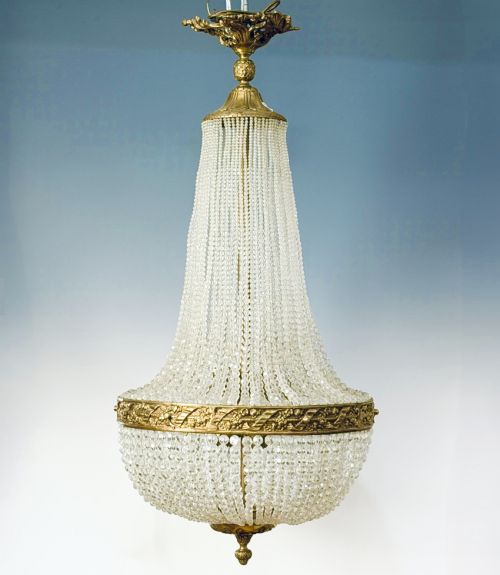
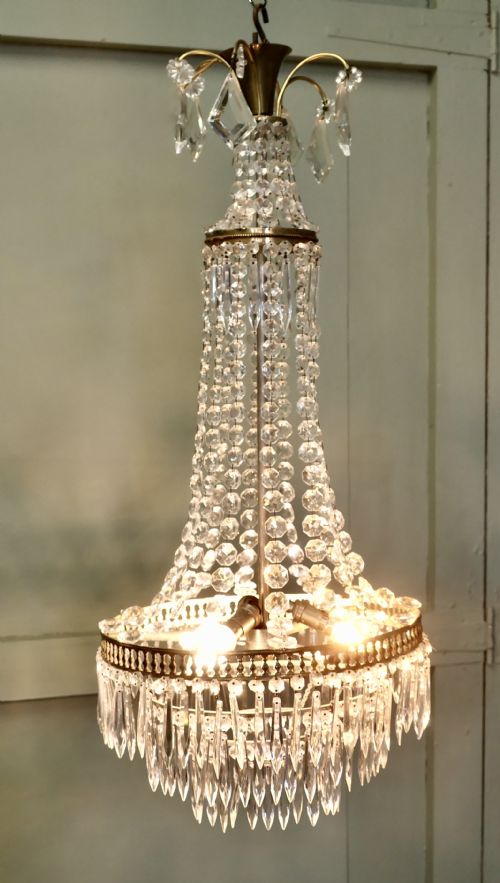
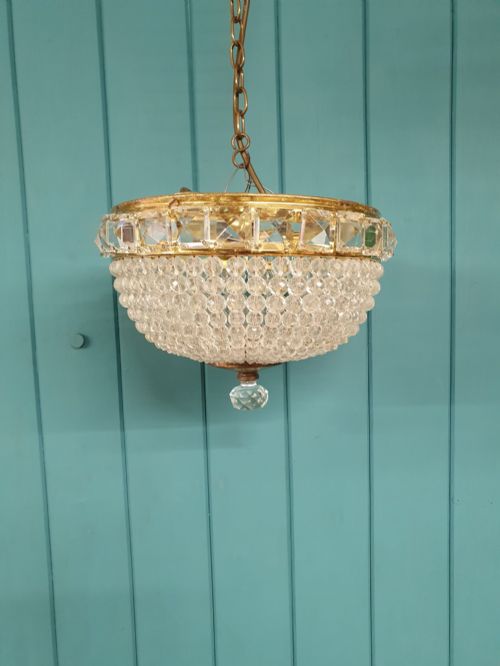
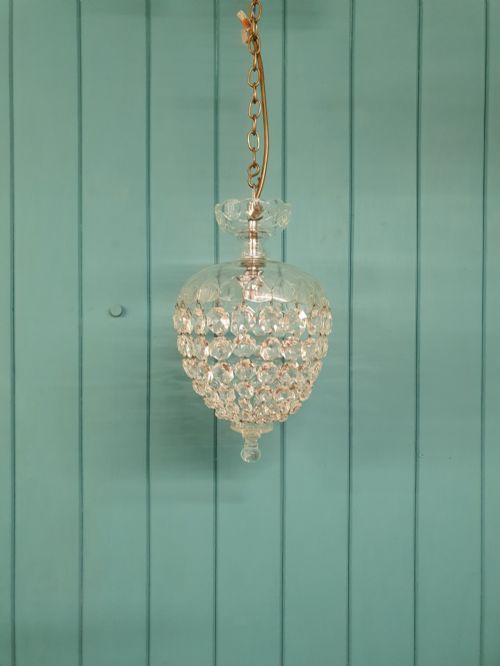
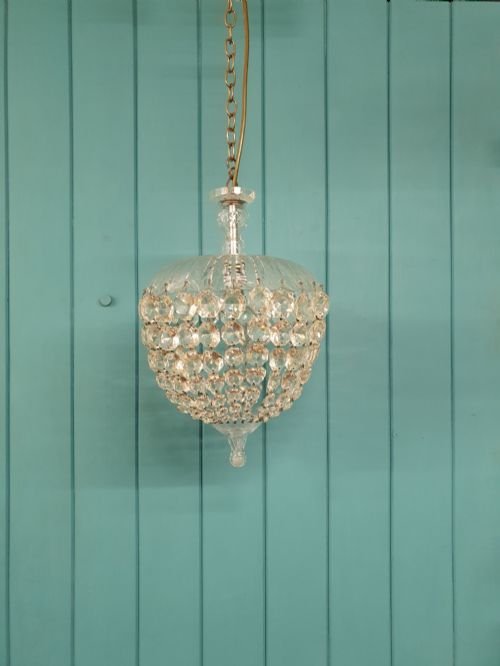
A french beaded basket chandelier provides a distinct form of period ceiling lighting, frequently found in Edwardian and early twentieth century examples alongside nineteenth century designs. These pieces often take the shape of dome top chandeliers, tapered bag chandeliers, or traditional basket forms.
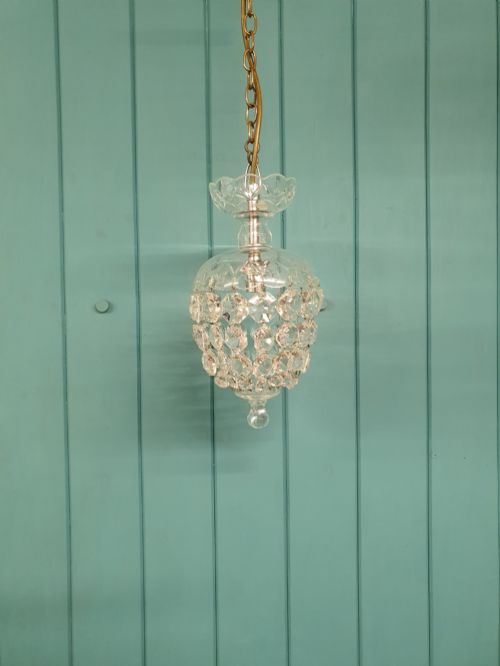
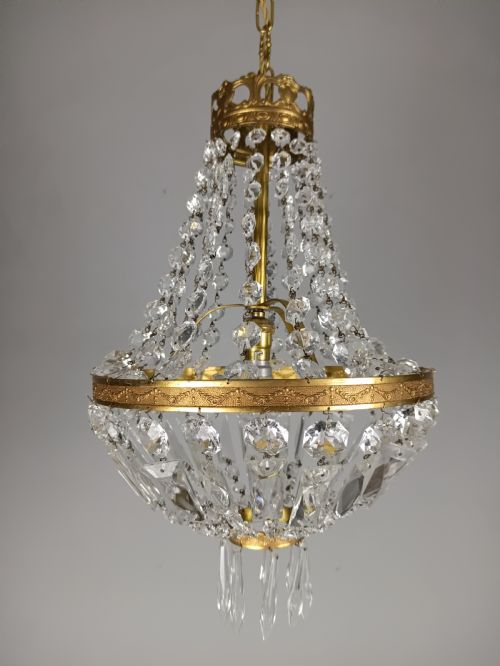
The selection ranges from compact small bag chandeliers measuring six inches to larger tent and waterfall configurations, embodying styles such as French Empire, French Chateau, and Regency. Buyers encounter variations including blue prisms, red drips, and Jasperware elements integrated into the metal frames.
How they were made
Maker workshops constructed the structural frames using brass, gilt brass, and gilt bronze to support the weight of the hanging elements. Metal armatures formed domes, tents, and baskets designed to hold numerous individual components securely in place.
Artisans wired cut glass, crystal beads, and glass prisms onto the metal framework using fine wire work. The combination of moulded glass drops and faceted crystals created layered waterfall and bag silhouettes that diffused the interior light.
French Beaded Basket Chandelier Retail Price Guide 2026
Typical asking prices for french beaded basket chandelier among the pieces listed under this phrase on Sellingantiques today, from the lower quarter to the upper quarter. They describe what is for sale here now, not the wider market.
Periods represented include nineteenth century, Edwardian, and the 1920s to 1930s.
What varies in quality
The fineness of the metalwork largely dictates the standard of a piece, with cast gilt bronze and heavy brass offering greater durability and sharper ornamental detail than simpler metal frames. Heavier mountings and robust structural wiring ensure the stability of intricate beadwork over decades.
The clarity and cut of the crystal elements create distinct visual differences across the range. Superior pieces utilise finely faceted cut glass and crystal that refract light more cleanly, sometimes featuring scarce touches of coloured glass like blue prisms or red drips.
The French Beaded Basket Chandelier Glossary
- Bag chandelier
- A lighting fixture featuring a flattened or rounded base where numerous glass beads hang tightly together in a pouch or bag shape. This style became particularly popular during the Edwardian era.
- Tent and waterfall
- A configuration where strings of beads form an upper tent shape rising to the ceiling, combined with a lower waterfall effect of cascading crystals. It defines classic French Empire styling.
- Gilt brass
- A brass base metal treated with a thin layer of gold or gilt finish to enhance its decorative sheen. It provides the warm metallic backdrop seen on many Edwardian and early twentieth century chandeliers.
- Cut glass
- Glass that has been mechanically ground and polished with facets to increase light refraction. These faceted drops hang from the frame to catch and scatter illumination.
- Dome top
- A rounded upper canopy structure forming the top tier of certain compact chandeliers. This shape frames the primary hanging beads beneath.
French Beaded Basket Chandelier: Frequently Asked Questions
How do I clean a beaded chandelier?
Maintenance requires careful hand wiping of individual glass beads and crystals while the fixture remains securely hung. Utilising a mild glass cleaning solution on a soft cloth prevents damage to the underlying brass or gilt metal framework.
Taking time to support each drop during cleaning ensures the delicate wire fixings do not strain or snap. Avoid submerging the entire frame, as moisture can degrade old wiring and fastenings.
What rooms suit a bag chandelier?
Compact bag chandeliers and small dome top pieces work effectively in hallways, bedrooms, or smaller reception spaces with lower ceilings. Their contained profile provides adequate period illumination without dominating the vertical space.
Larger tent and waterfall examples suit formal dining rooms or high ceilinged drawing rooms where their expansive drop can hang freely. Selecting the correct scale ensures the lighting fixture complements the proportions of the interior.
How do I date an antique chandelier?
Dating relies on examining the assembly techniques, metal composition, and the style of the glass beads. Edwardian and early twentieth century pieces frequently display specific brass casting methods and crystal cuts distinct from nineteenth century examples.
Comparing the wiring channels, suspension loops, and overall silhouette against documented period designs helps narrow the manufacturing timeframe. Subtle variations in the cut of the glass often point towards a specific decade of production.
Can these chandeliers take modern bulbs?
Most antique fixtures accommodate modern electrical standards through rewiring by a qualified professional. Adapting the internal fittings allows the use of low energy LED lamps that mimic the warm glow of period lighting.
Consulting an electrician ensures the vintage brass frame and suspension points can safely bear any updated internal components. Preserving the original external appearance remains straightforward while upgrading the hidden electrical core.