


French Art Nouveau Ceramics
French art nouveau ceramics are expressive sculptural and decorative objects defined by flowing organic lines, capturing the spirited craftsmanship of the turn of the twentieth century.
French Art Nouveau Ceramics
French art nouveau ceramics encompass a diverse grouping of vases, sculptures, wall plaques, and table lamps originating from the late nineteenth and early twentieth centuries. These pieces reflect the dominant stylistic shifts of the period, moving away from strict academic revivalism toward natural forms and sinuous profiles.
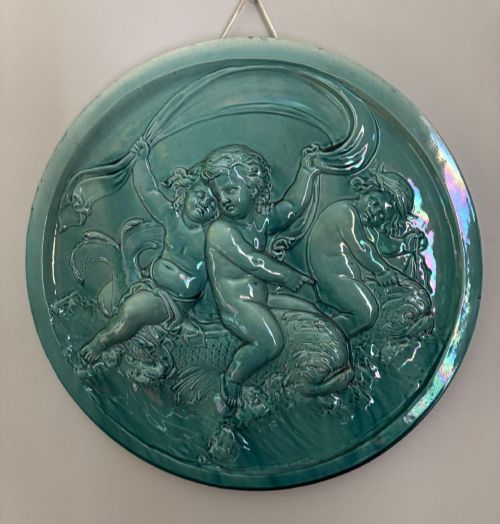
The selections available here lean heavily into earthenware, faience, and terracotta, often complemented by specialised glazes or bronze mounts. Buyers frequently encounter sculptural busts, decorative tiles, and jardiniere sets bearing the distinct aesthetic sensibilities of French studio pottery and continental workshops.
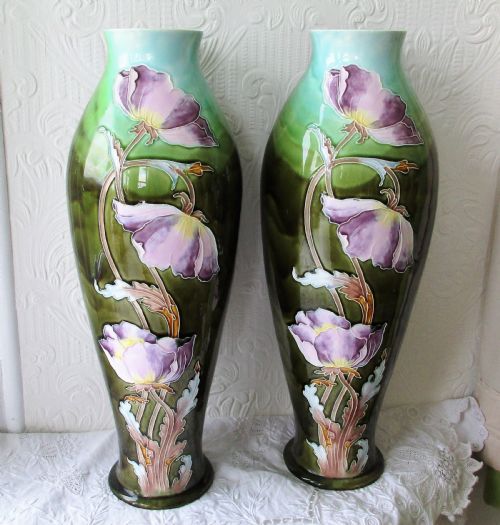
Spanning decades from the late nineteenth century into the 1920s, these objects capture both the high-water mark of the movement and its later commercial evolution. Each category reveals how makers translated organic motifs, such as floral patterns and avian figures, into permanent ceramic and terracotta forms.
Materials and Working Methods
Makers utilised plastic mediums such as earthenware, terracotta, and faience to model complex, flowing contours by hand or within bespoke moulds. Bisque porcelain and specialised lustre glazes were similarly applied to achieve varied surface textures, from matte biscuit finishes to highly reflective metallic sheens.
Surface decoration often involved intricate enamelling and rich glaze layering, particularly seen on faience vases and specialised architectural tiles. Metal components, such as bronze mounts, were frequently integrated into lamps and decorative vessels to complement the primary ceramic body.
Listings feature periods spanning the nineteenth century through the 1920s, employing earthenware, terracotta, faience, and bisque porcelain.
Evaluating Quality and Execution
The distinction between standard commercial output and superior studio work lies in the crispness of the modelled detail and the ambition of the form. Sculptures and plaques by recognised artists display finer anatomical nuance and more deliberate handling of surface texture than anonymous factory pieces.
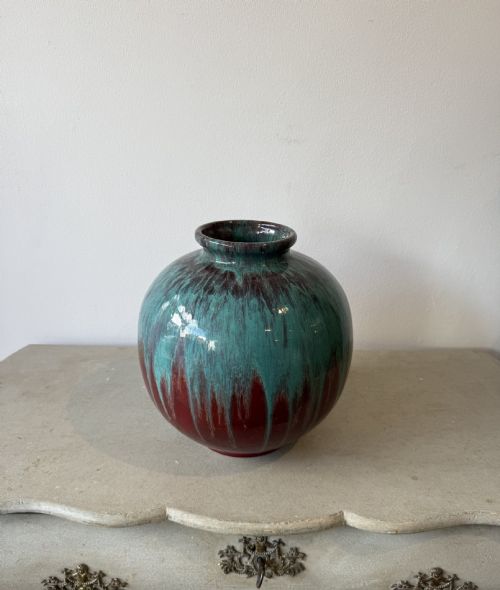
Glaze chemistry and firing success dictate the depth of the finished object, with sophisticated lustre applications and controlled enamel work elevating the piece. The successful integration of mixed media, such as combined ceramic and bronze elements, also marks out more accomplished examples.
Clement Messier·Luca Madrassi·Clement Massier·Georges Morin·A.Gory
The French Art Nouveau Ceramics Glossary
- Faience
- Tin-glazed earthenware, often brightly coloured and decorated with botanical or figurative motifs. This technique allows for painterly surface designs across vases and wall pieces.
- Terracotta
- Fired unglazed clay possessing a warm, reddish-brown hue, frequently utilised for sculptural busts and figures. The porous material accepts fine surface tooling by the artist.
- Bisque Porcelain
- Unglazed white porcelain fired to a matte, stone-like texture that highlights delicate sculptural modelling. It provides a smooth surface reminiscent of carved marble.
- Lustre Glaze
- A metallic film applied to the ceramic surface during a specialised secondary firing to produce an iridescent, shimmering effect. This technique was championed by leading studio potters.
- Jardiniere
- An ornamental ceramic stand or pot designed to hold plants or floral arrangements, often paired with matching pedestals. These larger forms showcase the structural ambitions of the period.
French Art Nouveau Ceramics: Frequently Asked Questions
What defines French art nouveau ceramics?
These pieces are characterised by organic shapes, asymmetrical designs, and natural motifs inspired by plants, animals, and the human form. The style emerged strongly around the turn of the twentieth century in France.
Makers applied these fluid lines across various functional and decorative formats, including vases, wall plaques, and sculptural busts.
How were these ceramics used originally?
Objects such as jardiniere stands, large vases, and table lamps served as functional interior furnishings for affluent Edwardian and late Victorian homes. Wall plaques and sculptural works were primarily decorative, intended to display artistic taste.
Many items combined utility with high sculptural art, reflecting the period desire to beautify domestic spaces.
How do I distinguish between periods?
Earlier pieces from the 1890s and 1900s often exhibit strict adherence to organic art nouveau floral patterns and complex lustre glazes. Items from the 1910s and 1920s can show transitional styles or simplified forms reflecting later taste.
Maker signatures, material choices like terracotta versus faience, and documented dates help establish the timeline.
How should I care for these antiques?
Dust glazed ceramics and terracotta gently with a dry, soft cloth to prevent accumulation in recessed carved details. Avoid using liquid cleaners or water on unglazed terracotta and bisque porcelain.
Position lamps and fragile vessels away from direct sunlight and areas prone to accidental knocks.