
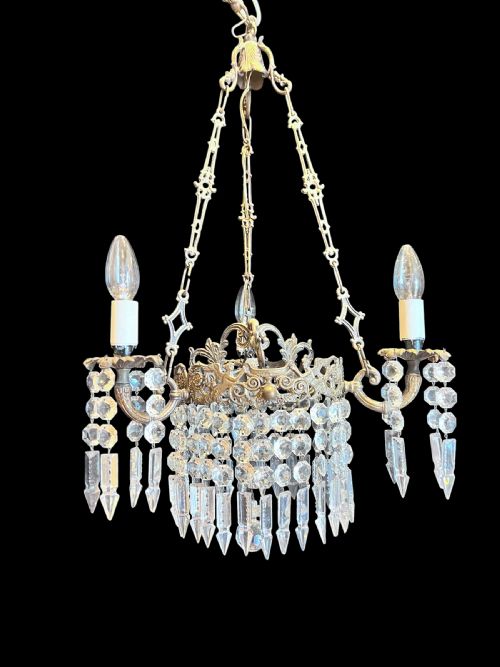


French Art Glass Fixtures
French art glass fixtures bring distinct illumination into a room, combining the clarity or texture of moulded and frosted glass with robust metalwork.
French Art Glass Fixtures
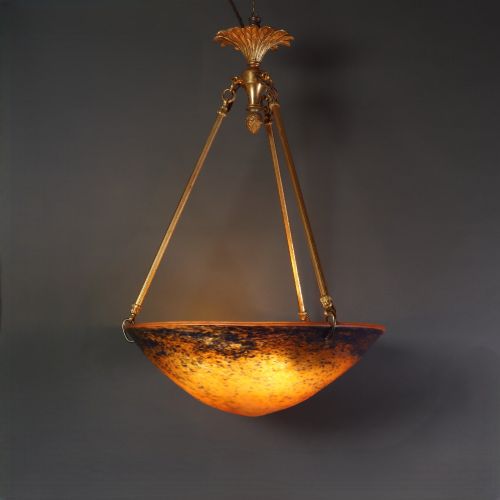
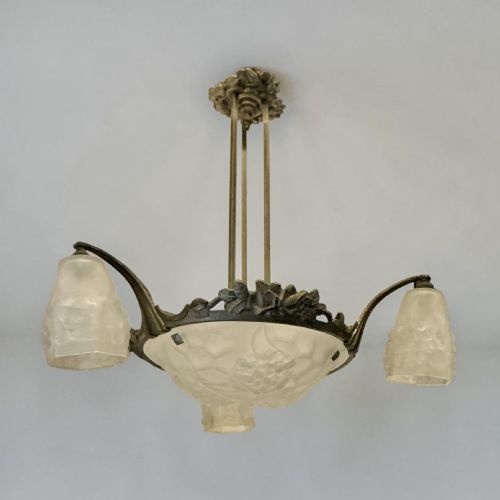
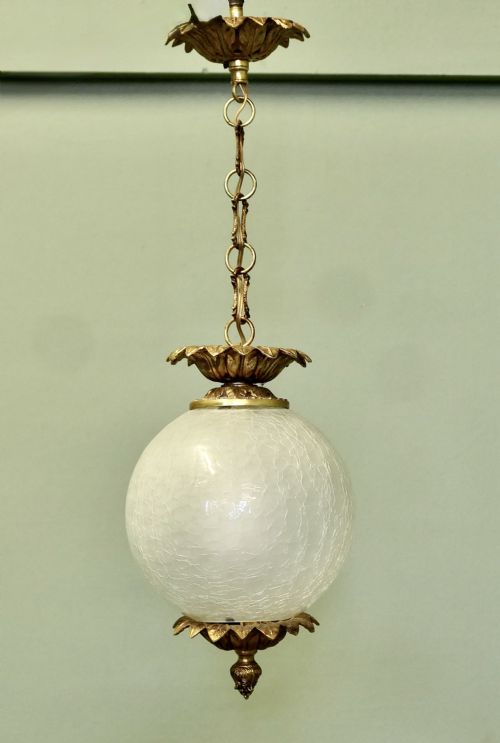
French art glass fixtures encompass pendant lights, chandeliers, and wall sconces designed primarily during the early decades of the twentieth century. When exploring French art glass fixtures, the most common examples merge coloured or frosted glass bowls and globes with structural metal frameworks.
How they were made
The production relies on the combination of artisan glassmaking and metal casting or smithing. Glass elements are frequently frosted, etched, or rendered in pâte de verre, capturing light with muted diffusion rather than harsh glare.
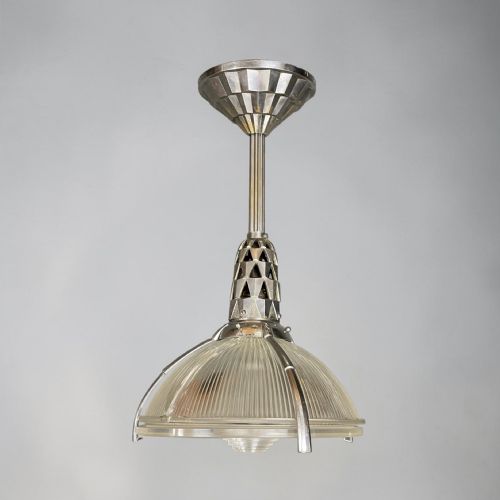
Metalwork utilises brass, bronze, wrought iron, copper, and chrome to support and frame the heavy glass shades. These materials are worked into suspension rods, wall brackets, and decorative collars that secure the glass safely while contributing to the aesthetic style of the period.
Some wall sconces feature clever tubular chrome arms designed to make even a modest hallway feel like an ocean liner smoking room.
What varies in quality
Quality in these fixtures is distinguished by the depth of detail in the glass mouldings and the precision of the metal mounts. Higher quality pieces display crisp signing or attribution from recognised makers, alongside substantial metal gauges that provide stable structural integrity.
The sophistication of the surface finish on both the metal and the glass separates standard commercial productions from superior artistic works. Harmonious proportions between the shade and the suspension hardware indicate careful design integration.
Émile-Jacques Ruhlmann·Schneider·Lalique·Verrerie Des Vosge·Jean Gauthier·Muller Freres
The French Art Glass Fixtures Glossary
- Pâte de verre
- A glass-crafting technique where finely crushed glass is packed into a mould and fused in a kiln. This method produces objects with a dense, sugary texture and rich colour saturation.
- Frosted glass
- Glass that has been treated to scatter light and create a translucent appearance. It reduces glare while maintaining a soft, even illumination.
- Wrought iron
- Iron that has been heated and shaped by hand tools. It provides a strong, malleable framework often seen in robust ceiling lanterns and brackets.
- Etched glass
- Glass surface treated with acid or abrasives to create decorative patterns. The process allows light to highlight specific ornamental designs against a clear or frosted background.
French Art Glass Fixtures: Frequently Asked Questions
How do I hang a heavy art glass chandelier safely?
These fixtures require secure mounting directly into ceiling joists or the use of heavy-duty toggle anchors capable of supporting substantial weight.
Professional installation is strongly advised due to the combined weight of the thick glass shades and the metal frames.
What is the difference between Art Nouveau and Art Deco fixtures?
Art Nouveau fixtures feature asymmetrical, flowing lines inspired by natural organic forms like plants and flowers.
Art Deco designs lean towards symmetry, geometric patterns, and streamlined industrial elements typical of the interwar period.
Can modern bulbs be used in antique French light fixtures?
Modern LED bulbs can generally be utilised provided they match the required wattage limits and physical dimensions of the original shade fitters.
Low heat output from LEDs is particularly beneficial for preserving fragile antique glass over prolonged periods of use.
How should frosted and etched glass shades be cleaned?
Clean the glass using a soft, lint-free cloth dampened with warm water and mild, non-abrasive soap.
Avoid submerging metal-mounted glass pieces entirely to prevent damage to vintage patination and historic fixings.