



French 18k Jewellery
French 18k jewellery brings together pendants, rings and cufflinks shaped by Victorian, Edwardian and Art Deco hands in high-carat gold.
French 18k Jewellery
French 18k jewellery encompasses religious medals, devotional pendants, rings and cufflinks originating from the nineteenth and early twentieth centuries. Pieces spanning the Victorian, Edwardian, Art Nouveau and Art Deco periods frequently appear in the selection.
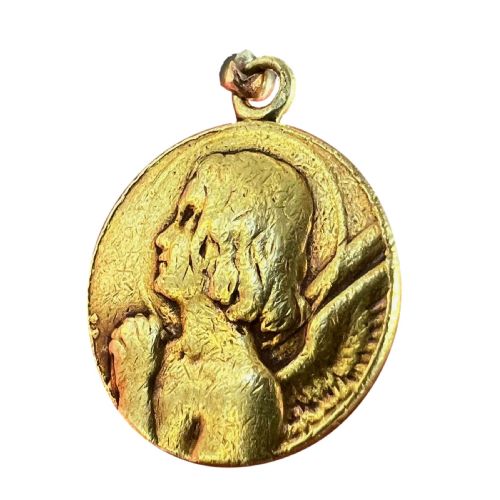
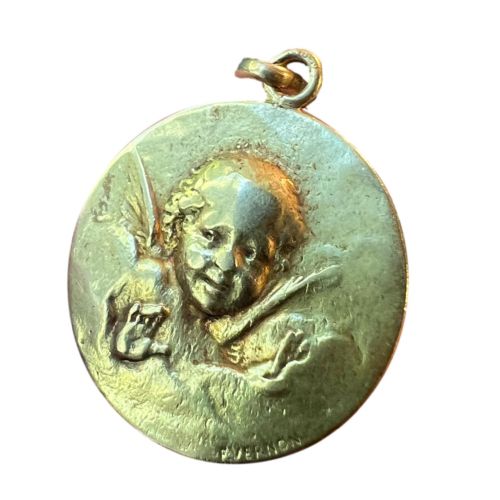
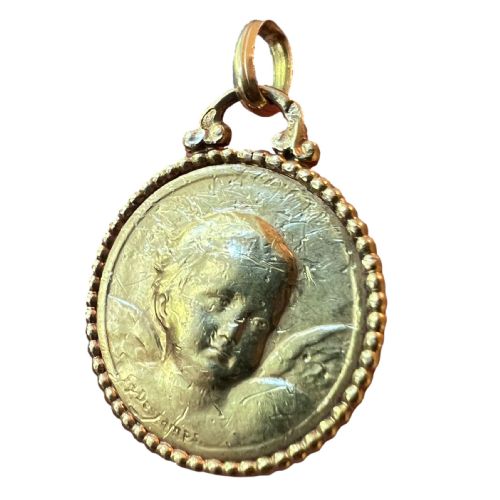
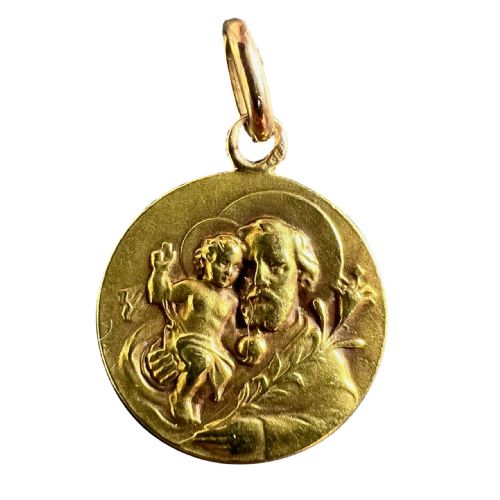
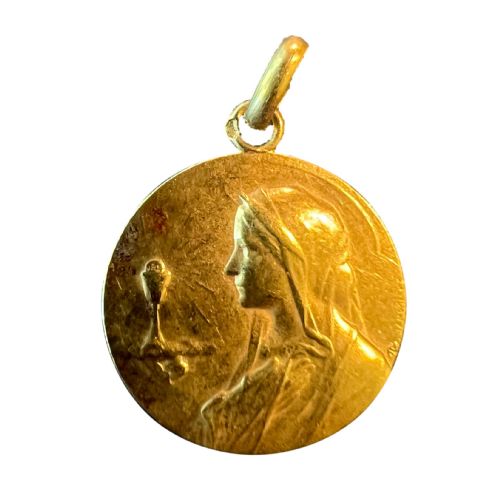
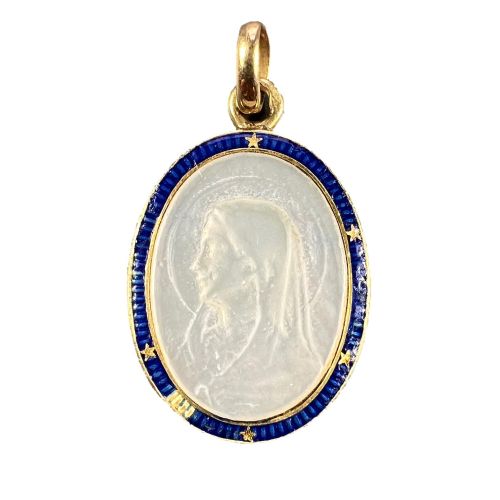
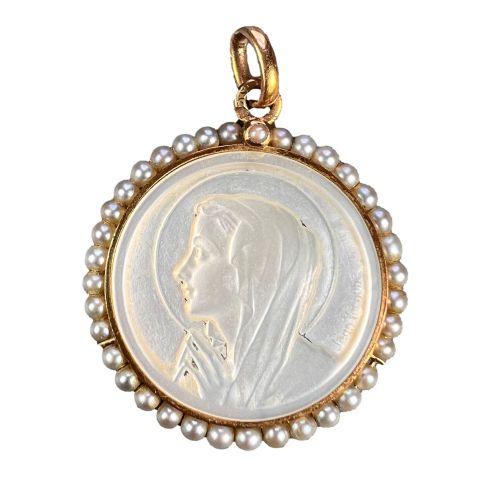
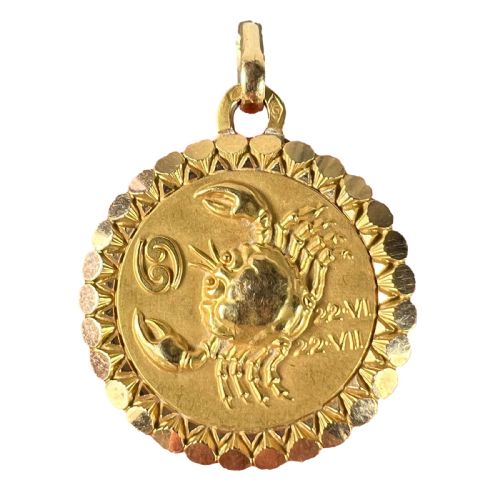
Religious medals dedicated to the Virgin Mary, Saint Joseph and Madonna and Child dominate the category. These devotional pendants often incorporate mother of pearl, enamel and pearls alongside standard yellow and rose gold formats.
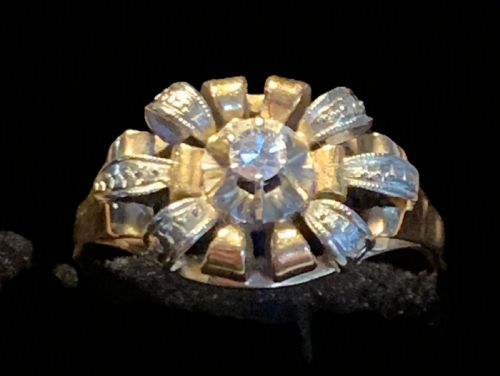
Rings, cufflinks and watch chains supplement the pendant offerings. Objects linked to French makers such as Rasumny, Monier and Dropsy represent prominent examples within the regional classification.
Materials and construction methods
Goldsmiths utilised 18ct yellow, rose and white gold as the primary structural metal for these items. Lustrous alloys form the bases of rings, chains and medal frames.
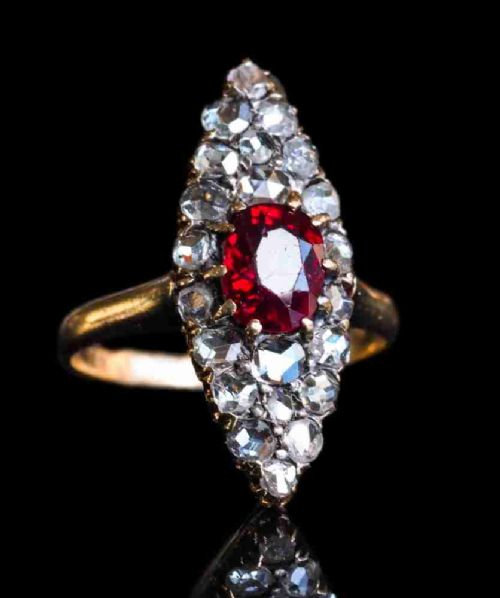
Enamel work, particularly plique-a-jour, alongside mother of pearl and seed pearls adds colour and texture to religious charms and floral motifs. Gemstones including diamonds, rubies and citrine appear flush-set or mounted in navette and heart configurations.
French 18k Jewellery Retail Price Guide 2026
Typical asking prices for french 18k jewellery among the pieces listed under this phrase on Sellingantiques today, from the lower quarter to the upper quarter. They describe what is for sale here now, not the wider market.
The material palette relies heavily on 18k gold paired with enamel, mother of pearl, pearls, diamonds and rubies.
Factors influencing quality
The integrity of applied enamel and the matching quality of set pearls or diamonds dictate overall refinement. Delicate details like twisted wire frames and openwork elements reflect skilled hand assembly.
Rasumny·Jampolsky·Emile Monier·Paul Brandt·Perroud·Mazzoni·Pageli Perriat·Dropsy·Guilbert·Sellier
The French 18k Jewellery Glossary
- Pendant
- A hanging ornament suspended from a chain or cord. Religious medals and charms fall under this classification.
- Plique-a-jour
- An enamelling technique where enamel is applied to a cell-based framework without a backing, allowing light to shine through the translucent material. This method resembles miniature stained glass.
- Navette
- A boat-shaped gemstone setting or ring face. The elongated silhouette flatters the hand.
- Medal
- A flat metal disc bearing a commemorative or religious image. These pieces often mark first communions or devotional promises.
- Cufflinks
- Paired fastening accessories for shirt cuffs. Gold examples frequently display floral or enamel decoration.
French 18k Jewellery: Frequently Asked Questions
What periods do these pieces span?
The inventory covers items from the nineteenth century through the Victorian, Edwardian, Art Nouveau and Art Deco eras up to the mid-twentieth century.
Most surviving examples date from the late nineteenth and early twentieth centuries, reflecting active manufacturing periods in French workshops.
How were religious medals worn?
Devotional medals were suspended from chains or ribbons as personal tokens of faith and protection. They often marked significant life events such as first communions.
Wearers kept them close to the heart beneath clothing or displayed them openly depending on personal custom.
What is plique-a-jour enamel?
Plique-a-jour is a demanding technique that creates translucent enamel areas without a solid backing plate. Light passes directly through the coloured glass compartments.
This method appears frequently on high-grade Edwardian and Art Nouveau religious pendants.
Are these items marked for gold purity?
French pieces from this era utilise specific regional assay marks to indicate gold content. The Eagle head stamp commonly denotes standard 18k gold purity.
Maker marks also appear as small stamped punches near the edge of medals and ring shanks.