



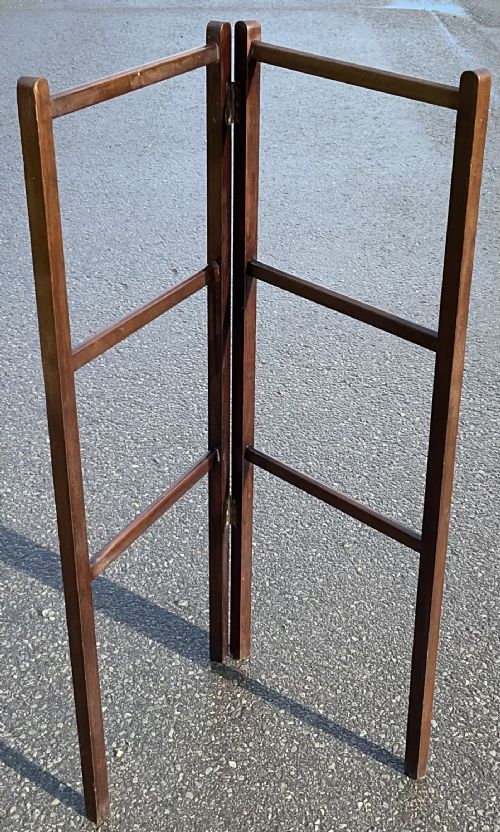


Freestanding Mahogany Clothes Horse
A freestanding mahogany clothes horse is a practical piece of period laundry furniture that brings warmth and function to a room.
Freestanding Mahogany Clothes Horse
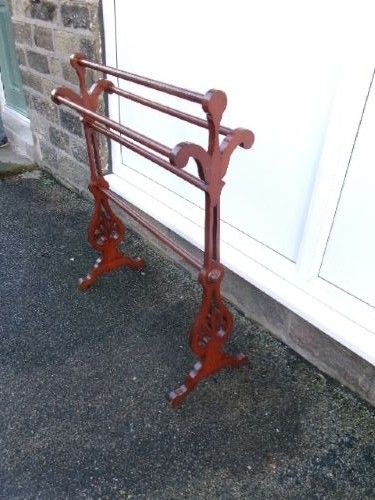
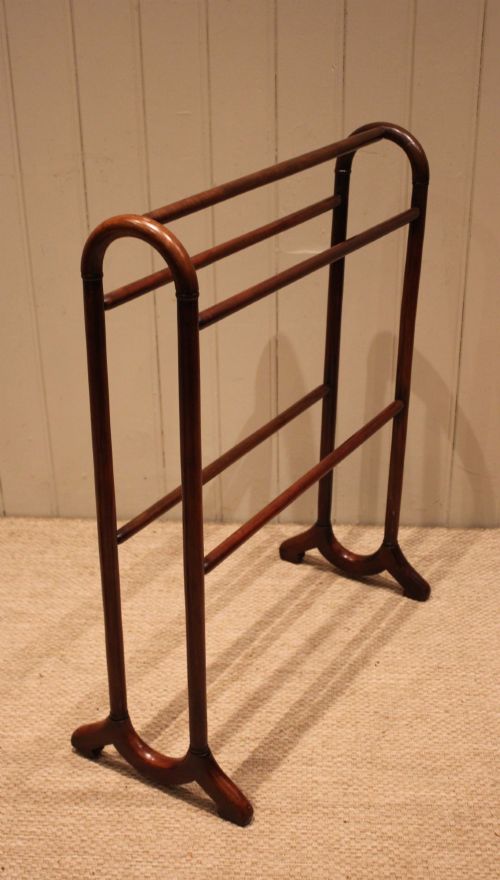
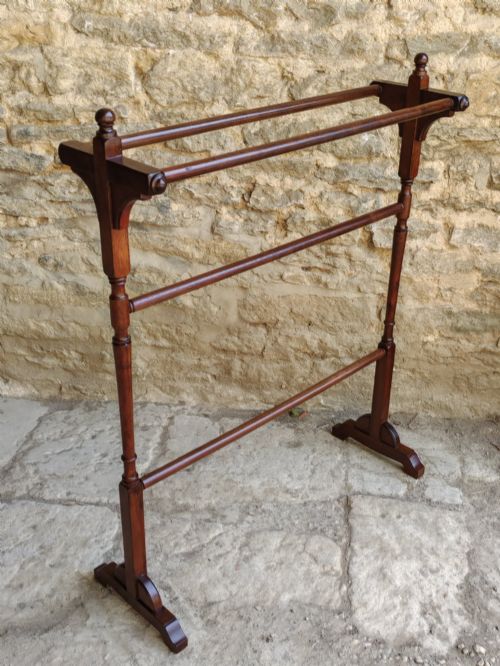
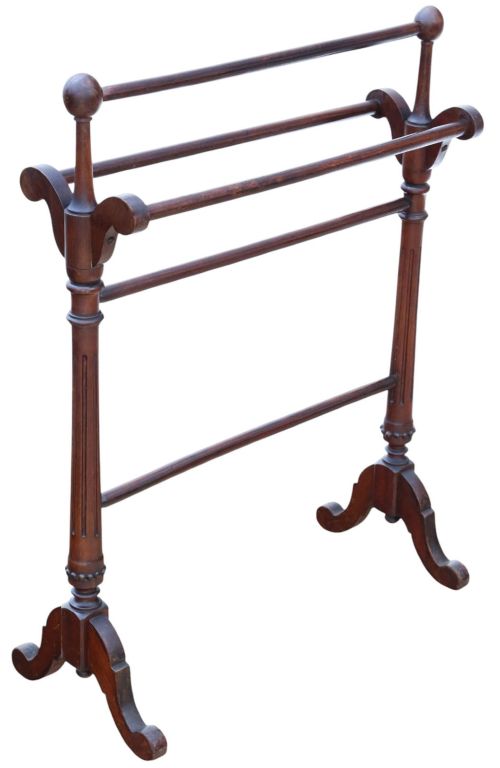
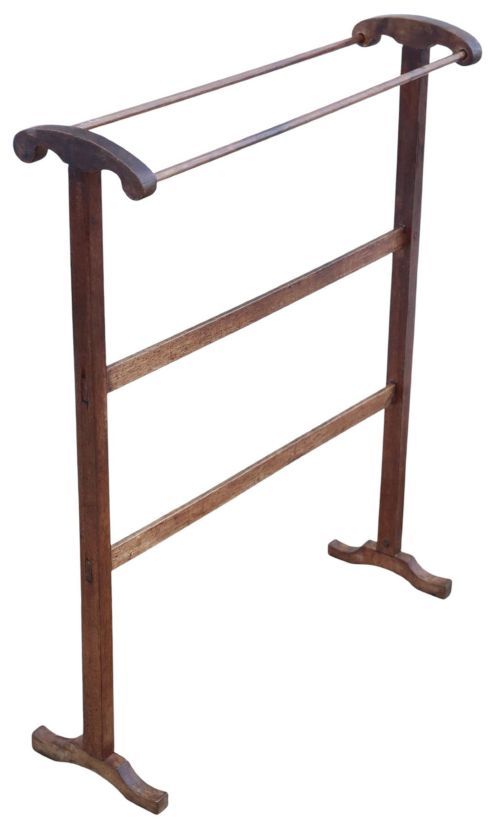
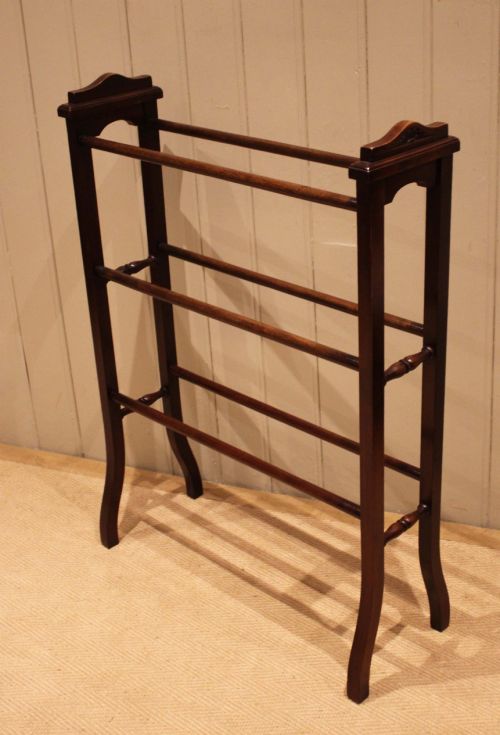
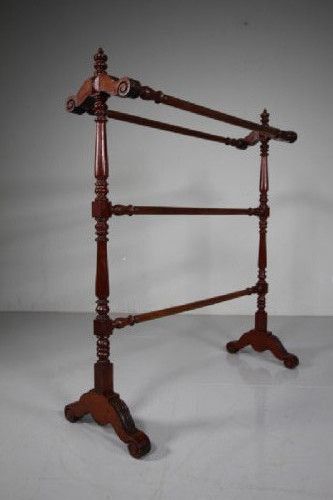
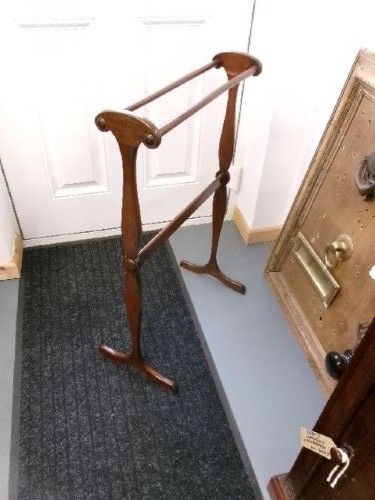
A freestanding mahogany clothes horse is primarily represented on this page by towel rails and folding stands dating from the Regency, Victorian, and Edwardian periods. These wooden frames were built to stand independently in dressing rooms, bedrooms, or nurseries for airing garments and linens.
Most examples you encounter take the form of standing or folding rails, occasionally featuring multiple bars or multi-fold panels for domestic utility. The form relies on sturdy uprights and horizontal rails joined to create a stable, movable structure.
Originating across the nineteenth and early twentieth centuries, these pieces combine utilitarian design with cabinet-making traditions. The selection spans simpler Edwardian formats to more substantial William IV and Regency proportions.
How they were made
Construction relies heavily on solid mahogany, sometimes combined with secondary timbers like oak and accented with boxwood stringing or brass fittings. Cabinet makers shaped the uprights and turned the crossbars to provide both strength and tactile comfort.
Folding mechanisms utilise hinged joints that allow the multi-fold rails to expand and contract smoothly. The timber surfaces were finished to highlight the natural grain and deep reddish-brown tones characteristic of the material.
Freestanding Mahogany Clothes Horse Retail Price Guide 2026
Typical asking prices for freestanding mahogany clothes horse among the pieces listed under this phrase on Sellingantiques today, from the lower quarter to the upper quarter. They describe what is for sale here now, not the wider market.
Some larger folding rails span multiple panels, letting you construct a miniature wooden maze in your spare room.
What varies in quality
Quality reveals itself in the choice of timber and the solidity of the joints rather than surface decoration alone. Superior examples display carefully selected mahogany grain, robust turned uprights, and well-fitted hinges that bear weight without sagging.
Proportion and scale also separate standard utility pieces from grander manifestations. Generous proportions, refined turning, and subtle inlays of boxwood indicate a higher tier of domestic furnishing commissioned for wealthier households.
The Freestanding Mahogany Clothes Horse Glossary
- Cheval rail
- A standing towel rail or clothes horse designed on a heavy base or pivoting frame, allowing it to remain stable while holding textiles.
- Boxwood stringing
- A narrow inlay of pale boxwood set flush into the darker mahogany surface to create decorative linear borders.
- Regency
- A design period spanning the early nineteenth century defined by classical restraint, elegant proportions, and architectural influence.
- William IV
- A transitional stylistic period bridging late Regency and early Victorian tastes, often characterised by heavier, robust furniture proportions.
- Edwardian
- A decorative era spanning the late Victorian period up to the First World War, noted for lighter forms and refined domestic accessories.
Freestanding Mahogany Clothes Horse: Frequently Asked Questions
What is a clothes horse?
A clothes horse is a moveable wooden frame designed for holding and airing laundry, garments, or towels.
In period homes, these practical pieces sat near fires or in dressing rooms to dry and warm textiles before use.
How do I use one today?
You can place a freestanding rail in a bathroom, bedroom, or utility space to hold towels or blankets.
Their folding designs also make them useful as room dividers or decorative display frames for quilts and linens.
Are these rails stable?
Most standing and folding rails are designed with wide bases or multi-fold panels to maintain balance during daily use.
Larger Victorian and William IV versions offer extra weight and sturdiness for heavier household textiles.
How do I date a rail?
Dating relies on observing stylistic markers such as turned pillar shapes, timber choices, and inlay techniques.
Earlier Regency and William IV pieces show heavier classical turning, whereas Edwardian examples often feature lighter frames and inlaid boxwood details.