

Freestanding Bookshelves
Freestanding bookshelves bring order to rooms through adaptable shelving made in oak, mahogany, and walnut across Victorian and Edwardian decades.
Freestanding Bookshelves
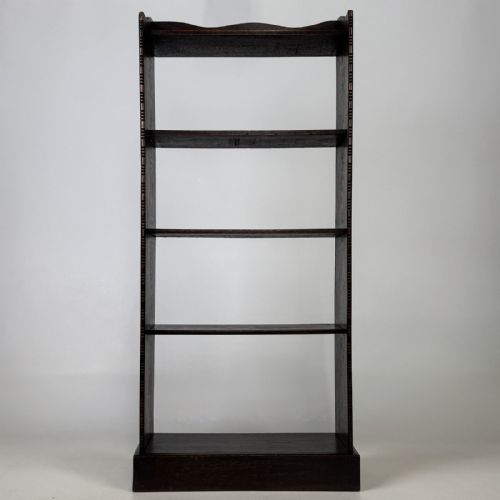
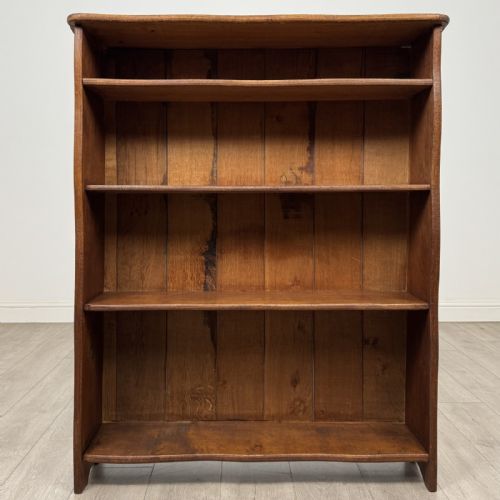
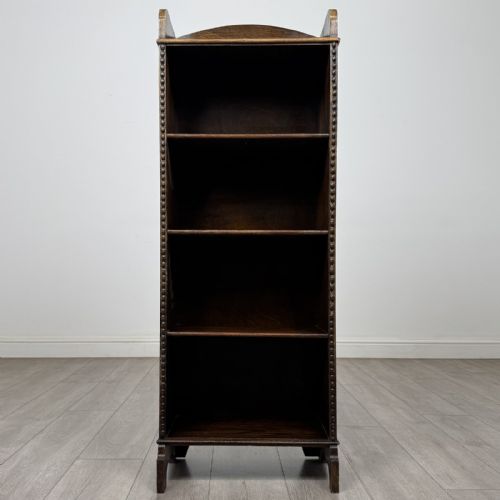
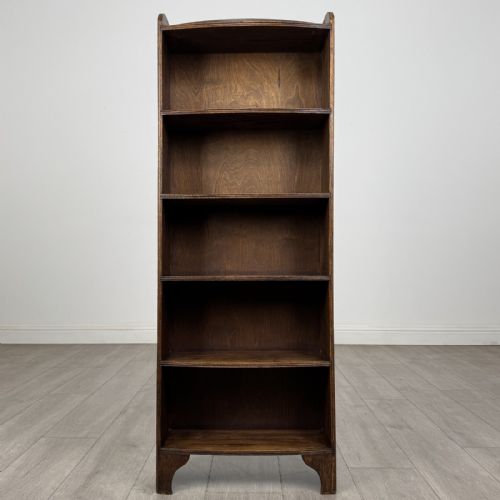
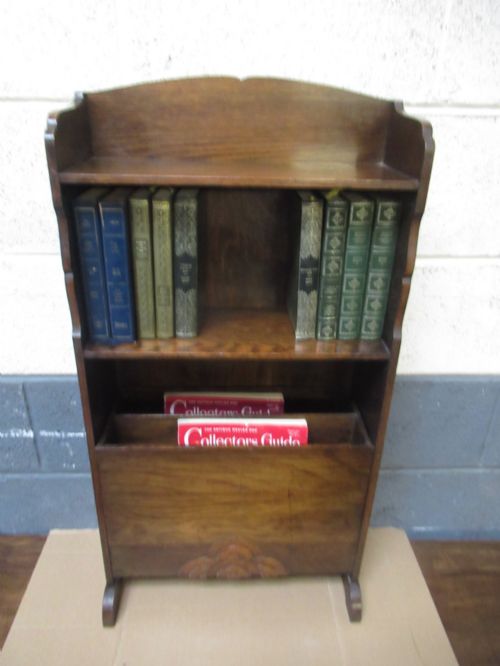
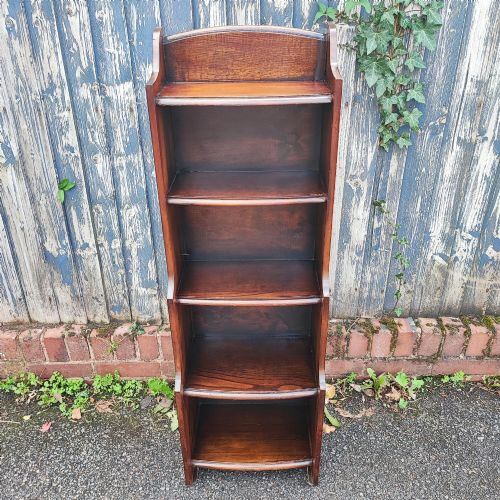
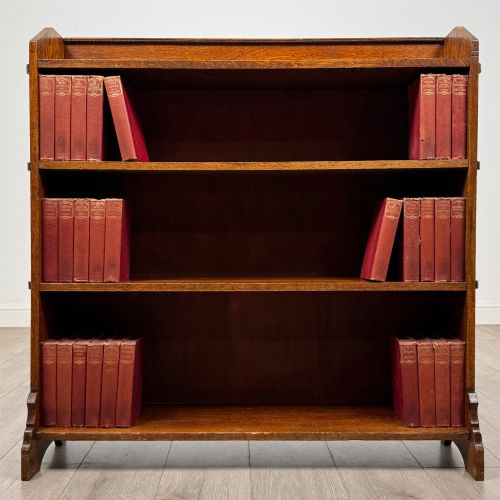
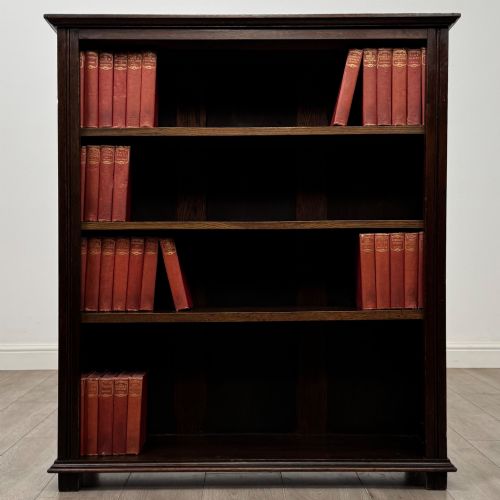
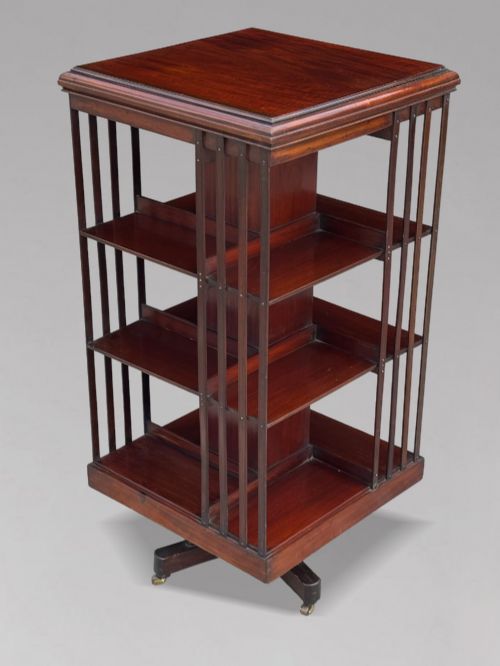
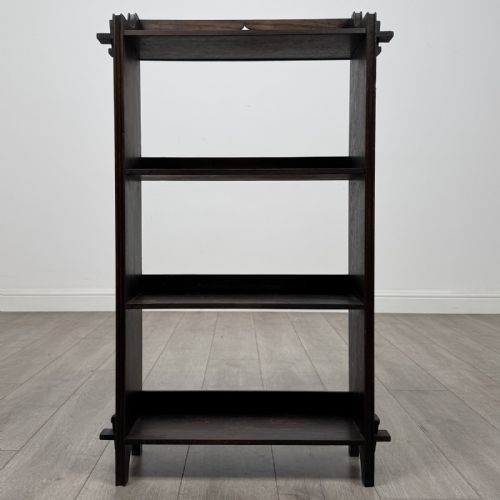
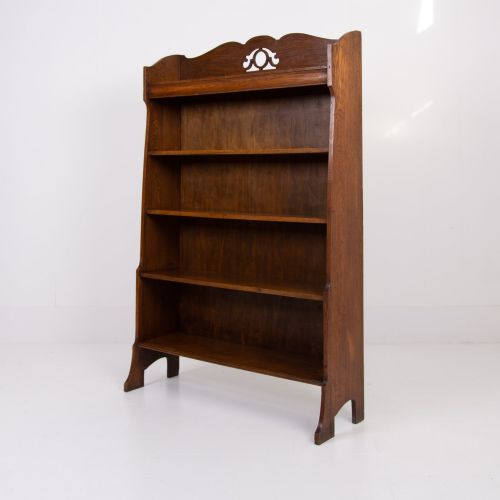
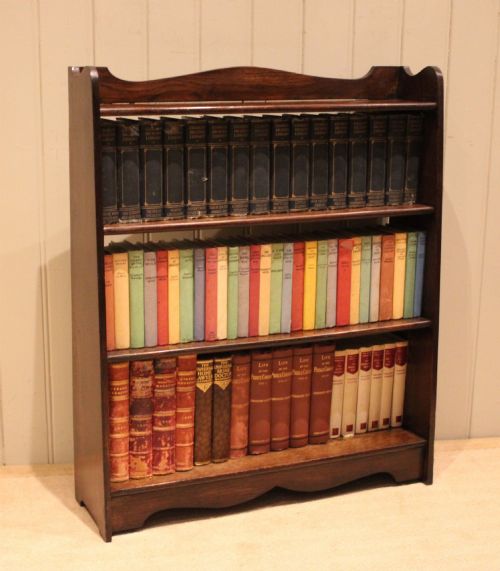
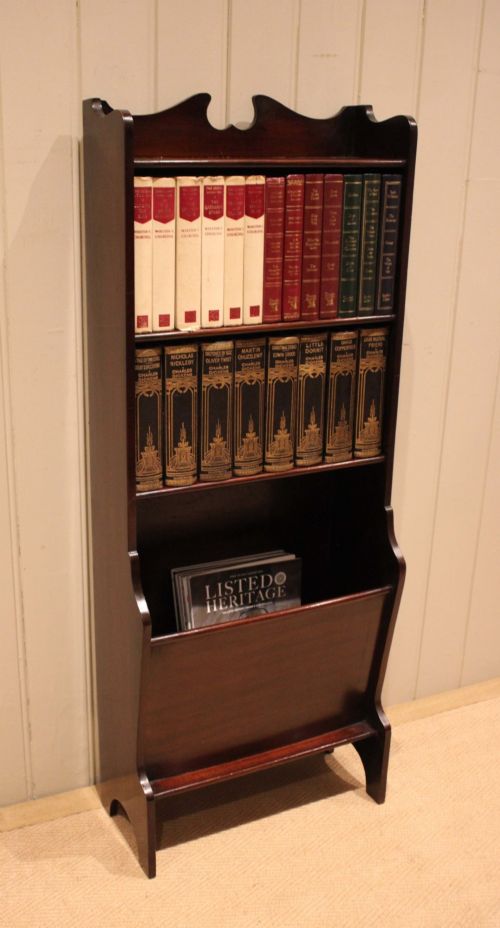
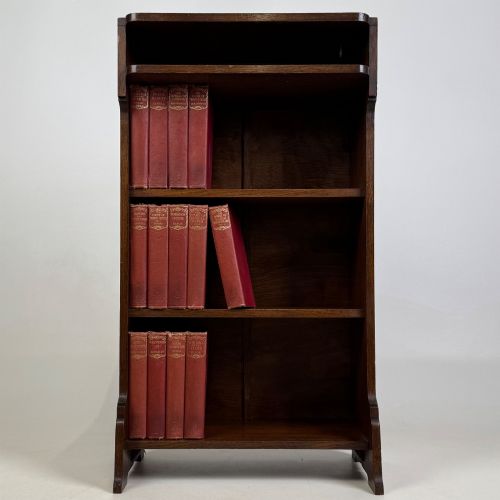
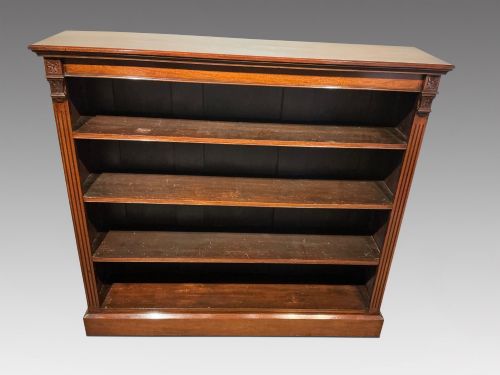
Freestanding bookshelves include open bookcases, revolving designs, table stands, and tiered etageres that stand without wall fixing. You will frequently meet Edwardian and 1920s oak or mahogany open models equipped with three or four fixed or adjustable shelves.
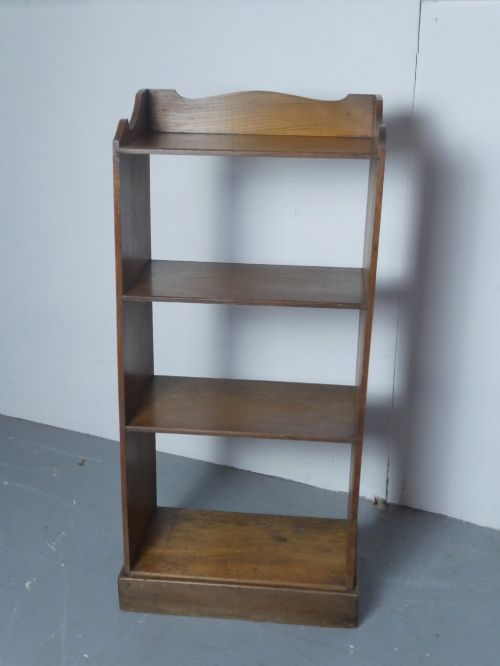
The selection ranges from compact small oak cases with raised galleries to tall nineteenth-century continental library editions and revolving table models. Cabinet bases, magazine racks, and carved edges appear alongside simple open frames intended for domestic studies and sitting rooms.
Materials and construction
Cabinet makers utilised solid timbers including oak, mahogany, walnut, rosewood, and pine, paired occasionally with brass fittings or cast iron elements. Surfaces received wax polishing, while edges showed carved detailing, beading, or decorative cut-outs characteristic of Arts and Crafts workshops.
Shelving configurations rely on straightforward tongue-and-groove joints, fixed partitions, or adjustable wooden supports that allow shelf height modification. Revolving iterations incorporate internal wooden and metal turning mechanisms to rotate smoothly upon a central base.
Freestanding Bookshelves Retail Price Guide 2026
Typical asking prices for freestanding bookshelves among the pieces listed under this phrase on Sellingantiques today, from the lower quarter to the upper quarter. They describe what is for sale here now, not the wider market.
Several revolving bookcases include hidden inner weights to stop them spinning too fast when you pull out a heavy dictionary.
Assessing quality in construction
The standard of a piece rests upon timber selection and the crispness of cabinet work, distinguishing plain utility items from finely figured mahogany or quarter-sawn golden oak examples. Superior pieces display substantial solid wood thickness, well-fitted backboards, and stable joinery that prevents structural wobble.
Decorative ambition separates standard iterations from finer specimens, evident in carved panels, shaped sides, gallery rails, and integrated magazine troughs. Finer revolving models exhibit smooth mechanical rotation and balanced weight distribution across multiple tiers.
Waring and Gillows
The Freestanding Bookshelves Glossary
- Open bookcase
- A piece of furniture designed with exposed shelves and no doors enclosing the front. This format allows immediate access to book collections.
- Revolving bookcase
- A compact shelving unit constructed to rotate freely on a central vertical pivot. These units sit upon floor bases or tabletops for easy browsing.
- Raised gallery
- A low decorative railing or rim fitted along the top edge of a bookcase or cabinet. It prevents small items from sliding off the surface.
- Whatnot
- A multi-tiered piece of freestanding furniture featuring open shelves supported by slender columns. It served to display books and decorative objects in nineteenth-century interiors.
- Arts and Crafts
- A design movement favouring honest construction, local timber, and subtle hand-carved motifs. Pieces often exhibit visible joints and decorative cut-outs.
Freestanding Bookshelves: Frequently Asked Questions
What distinguishes an Edwardian oak bookcase?
Edwardian oak bookcases typically present lighter golden oak tones, simpler cornices, and frequently incorporate raised galleries or open backs suited to smaller domestic spaces.
Craftsmen during this period also applied subtle carved edges or decorative cut-outs influenced by the Arts and Crafts movement.
How do revolving bookcases function?
Revolving bookcases sit upon a concealed internal pivot mechanism fixed to a weighted cruciform or circular base. This allows the entire tiered tower to spin freely for browsing titles from a seated position.
They emerged in mahogany and walnut during the late nineteenth century to hold dictionaries and reference volumes.
Are shelves in these bookcases adjustable?
Many nineteenth-century and early twentieth-century examples feature fixed shelves, though several Edwardian and Victorian editions utilise adjustable wooden supports.
Adjustable variants permit the interior height to alter according to varying book sizes.
What timber was most commonly used?
Oak and mahogany dominate the selection, appearing across Victorian, Edwardian, and 1920s pieces in both dark finishes and lighter golden hues.
Walnut, rosewood, and pine also feature in specific Regency, continental, and country iterations.