


Freestanding Bookshelf
A freestanding bookshelf provides accessible storage for growing volumes while anchoring a room with period timber and proportion.
Freestanding Bookshelf
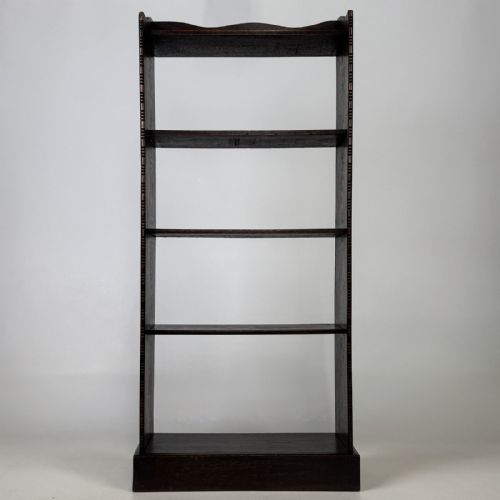
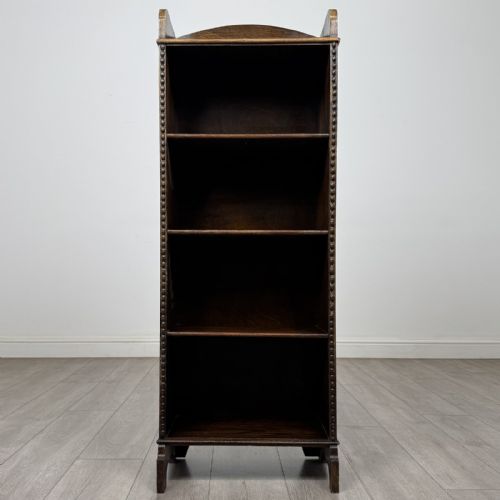
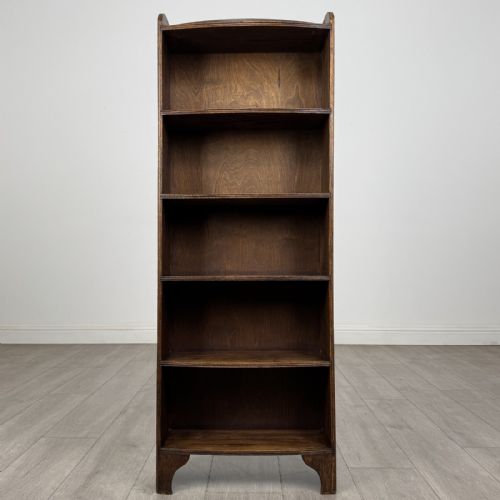
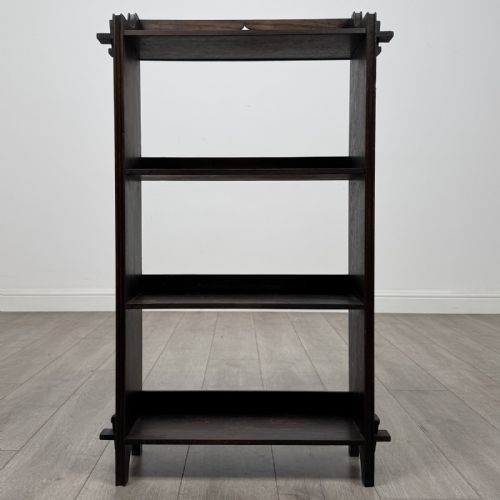
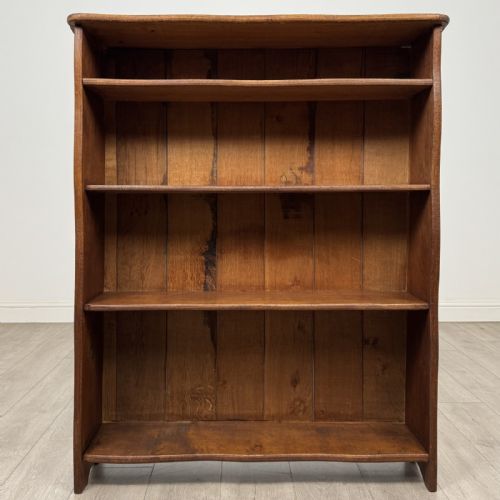
A freestanding bookshelf encompasses open bookcases, revolving book stands, whatnots, and low library shelving units designed to stand away from the wall or within a room. When hunting for a freestanding bookshelf, a buyer encounters everything from modest Edwardian oak open units to substantial nineteenth-century Continental library bookcases in carved solid wood.
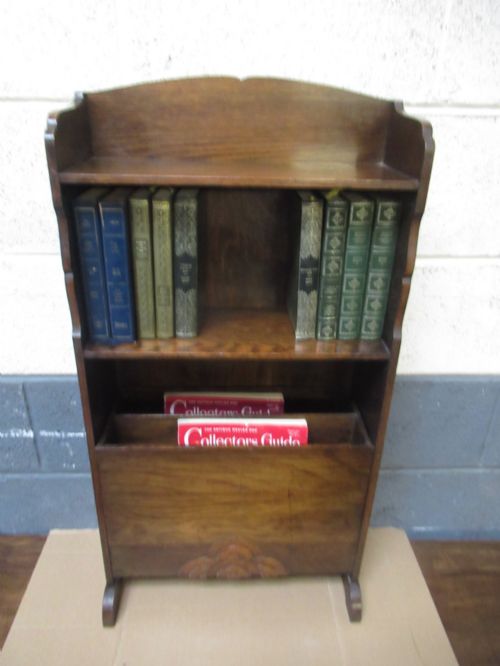
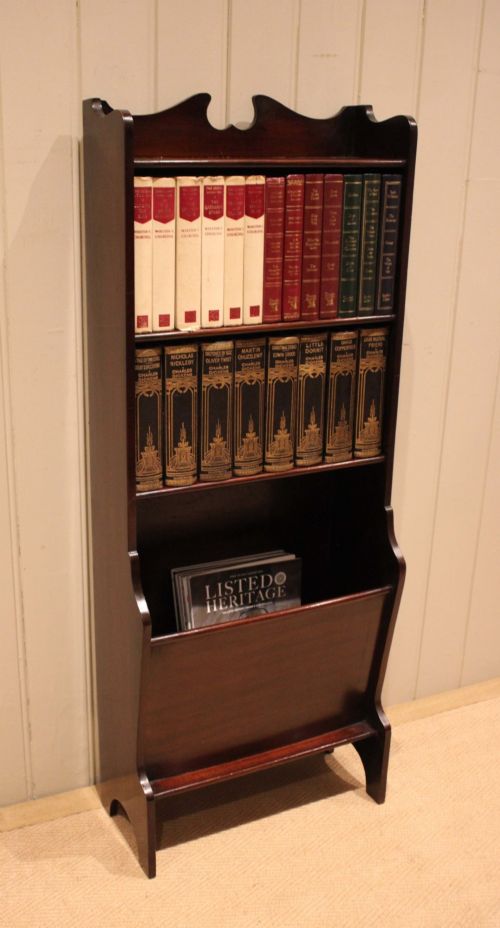
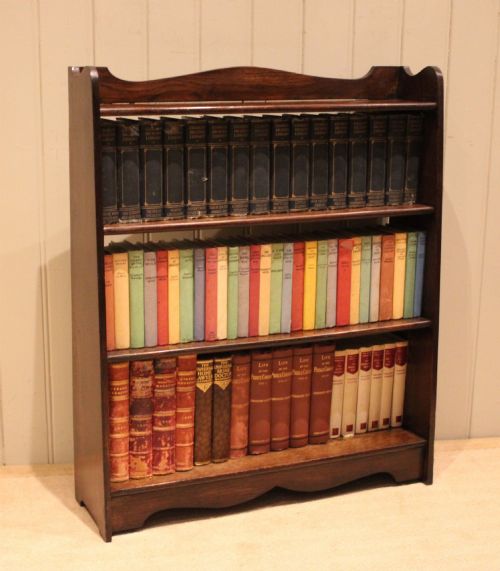
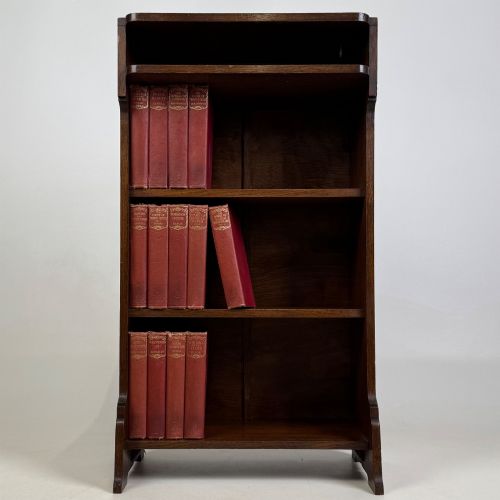
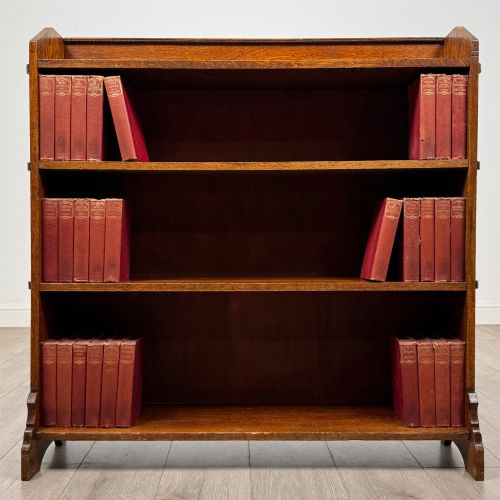
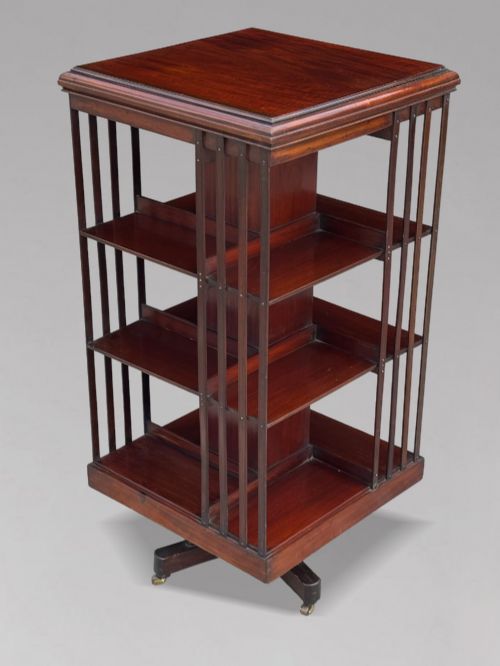
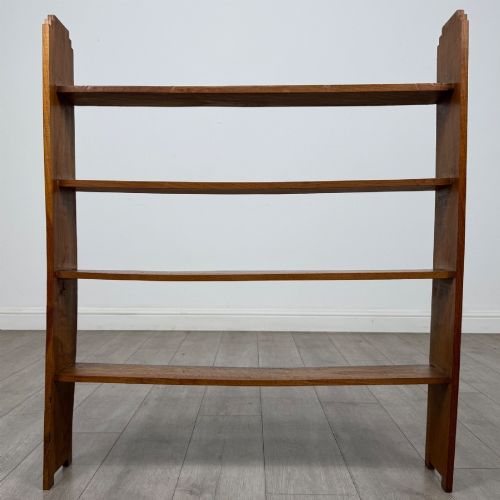
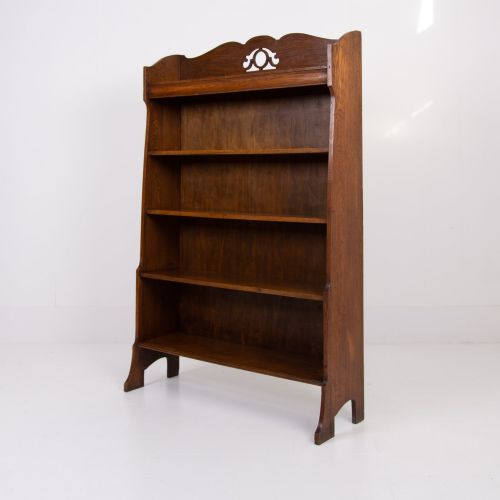
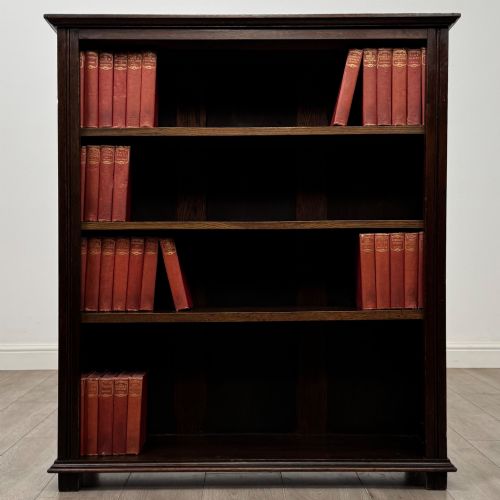
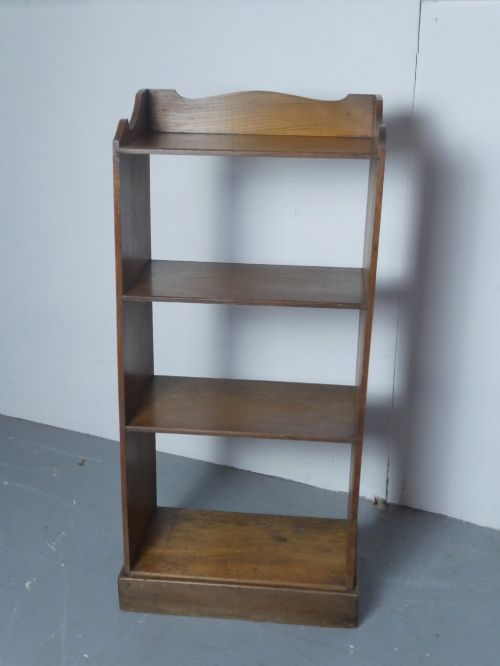
The prevailing form on this page is the compact Edwardian or 1920s oak open bookcase, often fitted with three or four shelves, shaped sides, or a raised gallery. Alongside these practical household items appear mahogany revolving bookcases, rosewood double-sided pieces, and pine shelving from the Victorian and Edwardian eras.
Originating across the nineteenth century through the early twentieth century, these items reflect domestic library habits before built-in joinery became standard. Buyers find specific variations including low waterfall display shelves, corner cabinets, and book troughs intended for smaller collections and parlour use.
Materials and construction methods
Makers relied primarily on native and imported hardwoods like oak, mahogany, and walnut, supplemented by utility timbers such as pine for internal components and backing boards. Oak predominates in Arts and Crafts and Edwardian iterations, frequently displaying characteristic medullary rays, while mahogany and rosewood define finer Victorian and Regency items.
Construction techniques balanced stability with utility, utilising pegged joints, open backs, and adjustable shelving mechanisms supported by brass brackets or traditional wooden ratchets. Revolving models incorporate complex internal cross-frame timber mechanisms and iron pivot hardware to bear the weight of heavy volumes smoothly.
Surface treatments range from waxed and polished finishes that highlight natural grain to carved edgings, decorative cut-outs, and applied mouldings. These straightforward methods ensured that freestanding furniture could withstand daily domestic handling while maintaining structural integrity over generations.
Freestanding Bookshelf Retail Price Guide 2026
Typical asking prices for freestanding bookshelf among the pieces listed under this phrase on Sellingantiques today, from the lower quarter to the upper quarter. They describe what is for sale here now, not the wider market.
Listings feature oak most frequently, followed by mahogany, pine, and walnut, spanning the Victorian, Edwardian, and 1920s periods.
Distinctions in craftsmanship and design
Quality separates mass-produced utility shelving from bespoke cabinet work through the selection of timber and the precision of joinery. Superior examples utilise solid, well-figured planks for the sides and shelves rather than thin veneers over secondary softwood.
Design ambition elevates a piece from simple storage to notable furniture, evident in thoughtful details like raised galleries, shaped sides, carved edgings, and decorative cut-outs associated with the Arts and Crafts movement. The integration of functional innovations, such as smoothly operating revolving mechanisms or adjustable shelving systems, distinguishes finer workshop production from standard domestic joinery.
Waring and Gillows
The Freestanding Bookshelf Glossary
- Revolving bookcase
- A compact bookcase mounted on a hidden rotating base that allows access to books from all sides. These pieces were popular in libraries and studies during the Victorian and Edwardian periods.
- Whatnot
- A piece of freestanding open shelving with multiple tiers used for displaying books or ornaments. They frequently feature slender corner supports and delicate spindle turnings.
- Raised gallery
- A low decorative railing around the top surface of a piece of furniture. It prevents items from sliding off the upper shelf.
- Book trough
- A V-shaped desktop or low freestanding receptacle designed to hold a small selection of books upright for immediate reading. They often appear in mahogany or oak from the Edwardian era.
- Arts and Crafts
- A design movement spanning the late nineteenth and early twentieth centuries that emphasised honest construction and visible craftsmanship. Pieces from this tradition often display exposed joinery and minimal ornamentation.
Freestanding Bookshelf: Frequently Asked Questions
How do I choose the right size?
Consider both the available floor space in your room and the volume of books you intend to store. Lower open shelves work well beneath windows, while taller upright versions maximise vertical capacity in smaller studies.
Measure your largest volumes before purchasing, as older pieces often feature fixed shelf heights that accommodate traditional octavo formats rather than modern oversized art books.
Where should I place a revolving bookcase?
Revolving bookcases function best in open spaces where they can turn freely without bumping into surrounding furniture or walls. Placing one beside an armchair or beside a desk provides immediate, effortless access to frequently consulted reference volumes.
Ensure the revolving mechanism sits on level flooring so the weight of the books distributes evenly during rotation.
How do I care for polished wood surfaces?
Maintain the finish by dusting regularly with a soft, dry cloth and applying traditional beeswax sparingly to nourish the timber. Avoid placing wooden furniture in direct sunlight or near active heat sources that can dry out the grain.
Keep humidity levels stable in the room to prevent timber expansion and shrinkage that might otherwise affect traditional joints.