
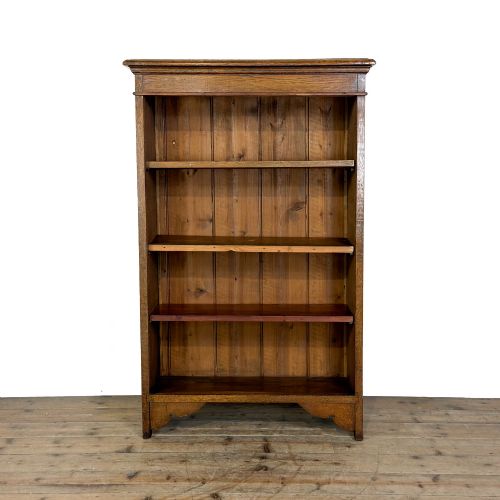
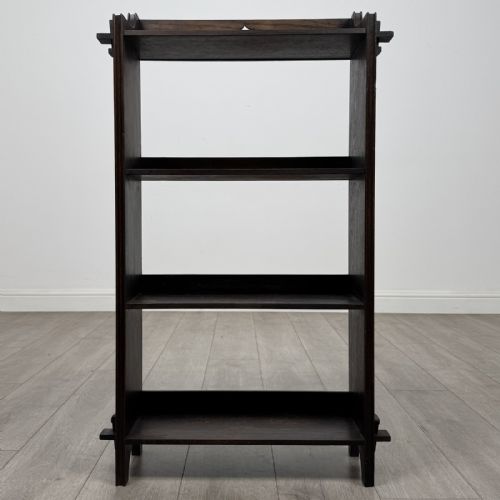
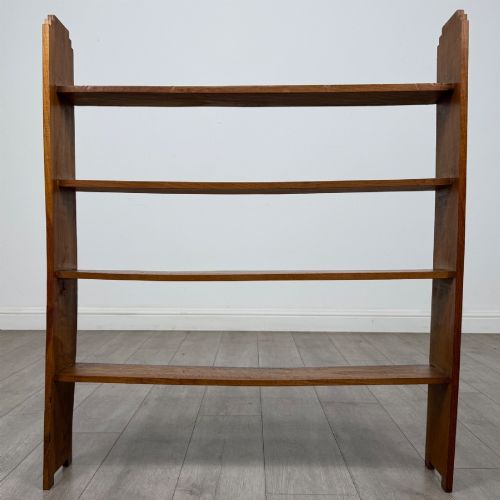
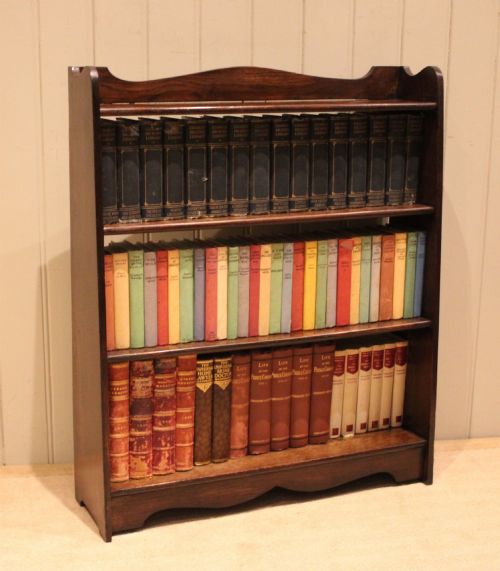
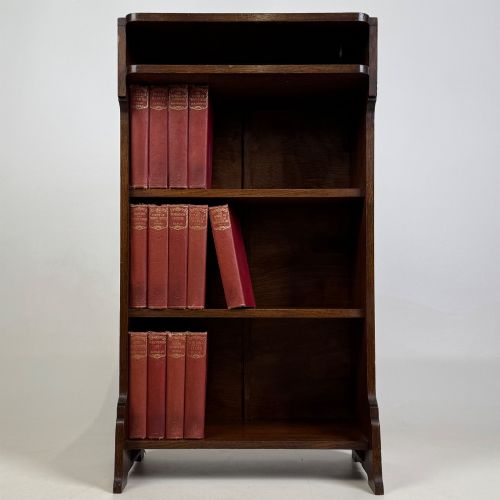
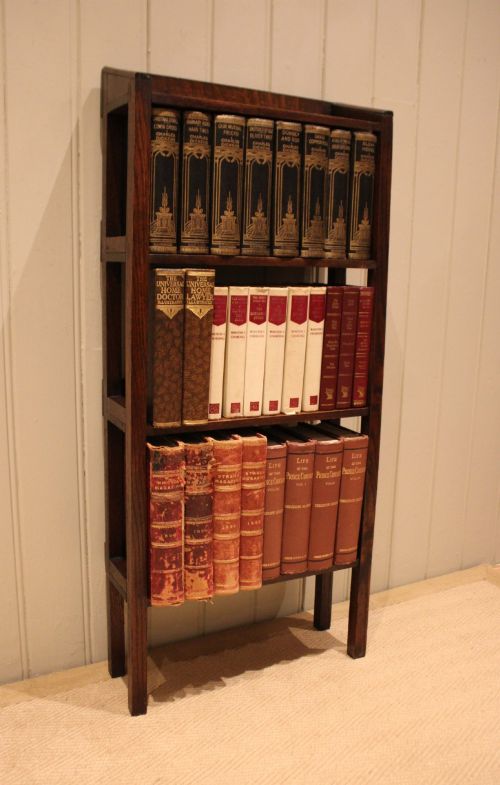
Freestanding Bookshelf Unit
These freestanding bookshelf unit examples offer practical book storage with classic period charm, crafted in sturdy timber for everyday use.
Freestanding Bookshelf Unit
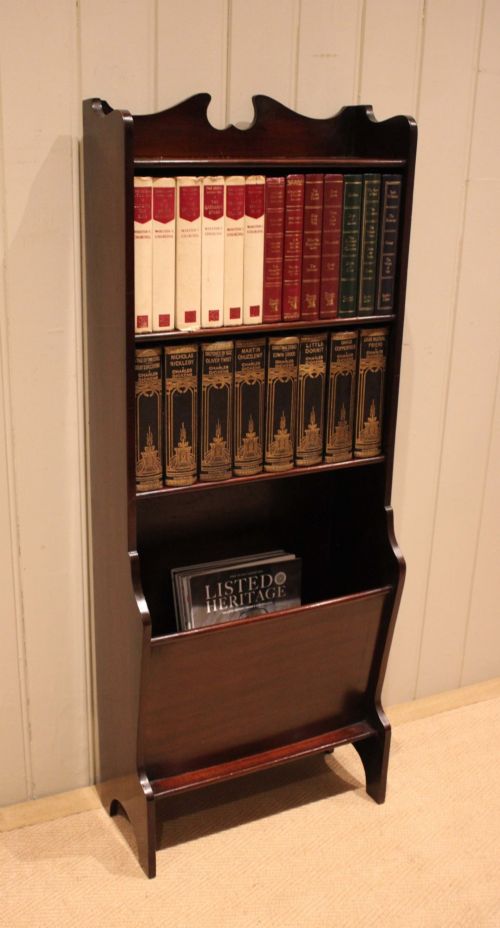
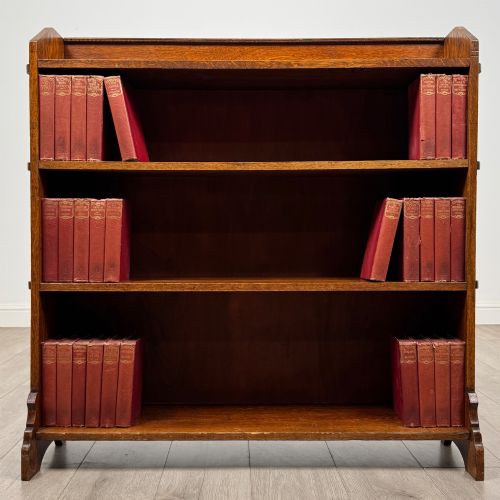
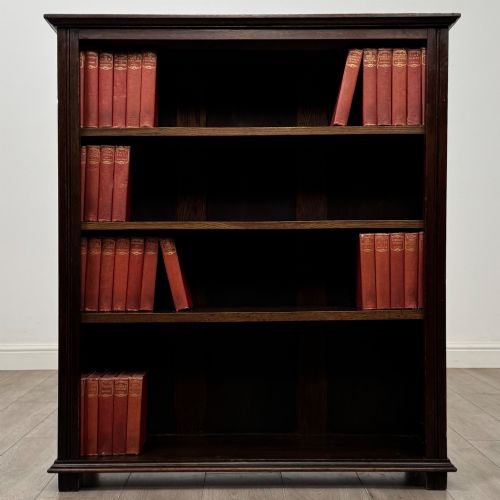
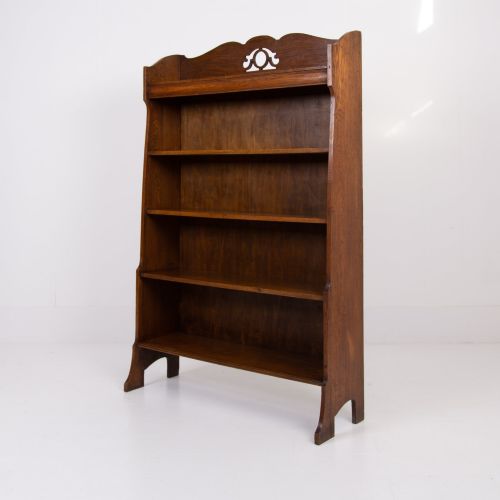
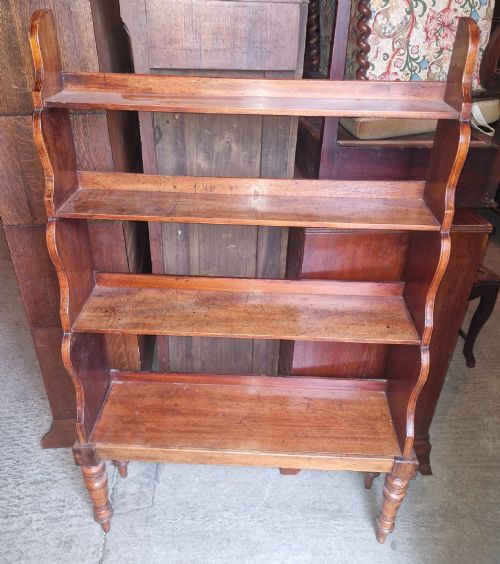
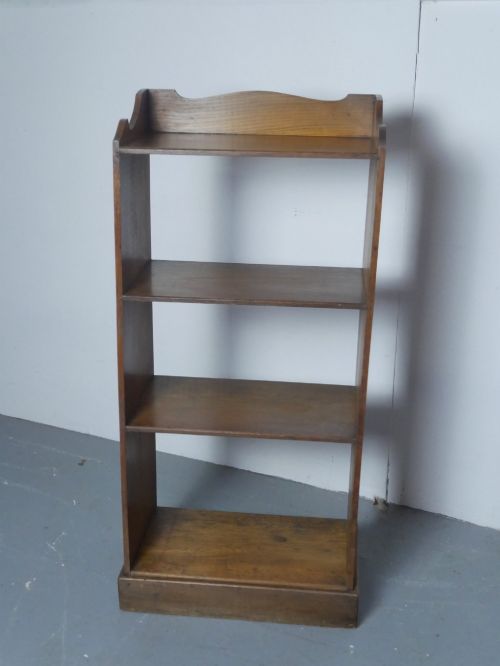
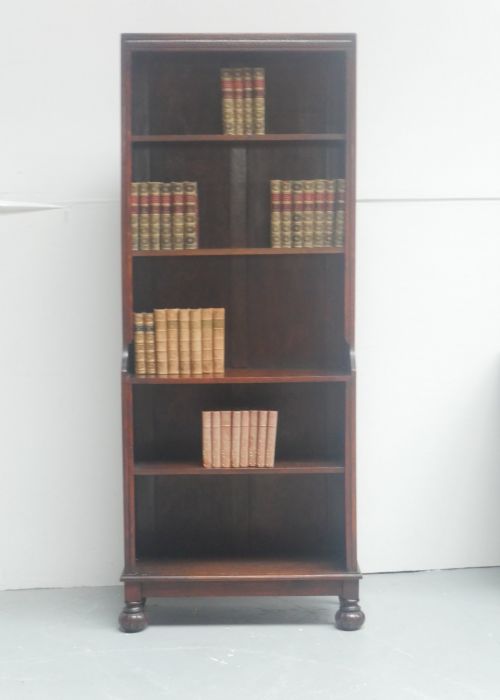
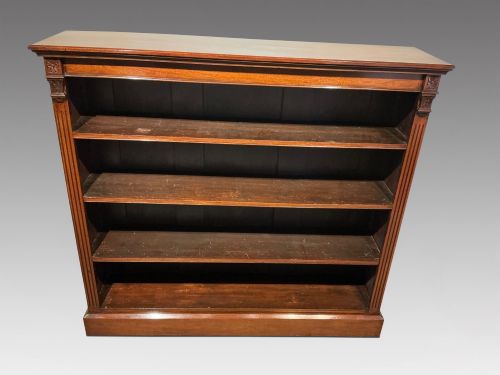
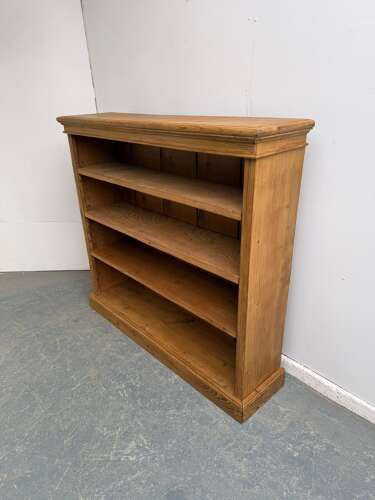
A freestanding bookshelf unit provides accessible open storage for books and display items without requiring wall attachment. Buyers seeking a freestanding bookshelf unit will find numerous variations ranging from compact three-shelf oak examples to taller nineteenth-century waterfall designs.
The selection encompasses pieces originating from the nineteenth century through the 1930s, with a strong representation of Edwardian and 1920s oak and mahogany forms. Alongside standard open bookcases, the inventory includes related storage formats such as whatnots and book stands.
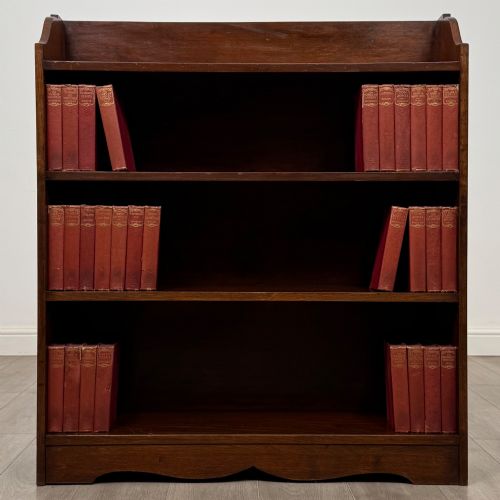
Most pieces function as open shelving units, though specific variants incorporate raised galleries, magazine racks, carved edges, or decorative cut-outs. These configurations reflect domestic needs from the Victorian era up to the interwar period.
How they were made
Makers utilised solid timbers such as oak, mahogany, pine, walnut, and burr walnut, frequently applying wood veneer for decorative surfaces. Metal and brass elements appear as structural or accent components across various periods.
Construction techniques emphasise traditional joinery suited to open shelving, with certain pieces featuring adjustable shelves or specialised mouldings to the front. Waxed finishes and polished timber surfaces protect the wood while highlighting natural grain patterns.
Listings span the nineteenth century, Victorian, Edwardian, and 1920s periods, utilising oak, mahogany, pine, walnut, and brass.
What varies in quality
Quality differences emerge through timber selection and cabinetmaking skill, distinguishing standard utility items from finely figured burr walnut or flame mahogany pieces. The crispness of carved details, decorative cut-outs, and raised galleries further separates simpler utilitarian constructions from more ambitious designs.
Structural integrity and material selection dictate the overall standard, visible in the choice of solid hardwoods versus secondary softwoods. Refined proportions and matching wood veneers indicate higher workshop standards during manufacture.
The Freestanding Bookshelf Unit Glossary
- Waterfall bookcase
- A stepped bookcase design where each successive shelf is shallower than the one below, creating a cascading profile.
- Whatnot
- A multi-tiered piece of freestanding furniture used for displaying ornaments, books, or small objects.
- Gallery
- A small decorative railing or raised edge positioned along the top surface of a piece to prevent items from sliding off.
- Flame mahogany
- A decorative timber veneer harvested from the junction where branches join the main trunk, displaying a flame-like grain pattern.
- Arts and Crafts
- A design movement emphasising handcraftsmanship, simple forms, and honest expression of materials.
Freestanding Bookshelf Unit: Frequently Asked Questions
What is a freestanding bookshelf unit?
A freestanding bookshelf unit is a piece of furniture designed to hold books that stands independently on the floor without needing wall support.
These pieces typically feature open shelves and appear in various woods like oak and mahogany across multiple historical periods.
How do I date a wooden bookcase?
Dating relies on identifying stylistic markers, construction methods, and timber choices characteristic of periods like the Victorian era, Edwardian period, or the 1920s.
Details such as carved edges, gallery rails, and specific wood veneers help narrow down the likely decade of manufacture.
Are these bookcases adjustable?
Certain period bookcases include adjustable shelving mechanisms, allowing users to alter shelf heights to accommodate different book sizes.
Many traditional open bookcases, however, feature fixed shelves built directly into the vertical sides.
Where should I place a waterfall bookcase?
A waterfall bookcase works well against living room or study walls, utilising its stepped profile to display books and small decorative objects.
Because these units are finished on the front and sides, they require stable placement on flat flooring.
What wood types are common?
Oak and mahogany appear most frequently among these freestanding units, reflecting their popularity in British domestic furniture over past centuries.
Other materials include pine, walnut, burr walnut, and rosewood for more decorative commissions.