






Framed Victorian Poster
These framed victorian poster examples bring authentic nineteenth-century paper ephemera into your interior, offering a direct window into historical advertising and typography.
Framed Victorian Poster
A framed victorian poster brings historical printed ephemera into domestic spaces, capturing the commercial and decorative art of the nineteenth century. When searching for a framed victorian poster, you encounter surviving paper signs, tea advertisements, and educational prints preserved behind glass.
The selections span the later nineteenth century, including pieces from the eighteen-eighties and eighteen-nineties alongside similar turn-of-the-century works. These items primarily originate from commercial contexts, recording historical brands and public notices of the period.
How they were made
These works utilise period paper substrates printed with nineteenth-century commercial ink techniques, capturing the distinct typography and illustration styles of the era. The surviving sheets are protected beneath glass and housed within wooden or hardwood frames suitable for wall display.
The mounting materials reflect standard nineteenth and early twentieth-century framing practices, preserving the fragile paper surfaces from atmospheric degradation. Each piece combines the original printed sheet with structural framing components to ensure longevity.
Victorian tea drinkers enjoyed clever marketing long before television commercials existed.
What varies in quality
The standard of a framed victorian poster depends heavily on the crispness of the original print and the preservation of the paper substrate. Stronger examples retain vibrant ink saturation and clear typographical details without excessive fading or staining.
Framing choices also dictate the overall character, with period-appropriate timber mouldings and original glass elevating the piece above later replacements. The historical significance of the specific subject matter, such as documented tea or cocoa advertisements, further distinguishes finer works.
Horniman·Lutona
The Framed Victorian Poster Glossary
- Ephemera
- Printed material intended for short-term use that has survived as a historical document. These paper items include advertisements, signs, and broadsheets.
- Lithography
- A printing process that uses a flat stone or metal plate to apply ink to paper. This technique enabled the mass production of detailed Victorian illustrations and posters.
- Substrate
- The underlying material upon which an image or text is printed. In these works, the substrate consists of nineteenth-century paper.
- Half Tester
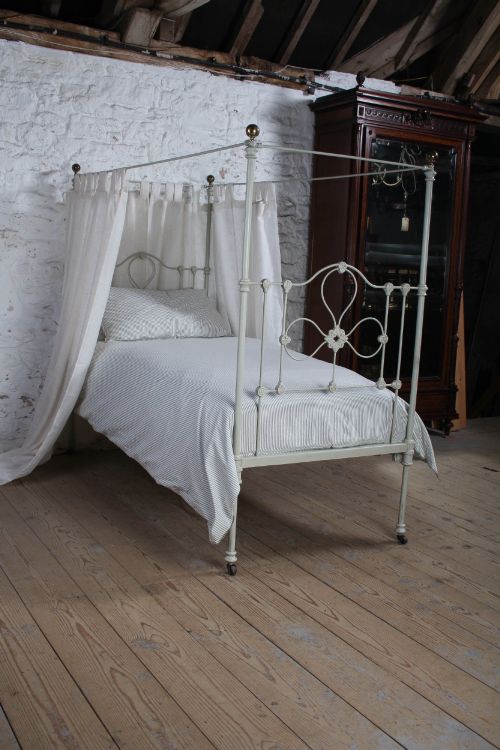
- A bed style featuring a canopy extending only partway over the head of the bed rather than the full length. This form appears alongside wall-hung prints within the broader nineteenth-century categories.
Framed Victorian Poster: Frequently Asked Questions
What is a framed victorian poster?
It is an original nineteenth-century printed paper sign or advertisement preserved beneath glass within a frame. These items record historical commerce, typography, and graphic design from the Victorian era.
Most examples originate from late nineteenth-century advertising campaigns, capturing the everyday visual culture of the period for modern interiors.
How do I care for antique paper posters?
Keep the framed piece away from direct sunlight to prevent the inks and paper substrate from fading over time. Stable indoor humidity protects the fragile paper from warping or deterioration.
Ensure the hanging wire and wall fixings remain secure, as antique frames can be heavy and require proper structural support.
Are these posters original to the nineteenth century?
The listings comprise authentic nineteenth-century printed material, including period advertisements and paper signs from the eighteen-eighties and eighteen-nineties. Each piece dates from the era it represents rather than being a modern reproduction.
Examining the paper stock and printing technique helps confirm the historical authenticity of the item.
Where were these posters displayed originally?
Commercial posters and paper signs were typically displayed in shops, public houses, and railway stations to promote household goods and beverages. They served an entirely utilitarian function before becoming collectible decorative objects.
Over the decades, survivors were salvaged and framed to protect the fragile paper from destruction.