

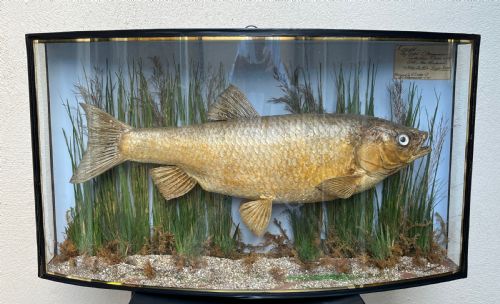
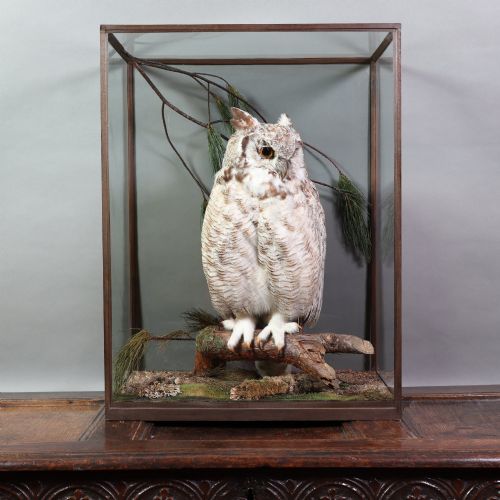
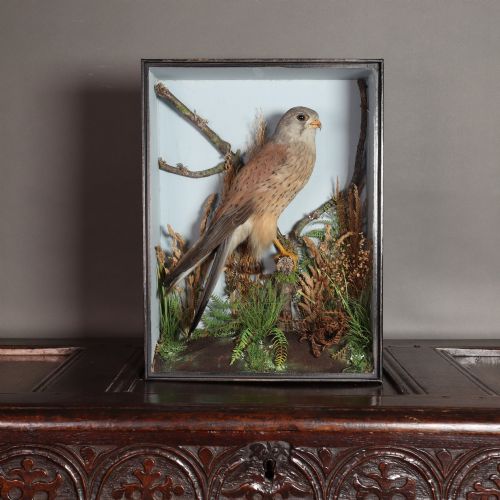


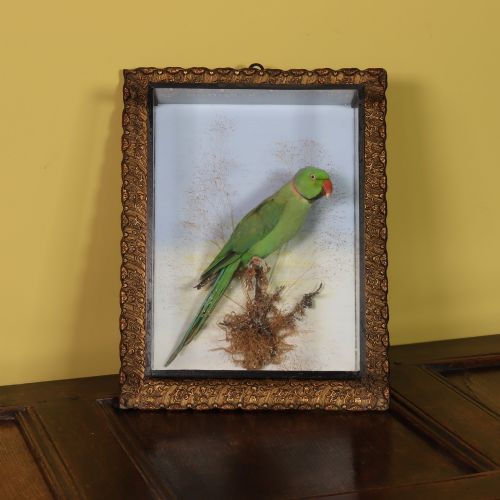
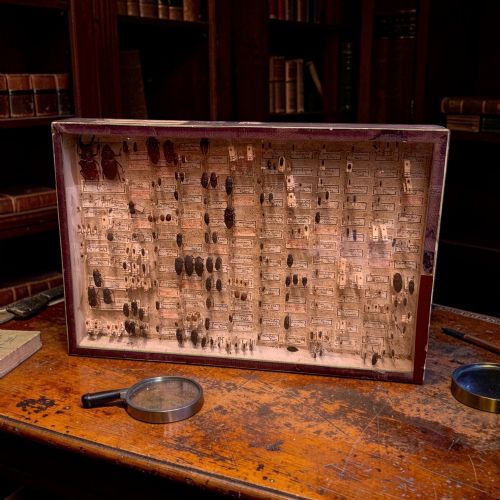



Framed Taxidermy Case
A framed taxidermy case brings the natural history of the Victorian and Edwardian eras directly to your walls in a protective wooden and glass enclosure.
Framed Taxidermy Case
A framed taxidermy case presents preserved birds, animals, or feathers mounted within a secure enclosure, combining natural science with decorative domestic display. You will frequently encounter specimens such as owls, kingfishers, jays, and waterfowl set against painted or natural backdrops.
These pieces primarily date from the nineteenth century through the early twentieth century, spanning the Victorian, Edwardian, and later periods. The forms range from wall-hanging picture frame cases to deep shadow boxes and tabletop curiosity cabinets.
Originating from a period of intense fascination with natural history, these displays served as both scientific study pieces and striking interior ornaments. The selection on this page shows British craftsmanship ranging from single specimens to complex dioramas containing multiple birds.
Materials and construction
Makers housed preserved specimens within wooden frames fitted with glass fronts to protect the delicate feathers and fur from dust and moisture. The internal environments frequently incorporate natural elements such as dried reeds, moss, gravel, and painted paper backdrops to simulate a realistic habitat.
Taxidermists utilised mounting techniques that required precise wire armature and meticulous arrangement of plumage to maintain a lifelike posture. The exterior wood often received a dark polish or painted finish suitable for domestic display.
Framed Taxidermy Case Retail Price Guide 2026
Typical asking prices for framed taxidermy case among the pieces listed under this phrase on Sellingantiques today, from the lower quarter to the upper quarter. They describe what is for sale here now, not the wider market.
The listings on this page span the Victorian, Edwardian, and early twentieth-century periods, featuring materials such as glass, wood, dried reeds, and taxidermy specimens.
Assessing quality and execution
The distinction between standard commercial work and superior examples lies in the anatomical accuracy of the taxidermy and the artistry of the interior setting. Master practitioners achieved convincing postures and natural expressions that elevate a specimen from a simple preserved animal to a sculptural work of art.
The complexity and condition of the diorama setting also influence the standard of the piece, particularly where painted backgrounds and simulated snow or water scenes remain intact and undamaged. Furthermore, the inclusion of documented maker labels from established workshops adds significant provenance.
Little & Co·Rowland Ward Ltd·T. E. Gunn·William Bazeley & Sons·Hutchings of Aberystwyth
The Framed Taxidermy Case Glossary
- Taxidermy
- The art of preparing, stuffing, and mounting the skins of animals for display. This practice reached a high level of sophistication during the nineteenth century.
- Diorama
- A three-dimensional scene in which specimens are arranged in a recreation of their natural habitat. These often include painted backdrops and botanical elements.
- Entomology
- The branch of zoology relating to insects. Entomology cases organise butterflies, beetles, or other insects systematically behind glass.
- Specimen
- An individual animal or plant used as an example of its species for scientific study or display. Collectors prize specimens with original plumage and minimal restoration.
- Shadow box
- A deep picture frame that allows three-dimensional objects to be housed securely under glass. This form is common for wall-mounted bird displays.
Framed Taxidermy Case: Frequently Asked Questions
How do I date a framed taxidermy case?
Dating relies heavily on the style of the wooden frame, the materials used in the interior groundwork, and any trade labels pasted to the back or inside the glass. Victorian examples often feature heavy dark wood and hand-painted backdrops reflecting mid to late nineteenth-century aesthetics.
Later pieces from the Edwardian era and the early twentieth century may utilise lighter oak frames or different mounting styles. Comparing the construction methods with documented maker timelines provides further chronological accuracy.
Where should I hang a taxidermy case?
These pieces require placement away from direct sunlight and damp environments to protect the fragile feathers, paper backgrounds, and wooden frames. Hanging them on interior walls with stable room temperatures ensures the preservation of the natural materials over time.
Consider eye-level placement in studies, hallways, or living rooms where the fine details of the diorama can be easily observed. Ensuring the wall fixings are secure is essential due to the combined weight of the glass and wood.
How do I clean the glass on a case?
Cleaning requires a soft cloth and a minimal amount of glass cleaner applied directly to the cloth rather than the wood or frame. This prevents moisture from seeping into the joints or damaging the internal historical elements.
Avoid spraying liquids near the edges where the glass meets the frame or seals, as older adhesives and papers can be sensitive to moisture. Regular dusting of the exterior frame with a dry cloth keeps the piece in good condition.