


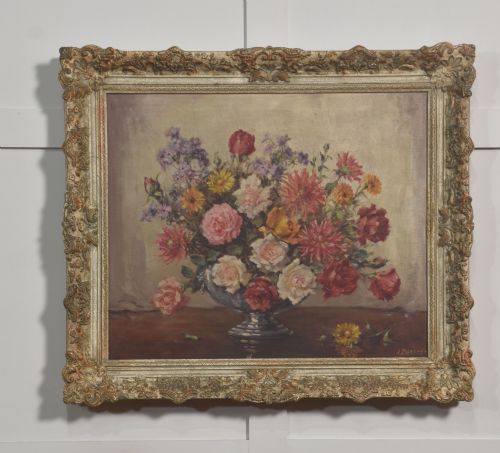
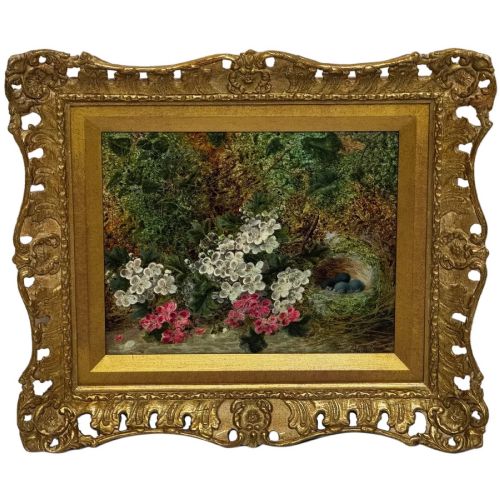
Framed Still Life
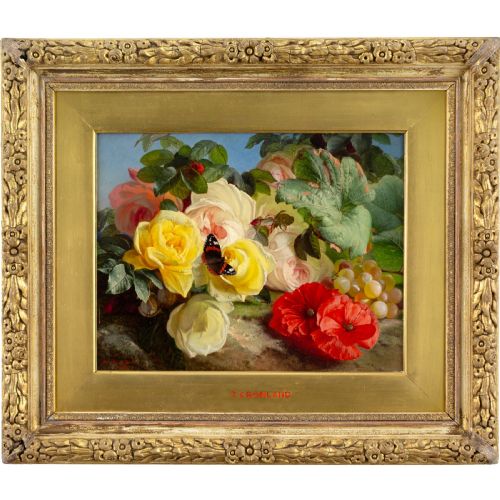
A framed still life captures quiet compositions of fruit, flowers and domestic objects, bringing centuries of oil painting tradition directly onto your walls.
Framed Still Life
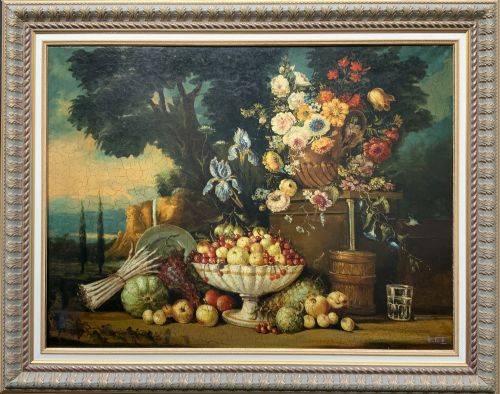
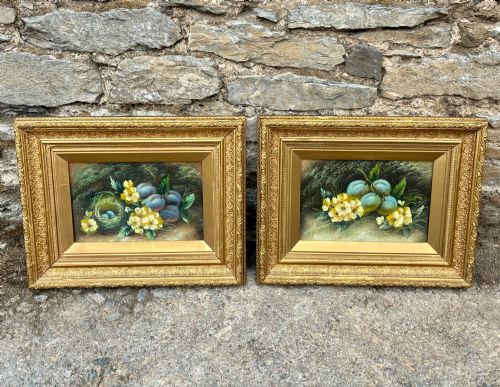
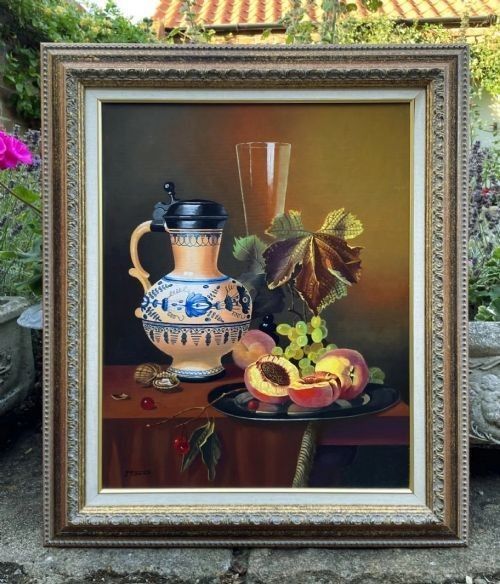
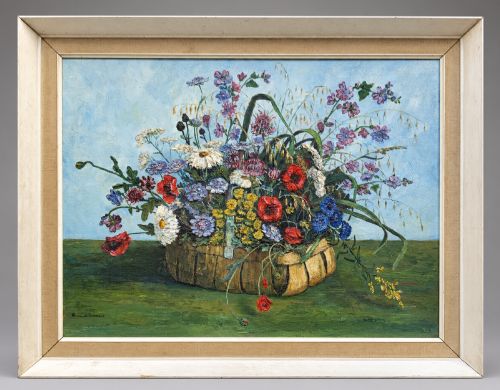
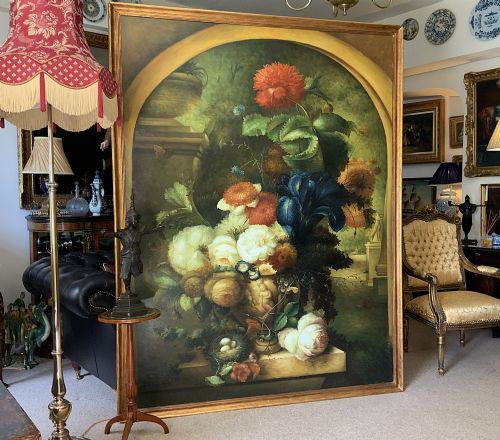
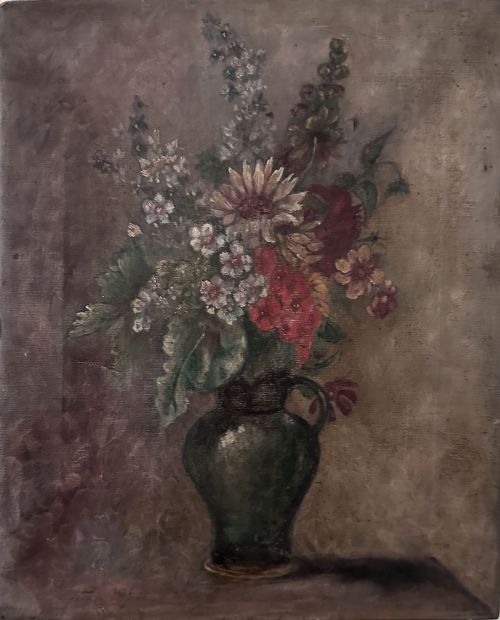
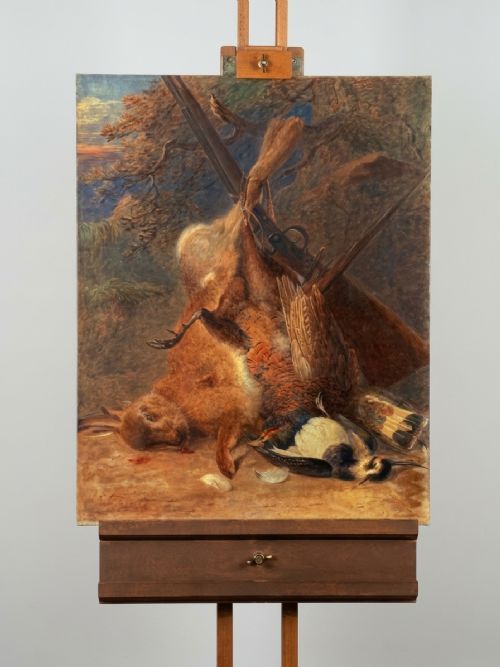
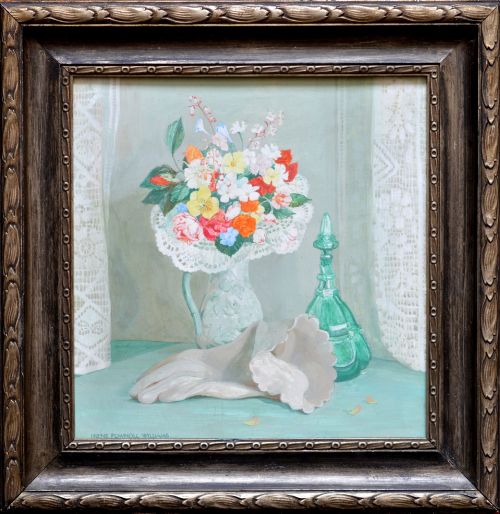
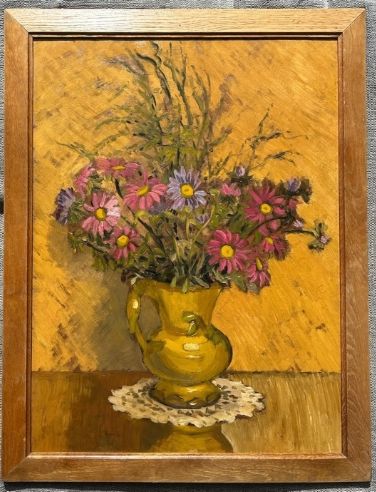
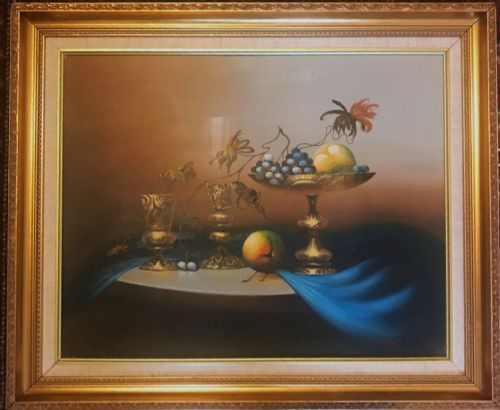
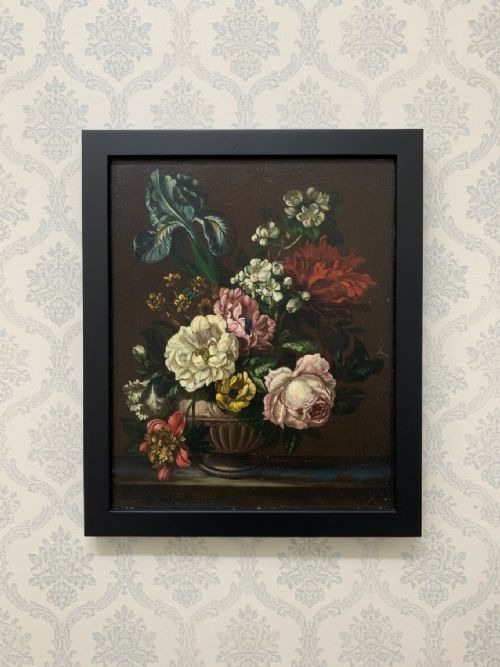
A framed still life represents arranged subjects such as flowers in vases, baskets of fruit, and birds' nests, captured in oil paint on canvas, board or panel. These works span from nineteenth-century Victorian studies to mid-century modern interpretations, alongside earlier Dutch Golden Age and Flemish Baroque revival styles.
You will most frequently encounter nineteenth-century oil paintings and mid-century examples featuring floral arrangements or fruit. The selection ranges from intimate cabinet pieces to monumental canvases housed in period gilt gesso frames.
How they were made
Artists typically applied oil paint onto stretched canvas, wood panels, or artist boards, building rich textures and deep tones. Many of these artworks are housed within substantial wooden frames finished with gold leaf, gilt, or moulded gesso.
Techniques vary from classical realism with precise detail to impressionistic brushwork, where light and colour take precedence over fine line work.
Several paintings feature secretive birds' nests hidden among the fruit and blossom, inviting a closer look.
What varies in quality
The sophistication of brushwork and the natural rendering of light upon surfaces separate standard decorative studies from masterworks. Compositional balance and the handling of translucent petals or polished fruit skins reveal the true skill of the artist.
The integrity and original state of the accompanying wooden or gilt frame heavily influence the overall stature of the piece, as period frames complement the depth and historical context of the painting.
Oliver Clare·Konstantin Stoitzner·Edward Ladell·Michelangelo Meucci·Emma Fordyce MacRae·Gaspar Peeter Verbruggen
The Framed Still Life Glossary
- Oil on Canvas
- Pigment mixed with drying oil applied to a woven fabric support. This traditional method allows for subtle blending and rich texture.
- Gilt Gesso
- A plaster-like material applied to wood frames and carved before being coated in gold leaf or metallic paint. It provides an ornate border for traditional paintings.
- Trumeau
- A decorative wall mirror or panel featuring painted or carved artwork within the upper section. These architectural pieces often originate from French country houses.
- Oleograph
- A mechanical print on canvas that simulates an oil painting through textured roller application. These reproductions emulate the appearance of genuine brushstrokes.
- Panel
- A flat wooden support used instead of canvas for painting. Panels offer a rigid foundation that prevents the cracking often found in aged textiles.
Framed Still Life: Frequently Asked Questions
How do I date a framed still life?
Examine the canvas preparation, stretcher bars, and the construction style of the wooden frame. Canvas types and framing techniques evolved distinctly from the nineteenth century through the mid-century modern era.
Signatures, artist inscriptions on the reverse, and stylistic clues such as Victorian realism or mid-century impressionism also help narrow down the period of creation.
Where should I hang a still life painting?
Still life paintings traditionally suit dining rooms, kitchens, or living spaces where their intimate domestic subjects can be appreciated closely. Their rich floral and fruit compositions add warmth and traditional character to interior walls.
Ensure the artwork hangs away from direct sunlight and excessive moisture to protect both the oil paint and the surrounding gilt frame.
What is the difference between oil on canvas and oil on board?
Oil on canvas involves stretched fabric that yields slightly to the touch and offers a textured weave beneath the paint layers. Oil on board uses a rigid wooden or composition support, providing a completely firm surface.
Both materials were utilised extensively across different periods, with boards often appearing in smaller study pieces and panels.
Are these paintings supplied in original frames?
Many listings feature period frames, such as nineteenth-century gilt gesso or carved wood, which were paired with the artworks during their era of creation. These frames often show age-appropriate patination that complements the painting.
Descriptions specify whether the frame is original to the artwork or a later compatible addition.