








Framed Ship Model
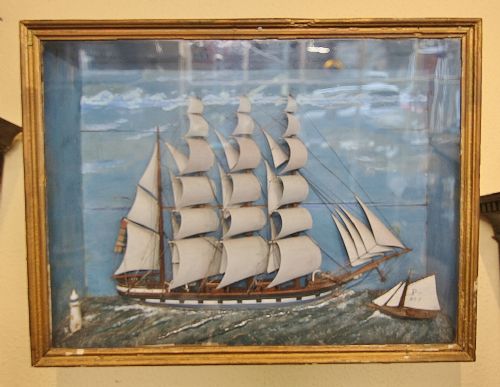
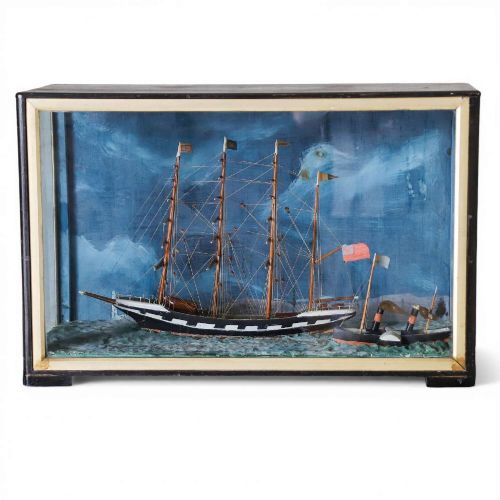
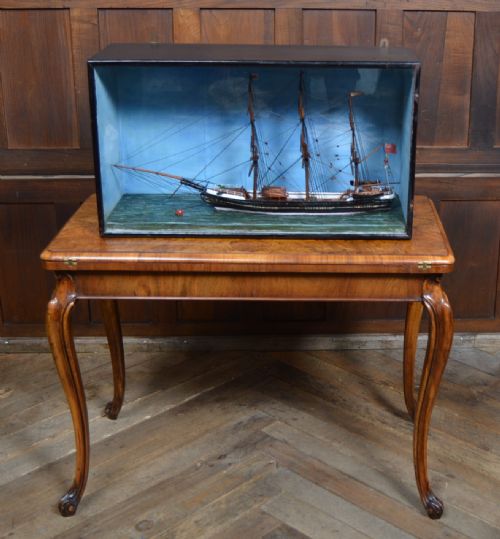
These framed ship model pieces bring historical maritime craft into your home through detailed shadow box dioramas and half hulls.
Framed Ship Model
A framed ship model presents maritime history in three dimensions, enclosed within protective shadow boxes and wall art cases. When you search for a framed ship model, you encounter pieces primarily from the nineteenth century and the early twentieth century.
The objects on this page range from half model hull displays set against painted coastal backdrops to fully rigged sailing ship dioramas. Many examples originate from British folk art traditions, capturing named vessels like the Queen Anne and the Glynllifon.
Maritime folk art dominates the selection, reflecting the handmade skill of makers working in coastal communities. These pieces combine miniature wooden vessels with painted seascapes and plaster elements to create depth within a wall-hanging frame.
Materials and construction
Makers constructed these pieces using wood, canvas, and pine, carving hulls and scratch-building masts by hand. Painted backdrops in oil paint supplied skies and coastal landmarks such as Tynemouth Castle behind the miniature vessels.
Glazed shadow boxes protected the delicate rigging and fabric elements from dust and damage. Additional detailing often involved plaster for waves and unconventional materials like straw work to render intricate decorative patterns.
Framed Ship Model Retail Price Guide 2026
Typical asking prices for framed ship model among the pieces listed under this phrase on Sellingantiques today, from the lower quarter to the upper quarter. They describe what is for sale here now, not the wider market.
Some nineteenth-century makers utilised straw work to construct intricate decorative patterns within their maritime shadow box scenes.
Assessing quality
Quality in these dioramas rests upon the intricacy of the scratch-built rigging and the skill evident in the carved wooden hull. Finer examples integrate painted backdrops with the physical model to create a convincing perspective, whereas simpler pieces rely on basic assembly.
The presence of named vessels and detailed coastal scenery elevates a piece beyond standard folk art production. Preservation of the original glass case and the stability of the internal wooden and fabric components also define the better specimens.
The Framed Ship Model Glossary
- Shadow box diorama
- A shallow display case enclosing a three-dimensional scene behind glass. This format protects intricate miniature rigging from environmental wear.
- Half model hull
- A carved representation of one side of a ship mounted on a backboard. These often include painted coastal backdrops and specific geographical landmarks.
- Scratch-built
- Constructed entirely from raw materials without the use of a commercial kit. Makers built these ship models using individual pieces of wood, canvas, and thread.
- Folk art
- Artistic work created within a community culture without formal academic training. These maritime pieces reflect traditional local skills and vernacular styles.
Framed Ship Model: Frequently Asked Questions
How were these dioramas displayed originally?
These framed models were designed primarily as wall art for homes and maritime offices. The protective glazed box kept the delicate rigging safe from coastal sea air.
Today, they function well as focal points in living spaces or studies, continuing their original purpose as displays of nautical heritage.
What subjects do these ship models depict?
The pieces record specific vessels, such as the Glynllifon or the Hippolyta, alongside unnamed sailing ships and local craft like cobles. Many incorporate painted backgrounds showing recognizable landmarks or dramatic seascapes.
This mix of specific portraiture and general maritime scenes reflects the varied interests of nineteenth-century commissioners and makers.
How do I care for a framed ship model?
Keep the piece away from direct sunlight and damp environments to protect the wood, canvas, and oil paint. The glass front should be cleaned gently without pressing against the delicate internal components.
Stable indoor temperatures help preserve the old pine frames and prevent the plaster or paper elements from degrading.
How can I tell the period of a diorama?
Nineteenth-century examples often display traditional folk art characteristics and simpler materials like straw work or basic carved wood. Pieces from around nineteen hundred and the early twentieth century tend to feature more refined riggings and specific vessel names.
Examining the construction of the wooden frame and the style of the painted canvas provides further clues to the date of creation.