


Framed River Thames Art
When you search for framed river thames art, you enter a visual record of London and its reaches through centuries of changing water traffic and architecture.
Framed River Thames Art
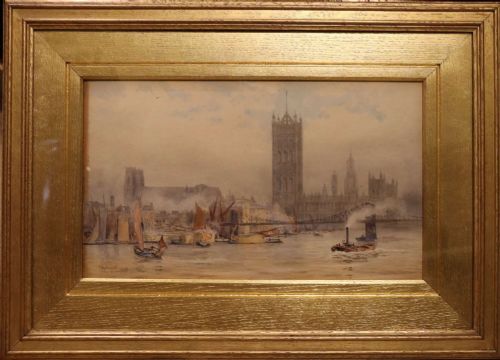
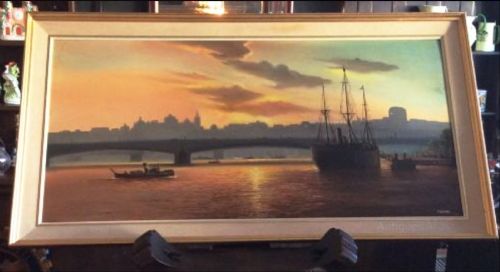
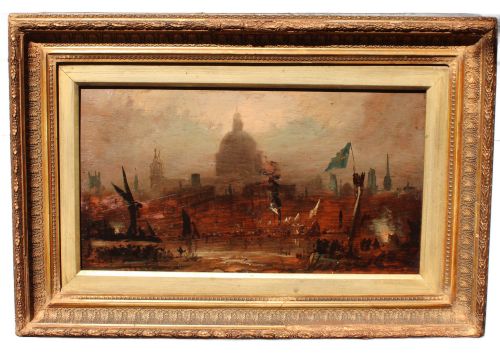
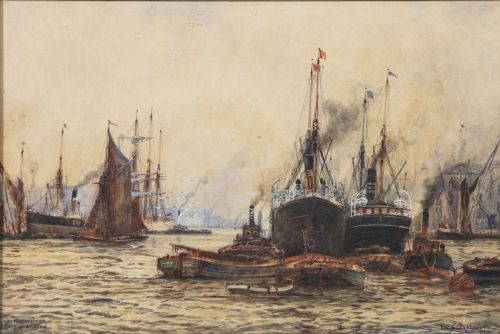
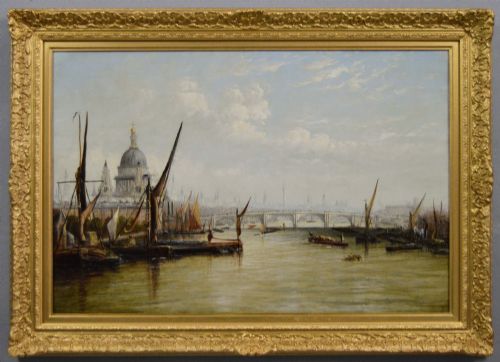
Framed river thames art captures the maritime history, bustling wharves, and quieter reaches of Britain's most famous waterway from the Georgian period through to the twentieth century. These works document specific landmarks such as Windsor Castle, the Houses of Parliament, and London Bridge alongside everyday scenes of Thames barges and tug boats.
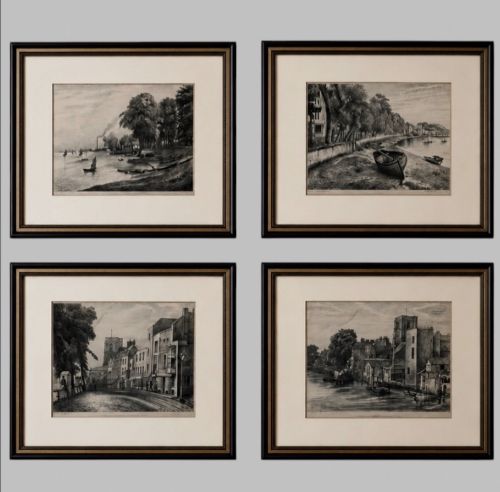
The selections available range from detailed topographical watercolours and atmospheric oil paintings on canvas to hand-coloured aquatints, etchings, and lithographs. You are most likely to encounter Victorian and Edwardian watercolours or oil paintings depicting bustling shipping pools and rural locks.
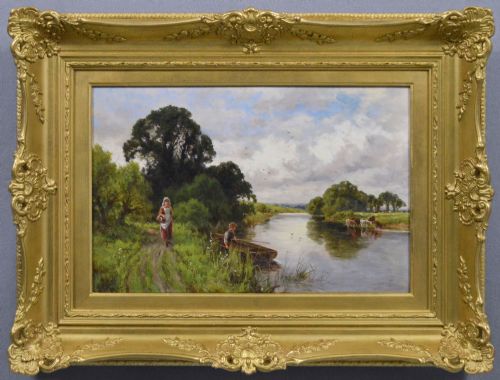
Compositions vary from grand panoramic marine seascapes to intimate rural river landscapes featuring figures fishing at dusk or quiet eyots near Marlow. Each piece offers a specific window into the historical topography and maritime commerce of the river.
The makers and artists represented span named nineteenth and twentieth-century painters and printmakers, alongside works created in the manner of earlier masters or after established topographical draughtsmen.
Materials and execution
Works in this category rely primarily on traditional paper and canvas supports, utilising mediums such as oil paint, watercolour, ink, and drypoint. Oil paintings on canvas or board capture the heavy textures of shipping vessels and atmospheric London smoke, while watercolours employ transparent washes on paper to render light on water.
Printmaking techniques represented include etchings, lithographs, and hand-coloured aquatints, which allowed topographical views to be reproduced and circulated. These works are typically housed in period wooden frames, occasionally incorporating gold leaf mouldings that complement the palette of the artwork.
Listings span the Georgian, Victorian, and Edwardian eras, utilising oil on canvas, watercolour, and engraved paper.
Factors of quality
The distinction between standard and superior pieces rests upon the surety of the draughtsmanship, the atmospheric handling of light and water, and the historical specificity of the view. Stronger works demonstrate a practiced command of perspective in rendering complex architectural landmarks like St Paul's or bridge structures alongside convincing water reflections.
Condition of the medium and the integrity of the original frame also separate examples, where well-preserved watercolour pigments retain their vibrancy and oil paintings exhibit stable surfaces without disruptive craquelure or later overpaint.
H. Medlycott·Frank William Scarbrough·Francis Moltino·Henry John Kinnaird·Robert Winchester Fraser·Edward Henry Eugene Fletcher·Edward Seago
The Framed River Thames Art Glossary
- Aquatint
- An intaglio printmaking technique that produces tonal areas resembling watercolour washes. It was frequently used for topographical views and illustrations.
- Drypoint
- A printmaking process where an image is scratched directly onto a metal plate with a sharp needle. This creates a characteristic velvety burr in the printed lines.
- Topographical
- Representing specific places accurately rather than inventing an imaginary landscape. These works serve as reliable historical records of past architecture and river life.
- Marine Seascape
- Artworks focused primarily on the sea, shipping, and coastal or tidal river environments. They frequently record commercial vessels, barges, and naval architecture.
Framed River Thames Art: Frequently Asked Questions
How do I date an antique Thames painting?
Dating relies upon stylistic markers, costumes of figures, and depicted architectural phases of London bridges and landmarks. Costume details and the presence or absence of specific nineteenth-century industrial structures often narrow the decade of creation.
Signatures, artist registry dates, and framing construction methods provide further corroboration. Comparing known exhibition dates for listed artists helps confirm the precise era of execution.
What is the difference between an etching and a watercolour?
An etching is a printed multiple created by biting lines into a metal plate with acid before applying ink to paper. This technique produces crisp, reproducible linear detail.
Watercolour is a unique, hand-painted work utilising water-soluble pigments on paper. Each watercolour is a one-off original featuring fluid washes of colour rather than printed ink lines.
Where were these river scenes typically painted?
Artists worked both from direct observation on the banks of the tidal Thames in central London and from rural reaches further upstream like Windsor, Marlow, and Wargrave. Urban subjects frequently concentrate around the Pool of London, the bridges, and the Houses of Parliament.
Rural compositions highlight locks, backwaters, and pastoral villages. Both urban and rural settings reflect the economic and leisure importance of the river.
How should I care for antique paper art?
Works on paper require protection from direct sunlight to prevent fading of watercolours and coloured printing inks. Maintaining stable indoor humidity prevents foxing spots and paper degradation.
Framing with acid-free mounts and conservation-grade glass preserves the paper substrate. Keeping pieces away from direct heat sources ensures the longevity of the materials.