



Framed Ocean Wave Art
Framed ocean wave art captures the restless motion of the sea through historic oil paintings and watercolours.
Framed Ocean Wave Art
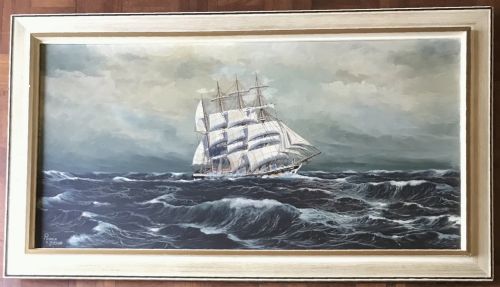
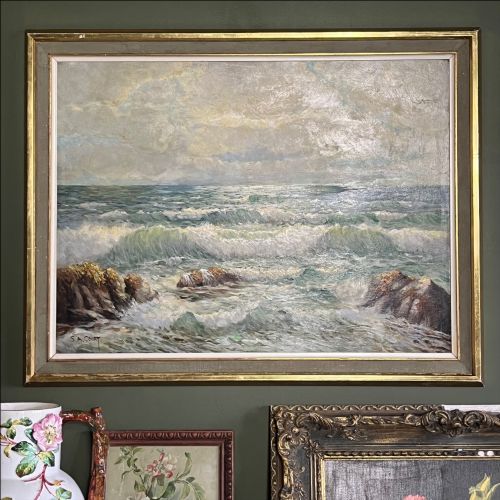
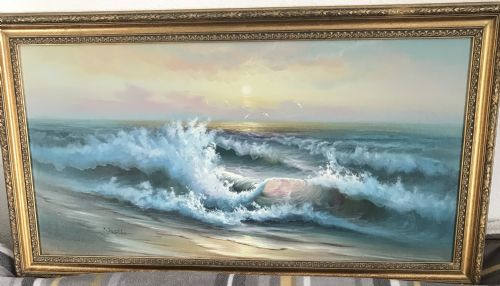
Framed ocean wave art comprises historic paintings that record the sea, coastal views, and marine vessels across multiple decades. Buyers searching this phrase encounter coastal landscapes, stormy seas, and portraiture of ships in heavy waters. These works capture specific shorelines and maritime scenes from Cornwall, Filey Brigg, Croyde Bay, and the Isle of Man.
The selections span the Victorian era through the mid-twentieth century, encompassing periods such as 1910, 1920, 1930, 1950, and 1960. Styles represented include British Impressionism, Edwardian maritime, and maritime realism. Most pieces arrive in period frames that complement the character of the canvas or paper within.
How these pieces were made
Artists painted these works using oil on canvas, watercolour, and gouache applied to paper. Painters often worked en plein air along coastal spots to capture natural light and wave movement directly. Canvases are stretched over wooden supports and enclosed in wood and gilt frames.
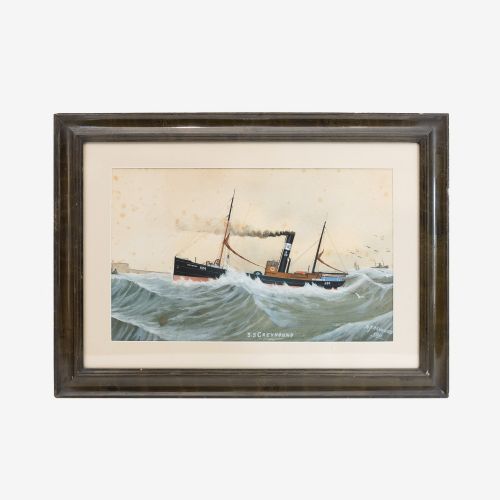
Watercolours utilise water-soluble pigments layered on paper, occasionally heightened with opaque gouache for wave crests and foam. Oil paintings employ thick brushwork and layered paint to render the weight and texture of water.
Framed Ocean Wave Art Retail Price Guide 2026
Typical asking prices for framed ocean wave art among the pieces listed under this phrase on Sellingantiques today, from the lower quarter to the upper quarter. They describe what is for sale here now, not the wider market.
Materials across these listings include canvas, paper, wood, oil paint, watercolour, gouache, and gilt.
What varies in quality
Quality rests in the handling of light, atmosphere, and the dynamic movement of the water. Stronger works convey the force of stormy seas or the stillness of a summer morning through confident brushwork and precise colour harmony. Lesser examples rely on rigid composition and flat application of paint.
The execution of maritime detail, from rigging on vessels to the foam along a coastline, distinguishes accomplished hands from routine production. The condition of the canvas, paper, and original gilt framing also influences the integrity of the piece.
Sidney A. Court·Alexander Harwood·Charles Napier Hemy·William Greaves·Herbert James·Montagu Barstow·Edmund Gouldsmith
The Framed Ocean Wave Art Glossary
- En plein air
- Painting outdoors in natural light. This method allows artists to capture immediate atmospheric changes on coastal waters.
- Gouache
- An opaque watercolour paint. It adds density and highlights to works on paper.
- Pierhead painting
- A specific genre depicting ships near a port. These works often record named vessels in coastal waters.
- Gilt
- A gold leaf or gold paint finish applied to frames. It enhances the visual boundary of the artwork.
Framed Ocean Wave Art: Frequently Asked Questions
What periods do these pieces date from?
The works span from the Victorian era through the mid-twentieth century. Dates include the nineteenth century, 1910, 1920, 1930, 1950, and 1960.
Individual pieces often bear specific dates or reflect the distinct stylistic movements of their decade of creation.
How were marine watercolours protected?
Works on paper utilised watercolour and gouache, requiring mounting behind glass within a protective frame. This guarded the delicate pigments from atmospheric moisture and surface damage.
Oil paintings on canvas avoided glass, relying instead on varnished surfaces to seal the pigment.
Where do these coastal scenes depict?
Locations include British coastal spots such as Cornwall, Devon, Filey Brigg, and the Isle of Man. Other works record specific vessels in heavy seas or neapolitan waters.
Artists travelled directly to these shorelines to paint the local tides and coastal landscape.