

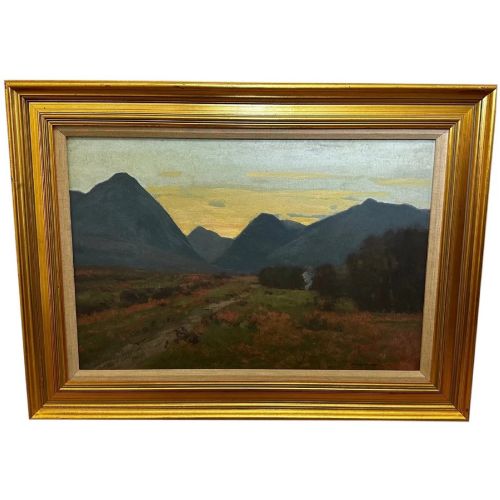
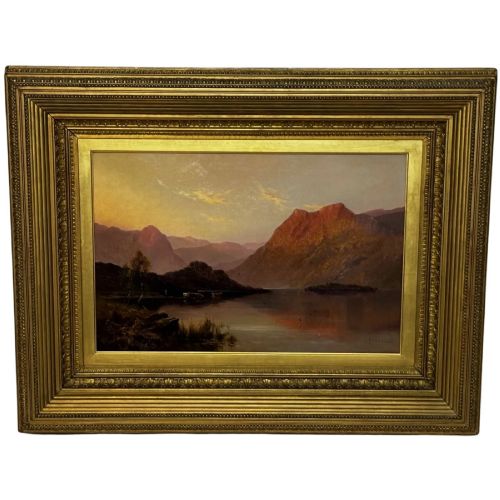
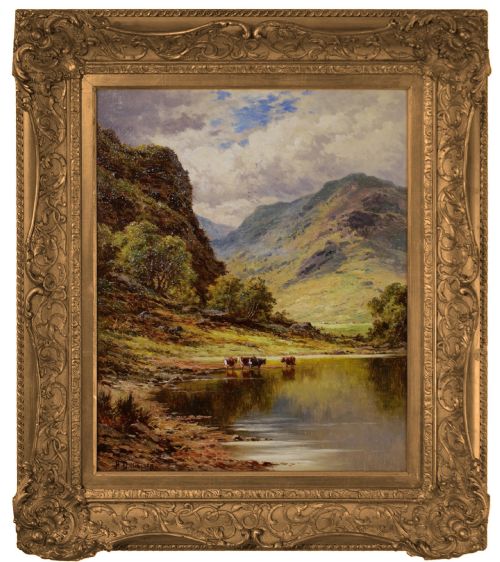
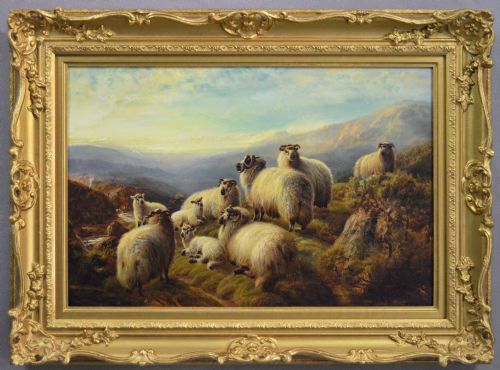


Framed Mountain Canvas
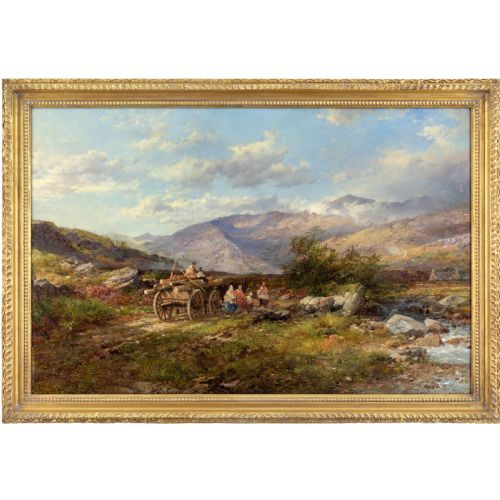
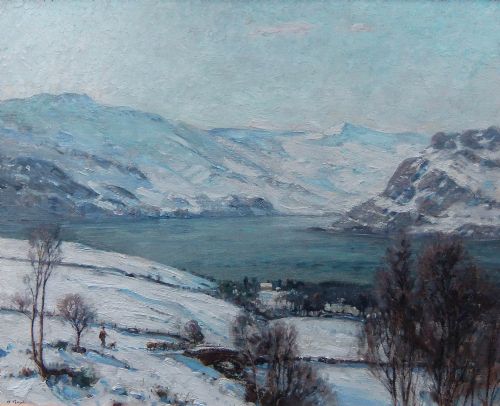
Framed mountain canvas works bring the crags, lochs and river valleys of nineteenth-century topography straight into your room.
Framed Mountain Canvas
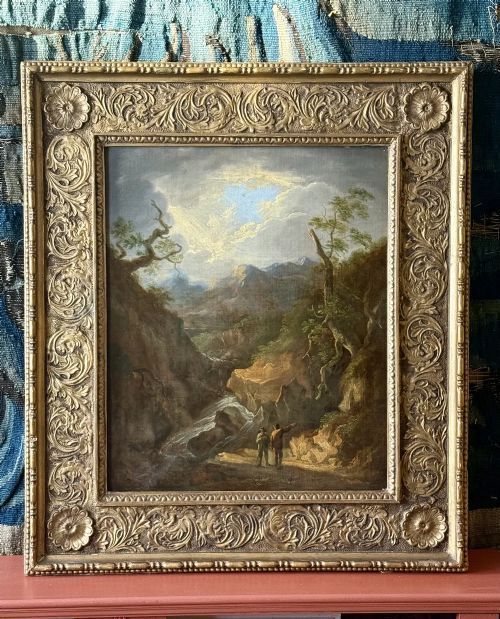
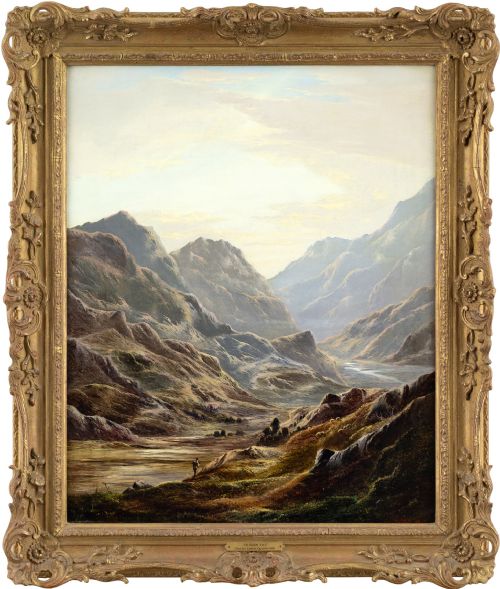
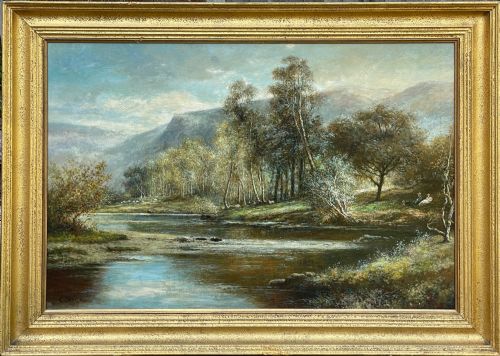
A framed mountain canvas typically takes the form of an oil painting on stretched fabric, set inside a substantial wood or gesso frame. Buyers seeking this phrase encounter British and continental landscapes stretching from Snowdonia and the Scottish Highlands to the Alps and Bavaria.
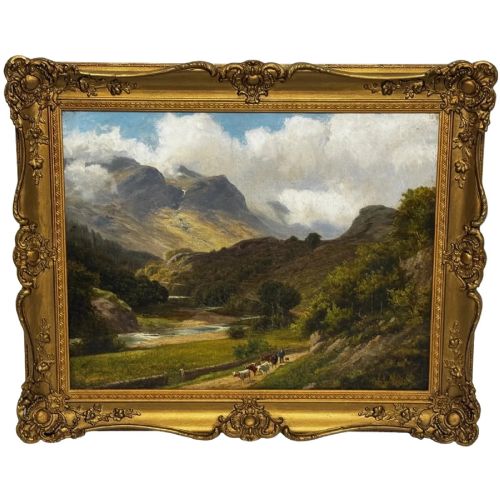
The prevailing examples span the nineteenth century through the early twentieth century, showing pastoral scenes, cattle near lochs, and craggy peaks. These works record romantic and impressionist views executed by named artists and regional schools alike.
Most compositions present tranquil waterways, passing rain showers over ridges, or shepherds with their flocks beneath towering summits. The combination of oil paint and period framing delivers a complete, historic window onto highland scenery.
Materials and construction
Artists painted primarily with oil on woven canvas, building up pigment to capture the texture of rock faces, water, and skies. Canvas provided a stable, flexible support that could accommodate both broad landscape sweeps and fine details like figures or cattle.
Makers housed these canvases in wooden frames, frequently enhanced with moulded gesso and gilt decoration to catch the light. These surrounds range from simple wooden battens to ornate, heavy giltwood mouldings designed to complement the grandeur of the painted peaks.
Framed Mountain Canvas Retail Price Guide 2026
Typical asking prices for framed mountain canvas among the pieces listed under this phrase on Sellingantiques today, from the lower quarter to the upper quarter. They describe what is for sale here now, not the wider market.
Styles represented include Scottish Impressionism, Victorian Romanticism, and the 19th Century British School.
Distinctions in quality
Quality rests on the precision of the brushwork and the artist's ability to render light, atmosphere, and scale convincingly across a large canvas. Stronger pieces convey the specific geology of locations like the Lake District or the Alps rather than generic scenery.
The harmony between painting and frame also dictates the overall standard, as original giltwood and gesso surrounds preserve the integrity of the piece. Well-preserved surfaces retain deep impasto, clear signatures, and stable canvas tension without excessive later intervention.
John Syer RI·Herbert Royle·Benjamin Barker of Bath·Alfred Fontville de Breanski Jr·George Houston RSA RSW·Henry H. Parker·Charles Leslie·Robert Watson·John Grenville Fennell·William Henry Mander·Sidney Richard Percy·Thomas Spinks·Frank Hider·Walter J Watson·C Caldwell·William Grant Murray·J Barclay·John Douglas Perrett·Karl Herrle·George Melvin Rennie·William Miller Frazer·Alfred de Breanski·Gustave De Brianski·Alfred de Breanski Sr
The Framed Mountain Canvas Glossary
- Oil on Canvas
- A painting medium where pigments bound in drying oil are applied to a woven fabric support. This method allowed artists to achieve rich colour depths and gradual tonal shifts.
- Giltwood
- Wood carved and covered with a thin layer of gold leaf. It provided opulent borders for nineteenth-century landscape paintings.
- Gesso
- A plaster-like mixture applied to wood frames to create smooth surfaces for moulding or gilding. It allowed makers to shape elaborate decorative reliefs.
- Impasto
- Paint applied thickly to a canvas so that it stands proud of the surface. This technique adds literal texture to renderings of water, clouds, and rocky crags.
- School
- A group of artists working in a similar style or region during a specific period. Listings often reference British, Scottish, or continental schools.
Framed Mountain Canvas: Frequently Asked Questions
What periods do these paintings come from?
The selections span the nineteenth century and the early decades of the twentieth century, with a strong representation of Victorian landscape art. Works from the 1860s, 1870s, and 1900s appear frequently among the listings.
Creators worked within romantic and impressionist traditions, capturing highland topography across Britain and continental Europe.
Where do these landscape scenes usually depict?
Many views focus on British locations including Snowdonia, the Lake District, the Scottish Highlands, and Welsh river valleys near Dolgellau. Other canvases travel further afield to the Alps, Bavaria, and China.
Local landmarks such as Loch Lomond, Ben Lawers, and the Conwy river feature prominently in the titles.
Are the frames original to the canvases?
Numerous works retain their original giltwood or gesso frames, which match the period of the painting. These surrounds often feature detailed mouldings suited to nineteenth-century display.
Some listings explicitly note original frames, adding historical context to the complete artwork.
How should I care for an oil on canvas?
Keep the canvas away from direct sunlight, damp environments, and sudden temperature shifts to protect the oil paint and wood support. Dust the frame gently with a dry, soft cloth.
Avoid using liquid cleaners on the painted surface or the giltwood mouldings.