




Framed Linen Needlepoint
Framed linen needlepoint pieces bring historical handwork into modern rooms, offering intimate windows into past domestic lives.
Framed Linen Needlepoint
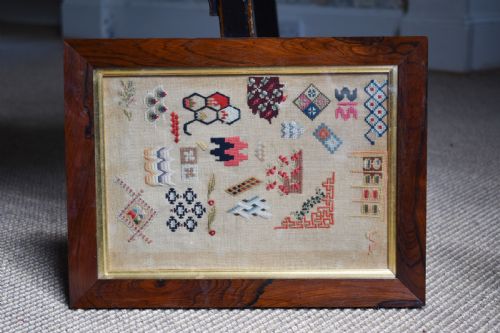
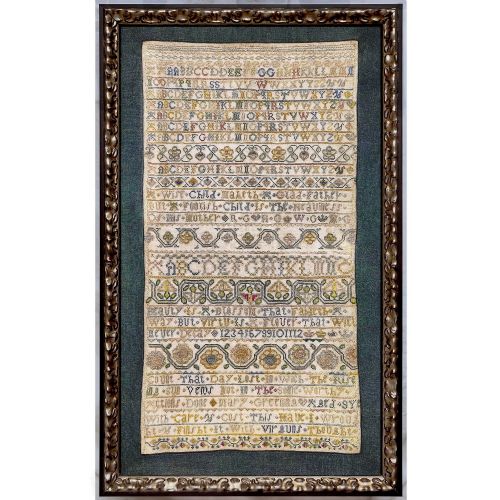
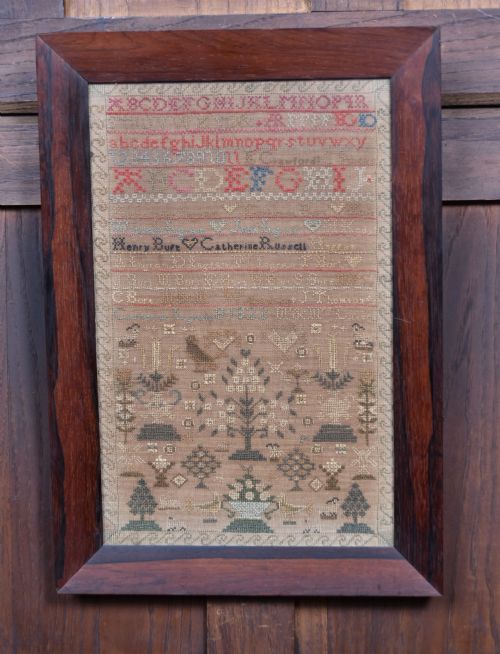
Framed linen needlepoint comprises historic embroidered panels, maps, and alphabets preserved behind glass in wooden frames. When searching for framed linen needlepoint, buyers encounter textile art spanning the 18th and 19th centuries, including Victorian samplers and Georgian cartography.
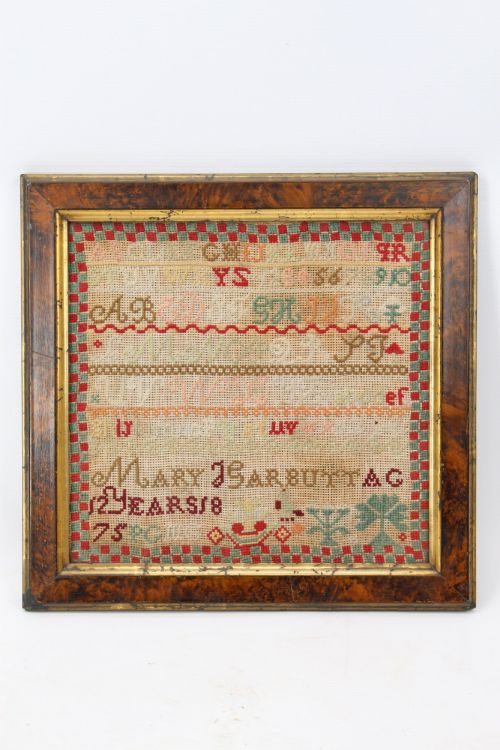
The selections on this page centre on needlework pictures and samplers worked by young makers, often recording ages, dates, and religious texts. English, Scottish, and Greek Island origins appear alongside folk art interpretations, showing diverse regional traditions in domestic textile production.
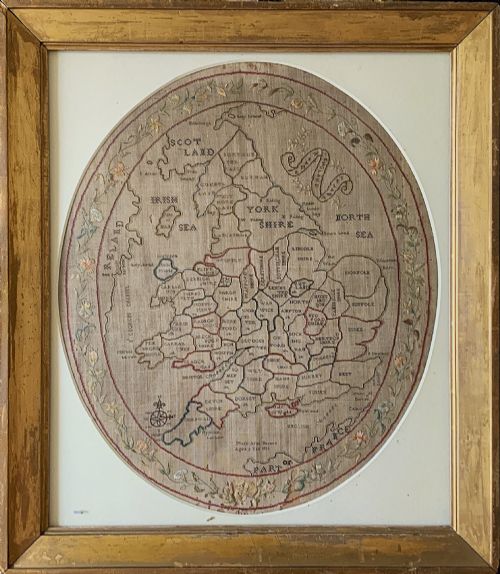
Most examples date from the Victorian and Georgian periods, utilising base linen grounds stitched with wool, silk, and silk thread. These mounted textiles range from miniature band samplers to large wall panels containing genealogical records and maps of England and Wales.
How they were made
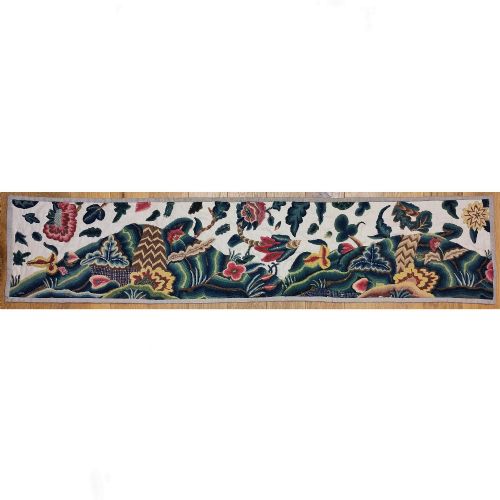
Maker execution relies on woven linen foundations stretched to receive hand-stitched motifs rendered in wool, silk, and silk thread. Workers employed counted thread techniques and crewelwork stitches to build alphabets, pictorial scenes, and cartographic details.
Protection and presentation involve wooden framing paired with glass coverings, safeguarding fragile organic threads from dust and environmental degradation over centuries. Contemporary mountings often preserve early or original framing methods that secure the textile panel safely behind glazing.
Framed Linen Needlepoint Retail Price Guide 2026
Typical asking prices for framed linen needlepoint among the pieces listed under this phrase on Sellingantiques today, from the lower quarter to the upper quarter. They describe what is for sale here now, not the wider market.
Stitch errors left by young makers centuries ago reveal genuine human moments behind otherwise precise alphabetical exercises.
What varies in quality
Quality rests in the precision of the stitching and the ambition of the subject matter, such as detailed maps or pictorial panels over basic alphabets. Pieces incorporating signed makers, recorded ages, and specific dates command greater historical interest than anonymous examples.
The condition of the linen ground and the vibrancy of surviving wool and silk threads dictate visual preservation. Superior items maintain intact glass protection, stable wooden frames, and minimal thread loss across complex pictorial layouts.
The Framed Linen Needlepoint Glossary
- Sampler
- A piece of needlework produced as a demonstration or test of skill in various stitches, often featuring alphabets, numerals, and moral verses. Historic examples frequently record the name and age of the young maker.
- Band sampler
- An early format of needlework featuring horizontal bands of distinct patterns and stitches arranged in rows. This traditional layout precedes the pictorial and map samplers of later periods.
- Crewelwork
- Embroidery executed with wool yarn on a linen ground, utilising varied traditional stitches to create flowing floral and pictorial designs. English examples date back to the seventeenth and eighteenth centuries.
- Skyros embroidery
- Textile work originating from the Greek Islands, characterised by distinctive regional motifs and stitching styles. These panels represent Mediterranean traditions distinct from British domestic samplers.
- Map sampler
- A specialised needlework project depicting geographical regions, such as England and Wales, combined with decorative borders and maker details. These pieces served both educational purposes and domestic display.
Framed Linen Needlepoint: Frequently Asked Questions
How old are these framed needlepoints?
The pieces listed span primarily from the eighteenth and nineteenth centuries, encompassing both Georgian and Victorian eras.
Dates are frequently stitched directly into the linen by the young makers alongside their names and ages.
What subjects do samplers show?
Common subjects include alphabets, religious verses such as the commandments, and detailed maps of England and Wales.
Other examples feature pictorial scenes, genealogical records, and traditional decorative motifs.
Were these always framed?
Many historic textiles were mounted behind glass in wooden frames to protect fragile silk and wool threads from airborne dirt.
Framing methods vary, with some pieces retaining older wooden housings that complement the age of the needlework.
Who made these historic textiles?
A large proportion of these pieces were worked by young girls as part of their domestic education in needle skills.
Signatures, initials, and ages stitched into the composition often preserve the identity of the maker for modern collectors.