

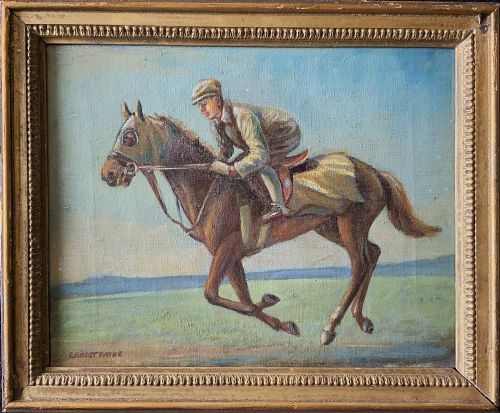


Framed Jockey Portraits
Framed jockey portraits capture the notable mounts and riders of British racing history within period wooden frames.
Framed Jockey Portraits
Framed jockey portraits combine the world of horse racing and fine art, depicting famous thoroughbreds alongside their riders on canvas or paper. These works celebrate historic winners from notable courses such as Newmarket and Kempton Park, rendered in distinct sporting styles.
The pieces on this page are predominantly nineteenth century works alongside early twentieth century examples. They include original oil paintings on canvas as well as period framed prints.
Subjects range from named royal thoroughbreds like Persimmon and Diamond Jubilee to specific historic races captured by period artists. The framing typically consists of wood or giltwood surrounds contemporary to the artwork.
How they were made
The artists applied oil paint to canvas or worked on paper to produce prints, utilising traditional brushwork to capture the musculature of the horses and the silks of the riders. These materials reflect standard nineteenth and early twentieth century studio practices.
Each piece is housed within a wooden frame, sometimes gilded, which provides both protection and visual definition for the sporting artwork.
Framed Jockey Portraits Retail Price Guide 2026
Typical asking prices for framed jockey portraits among the pieces listed under this phrase on Sellingantiques today, from the lower quarter to the upper quarter. They describe what is for sale here now, not the wider market.
Several portraits record legendary mounts participating in historic races at Colombo.
What varies in quality
Quality rests upon the skill of the artist in rendering anatomical precision in the horse and likeness in the jockey. Works by recorded painters display superior handling of light and movement compared to anonymous studies.
The preservation of the original canvas, paper, and frame dictates the overall integrity of the piece. Period frames that retain their original gilt surfaces contribute significantly to the character of the artwork.
Ernest Payne·Alfred Wheeler·Isaac Cullin·Snaffles·Frank Giggs
The Framed Jockey Portraits Glossary
- Oil paint
- Pigment suspended in drying oil, commonly used on canvas for nineteenth century sporting art. It allows for rich colour depth and detailed rendering of racing silks.
- Giltwood
- Wood carved and covered with a thin layer of gold leaf or gilt, frequently utilised for nineteenth century picture frames. This material adds warmth and reflects light around the artwork.
- Equestrian realism
- An artistic style focused on the accurate depiction of horses and racing scenes. It prioritises correct anatomical proportions and specific documentary details of the event.
- Sporting art
- A genre of fine art dedicated to depicting horses, racing, and field sports. It forms a distinct category within nineteenth century British painting.
Framed Jockey Portraits: Frequently Asked Questions
What periods do framed jockey portraits come from?
The works span the nineteenth century and the early twentieth century, reflecting Victorian and Edwardian artistic traditions in British sporting art.
Dates are often indicated by the lifespan of the artist or the specific historical race depicted in the subject matter.
Are these portraits original oil paintings or prints?
The selection includes both original oil paintings on canvas and period framed prints on paper. Each medium offers a different visual texture suited to equestrian subjects.
Listing titles specify whether a piece is an oil painting study or an original print.
How do I identify the jockey or horse in a portrait?
Many portraits record the names of famous racehorses and their riders directly in the title or subject matter, such as Fred Archer Up or Diamond Jubilee.
Racing silks worn by the jockeys often correspond to the registered colours of historic owners like Lord Glanely or King Edward VII.
How should I hang these portraits at home?
These works suit traditional study spaces, libraries, or living rooms alongside other British sporting art and equestrian memorabilia.
Ensure they are placed away from direct sunlight to protect oil paint, canvas, and paper from fading over time.