


Framed French Street Art
Framed french street art brings the atmosphere of Parisian boulevards and provincial squares directly into a room through oil paint and watercolour.
Framed French Street Art
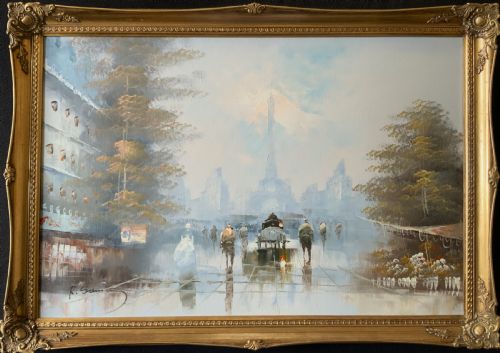
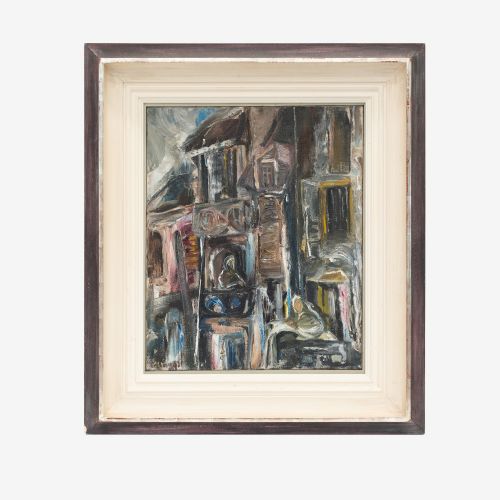
Framed french street art encompasses oil paintings, watercolours, and pastels depicting cityscapes, landmarks like the Eiffel Tower, and everyday urban scenes. These works capture Parisian street life, Montmartre in winter, and the architecture of France across several decades.
The pieces on this page span from the nineteenth century through the mid-twentieth century, embracing styles such as Impressionism, Post-Impressionism, and the Belle Epoque. Buyers will encounter both large cityscapes and intimate townscapes preserved in traditional wood and gilt frames.
How they were made
Artists painted primarily in oil on canvas or board, and occasionally with watercolour or pastel on paper, building texture and colour to represent light and atmosphere. These compositions capture specific moods, from sun-drenched Mediterranean streets to bustling city scenes on cold days.
The completed artworks found here are housed in wood frames, including gilt wood and gilded wood mouldings that complement the palette and period of the painting. The framing ranges from simple wooden profiles to ornate decorative surrounds.
Horses and carts share the pavement with early urban traffic in these bustling historic street scenes.
What varies in quality
Quality rests in the handling of light, brushwork, and the spatial depth of the cityscape. Stronger examples convey movement and atmosphere with assurance, whereas simpler works rely on formulaic repetition.
The integration of the artwork with its frame plays a role in the overall presentation. Period frames that suit the scale and tone of the painting elevate the piece, while later or mismatched replacements alter the visual balance.
Albert Ludovici Jnr·Caroline Burnett·Victor Gabriel Gilbert·Merio Ameglio·Léon Joseph Voirin·Eduard Leon Cortes·Joseph W. Milliken·Albert Guillaume·Henry Schafer·Letitia Marion Hamilton
The Framed French Street Art Glossary
- Gilt wood
- Wood coated with a thin layer of gold leaf or gold paint. This finish was commonly applied to frames to add reflective warmth to the artwork.
- Impressionism
- A nineteenth-century art movement characterised by relatively small, thin yet visible brush strokes and an emphasis on accurate depiction of light. Many street scenes adopt this approach to render bustling crowds and changing weather.
- Cityscape
- A painting or other work of art that depicts the physical aspects of a city or urban area. These often feature recognizable landmarks, streets, and figures.
- Belle Epoque
- A period of French history spanning from the late nineteenth century to the First World War, noted for optimism and cultural production. Art from this time often captures vibrant urban social life.
Framed French Street Art: Frequently Asked Questions
What periods do these artworks cover?
The selection includes works originating from the nineteenth century up through the mid-twentieth century.
These pieces reflect shifts in style from the Belle Epoque to mid-century impressionism and expressionism.
What mediums are used in these works?
Artists worked in oil paint on canvas or board, alongside watercolours and pastels on paper.
Most pieces are presented within wood or gilt wood frames suited to their era.
What subjects do these paintings depict?
The imagery focuses primarily on Paris cityscapes, iconic monuments, townscapes, and market scenes.
Compositions often feature figures, horses and carts, cathedrals, and suburban views across France.
How do I identify the style of a piece?
Look at the brushwork, the treatment of light, and the overall composition to distinguish between impressionist and post-impressionist approaches.
Signatures, framing materials, and recorded dates also help anchor a work within its period.