





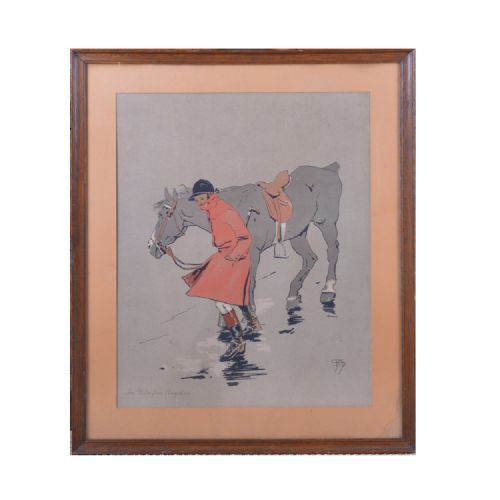
Framed Fox Hunt Picture
A framed fox hunt picture brings the momentum and tradition of British sporting art onto the wall through oils, watercolours and prints.
Framed Fox Hunt Picture
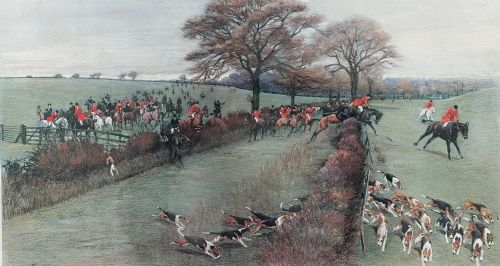
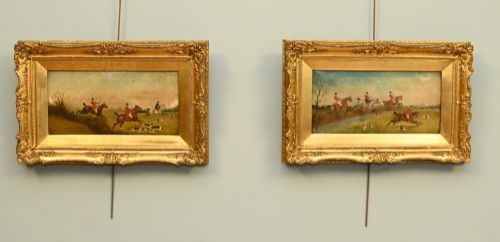
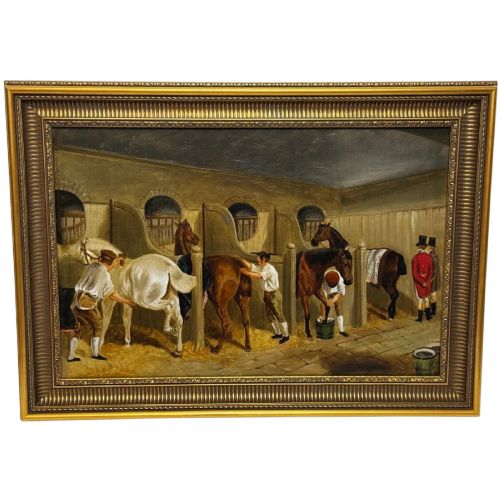
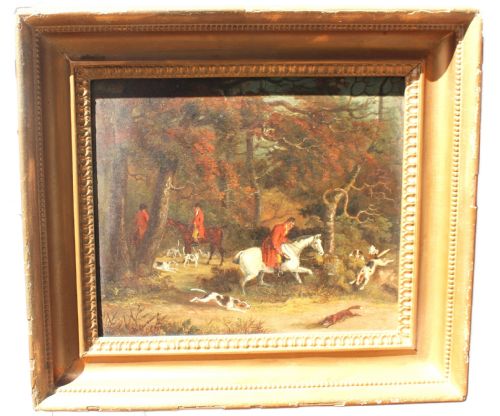
A framed fox hunt picture captures the movement of horses, hounds and riders across open countryside, representing the core of British sporting art. The selection here ranges from grand nineteenth-century oil paintings on canvas to hand-coloured engravings, watercolours and twentieth-century prints.
Buyers frequently encounter works executed in oil paint, watercolour, pencil and chalk, alongside original prints and chromolithographs by notable equestrian artists. These pieces document specific historic hunts such as the Quorn, Belvoir and Berkeley hunts, anchoring the rural scene in real topographical traditions.
How They Were Made
Artists deployed oil on canvas, oil on wood, or watercolour on paper, applying pigments to capture the vivid red coats of huntsmen against muted winter landscapes. Engravings and prints were produced using copper plates, then often hand-coloured to highlight details in the horses and hounds.
Framing typically involves gilt wood and gold leaf moulding, designed to complement the rich tones of the artwork and protect the paper or canvas beneath glass where required.
Framed Fox Hunt Picture Retail Price Guide 2026
Typical asking prices for framed fox hunt picture among the pieces listed under this phrase on Sellingantiques today, from the lower quarter to the upper quarter. They describe what is for sale here now, not the wider market.
Even the foxes occasionally paused to watch the chaotic procession unfold across the Leicestershire mud.
What Varies In Quality
Quality rests in the anatomical accuracy of the horses and hounds, the artist's handling of dynamic motion, and the preservation of the medium itself. Works by established sporting painters demonstrate superior draftsmanship in complex multi-figure compositions compared to routine studio output.
The integrity of the original framing, the clarity of hand-coloured details on prints, and the condition of the canvas or paper surface directly influence the visual impact of the piece.
John Arthur Lomax·Basil Nightingale·Charles Faulkner·John Sanderson Wells·Charles Johnson Payne Snaffles·Heywood Hardy·Guillaume Urban Régamey·George Goodwin Kilburne·Charles Hunt·Francis Calcroft Turner·Geoffrey Mortimer·Frank Algernon Stewart·Frank Dadd
The Framed Fox Hunt Picture Glossary
- Chromolithograph
- A multicoloured print produced through a specialised lithographic process that uses separate stones for each colour layer. This technique creates rich, vibrant reproductions closely resembling original watercolours.
- Engraving
- An intaglio printmaking process where an artist cuts lines directly into a metal plate with a burin. The resulting grooves hold ink to transfer fine, crisp details onto paper.
- Watercolour
- A painting method where fine pigment is suspended in a water-soluble binder applied to paper. It allows for translucent washes that capture shifting light in outdoor sporting scenes.
- Gilt Wood
- Timber carved and coated with a thin layer of gold leaf or metallic paint. This traditional framing technique provides a bright, reflective border suited to nineteenth-century canvases.
Framed Fox Hunt Picture: Frequently Asked Questions
How do I care for a framed hunting watercolour?
Keep the artwork away from direct sunlight to prevent the delicate pigments and paper from fading over time. Maintaining stable indoor humidity also protects the paper and the original gilt wood frame.
Ensure the piece hangs securely using appropriate wall fixings suited to the weight of the timber and glass. Dust the frame gently with a dry cloth without applying pressure to the glazed surface.
What is the difference between an original painting and a vintage print?
An original painting is a unique hand-painted work created directly by the artist using oil or watercolour on canvas, wood or paper. Every brushstroke is singular and tied to the artist's hand.
Prints and engravings are mechanical or plate-based reproductions issued individually or in sets, sometimes finished with hand-colouring. These offer a view into historic sporting imagery while existing in multiple impressions.
How can I date a nineteenth-century sporting artwork?
Examine the materials, including the style of the canvas stretching, the composition of the paper, and the construction methods of the wooden frame. Historic framing techniques and period labels often provide reliable chronological markers.
Subject matter clothing, tack, and specific hunt names mentioned in the title or inscription also help narrow down the decade of creation.
Where should I hang a large framed hunting oil painting?
Position the painting at eye level in a principal room where the scale of the canvas can be appreciated from a distance. Traditional spaces like studies, libraries and dining rooms suit the equestrian theme well.
Avoid placing heavy gilt frames near active heat sources or damp exterior walls to preserve the wood and the underlying canvas tension.