

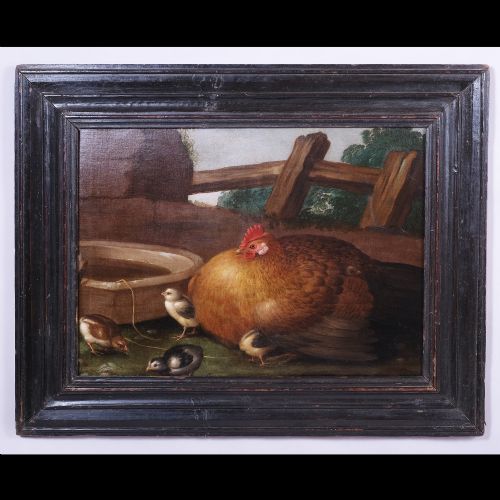
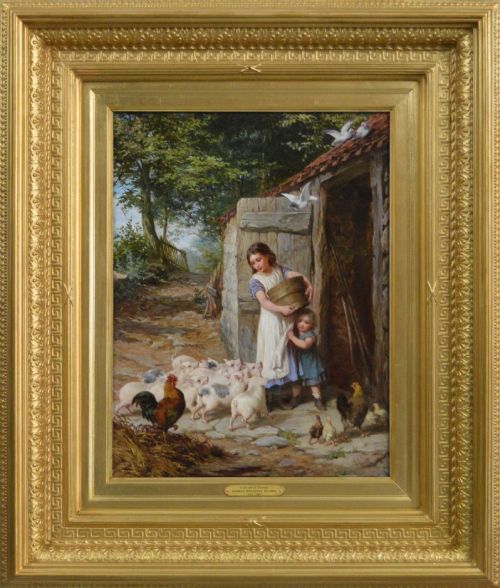


Framed Farmyard Painting
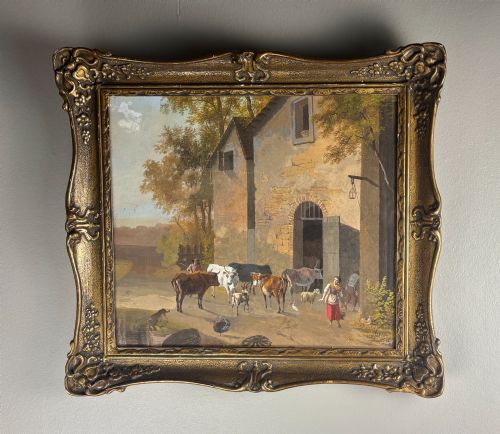
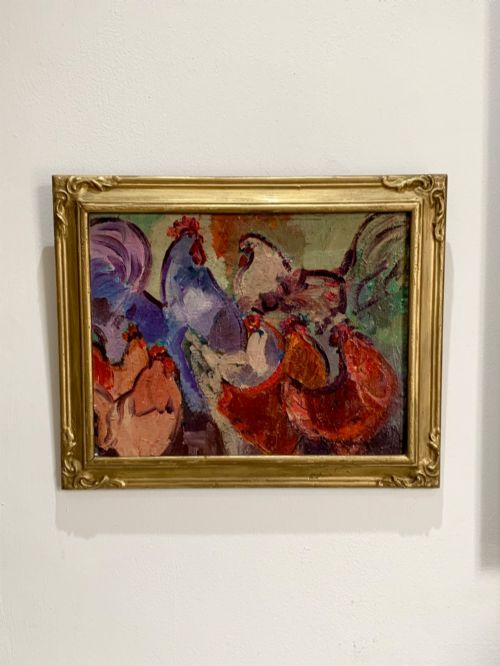
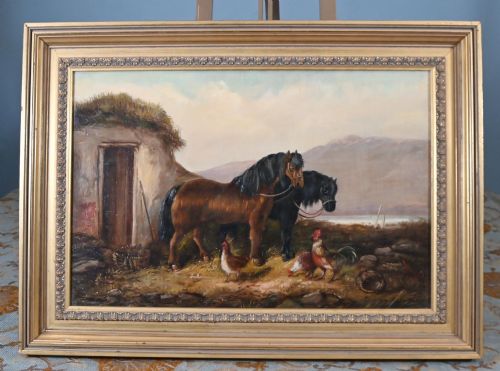
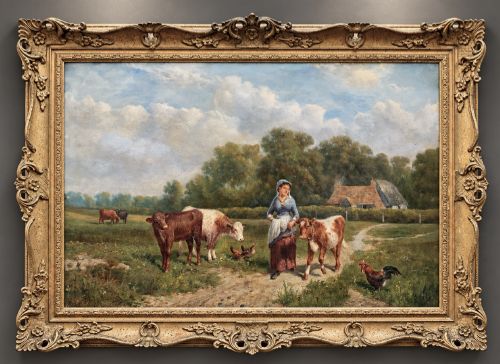
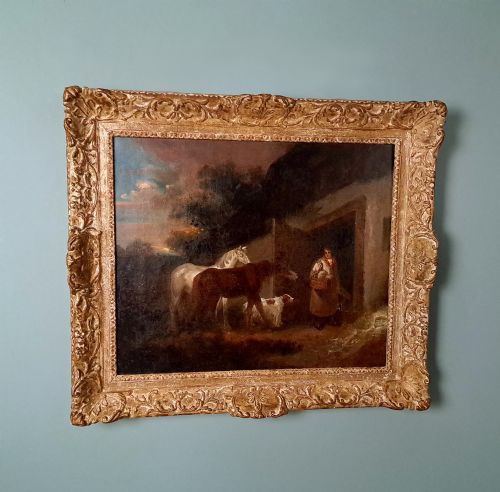
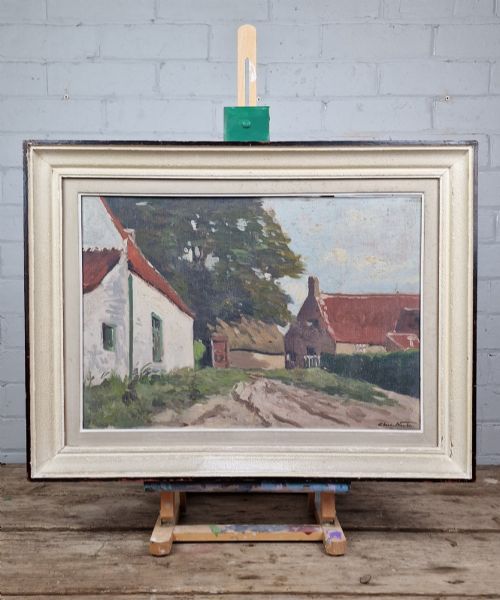
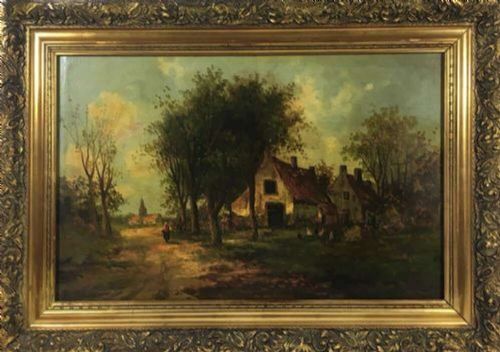
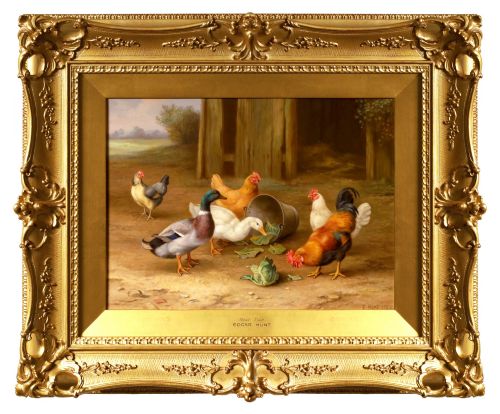
A framed farmyard painting brings the quiet routines of rural life and livestock into an interior through traditional brushwork.
Framed Farmyard Painting
A framed farmyard painting captures agricultural life, featuring horses, cattle, poultry, and rustic architecture across various historical periods. The selection on this page leans heavily into nineteenth-century works, alongside examples from the eighteenth and early twentieth centuries.
Buyers encounter oil on canvas, oil on board, and watercolour paintings framed in period wood and gesso settings. These pieces range from intimate watercolours of single animals to large landscape oil paintings populated by farm workers and livestock.
Materials and technique
Artists painted primarily in oils or watercolours on canvas, prepared wood boards, and paper, applying pigment to capture natural light in rural settings. Canvases and wooden panels received layers of oil paint, while watercolours utilised paper supports.
Surviving works are preserved in original or period frames constructed from wood, giltwood, and moulded gesso. These frames define the perimeter of each painting and protect the edges of the canvas or paper support.
Framed Farmyard Painting Retail Price Guide 2026
Typical asking prices for framed farmyard painting among the pieces listed under this phrase on Sellingantiques today, from the lower quarter to the upper quarter. They describe what is for sale here now, not the wider market.
Listings feature works executed in oil on canvas, oil on board, and watercolour on paper, framed in period wood and gesso.
Assessment of quality
Quality rests upon the artist's ability to render animal anatomy and the play of light across rustic textures with conviction. Stronger examples display careful observation of horses, poultry, and figures within a coherent landscape.
The integrity of the physical work, including the preservation of the paint layer and the character of the associated frame, separates finer survivals from simpler decorative items.
Samuel Joseph Clark·Karel Dujardin·William Joseph Shayer Senior·Charles Houben·George Augustus Holmes·Edgar Hunt·Claude Cardon·John Frederick Herring Jnr·John Atkinson·Helena Maguire·Pierre Emmanuel Dielmans·Julius Caesar Ibbetson·Arthur Charles Dodd·Robert Russell MacNee·B Kaufmann·Joseph Kirkpatrick·John Herring·J L Van Leemputten·R Lauritsch Vi·John R K Duff·Edward Killingworth Johnson·John Percy Cooke·Arthur Walker Redgate·Jack R Mould·Ernest Higgins Rigg
The Framed Farmyard Painting Glossary
- Oil on canvas
- Pigment suspended in a drying oil applied to a woven fabric support stretched across a wooden frame. This medium allowed artists to build rich textures and deep colour relationships.
- Giltwood
- Wood carved and coated with a thin layer of gold leaf. Frames executed in this material surround many traditional paintings.
- Gesso
- A paint mixture consisting of a binder mixed with chalk, gypsum, or pigment. It served as a prepared surface for panels and was moulded to create ornate frame decorations.
- Watercolour painting
- Pigments suspended in a water-soluble base applied to paper. These works require protective glass glazing within their frames.
- Genre painting
- Pictorial art depicting scenes from everyday life. Farmyard scenes fall into this category by recording rural labour and domestic animals.
Framed Farmyard Painting: Frequently Asked Questions
What periods do these paintings date from?
The listings encompass works stretching from the seventeenth century through the Georgian and Victorian eras into the Edwardian period and the early twentieth century.
Nineteenth-century examples form the core of the selection, reflecting a sustained artistic interest in pastoral life and animal portraiture.
How should I hang a framed farmyard painting?
These works suit dining rooms, libraries, and living spaces where traditional interiors benefit from rural themes and warm wood tones. Ensure the piece hangs away from direct sunlight to protect pigments and paper supports.
Allow the painting sufficient wall space so the original frame can sit comfortably without crowding from neighbouring objects.
Are the frames original to the paintings?
Many listings retain their period frames in wood, giltwood, or gesso, which match the age of the canvas or paper inside. Some works have acquired replacement frames over the centuries to suit changing tastes.
Examining the rabbet and the backboards helps determine whether the framing represents the period of creation or a later mounting.
How do I care for an antique oil painting?
Keep oil paintings in rooms with stable humidity and temperature levels to prevent the canvas from slackening and the paint layer from cracking. Dust the surface and the frame gently with a dry, soft brush without applying pressure.
Avoid using liquid cleaners or moisture on the painted surface or the gilt gesso frame.