

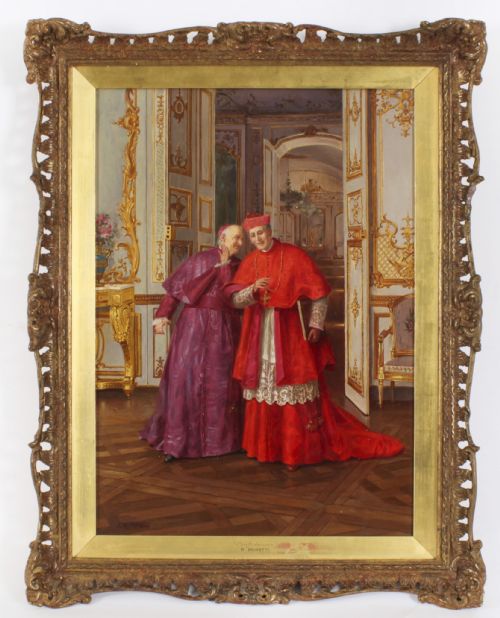


Framed Church Painting
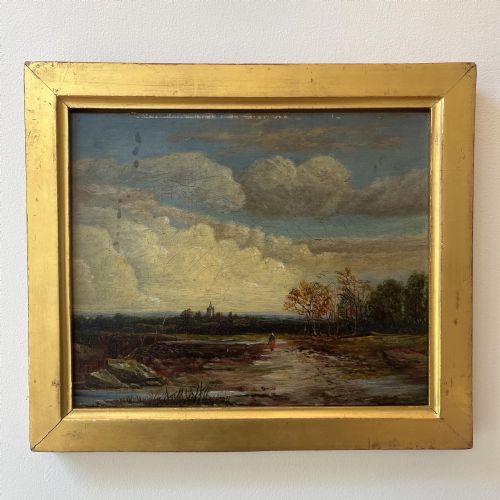
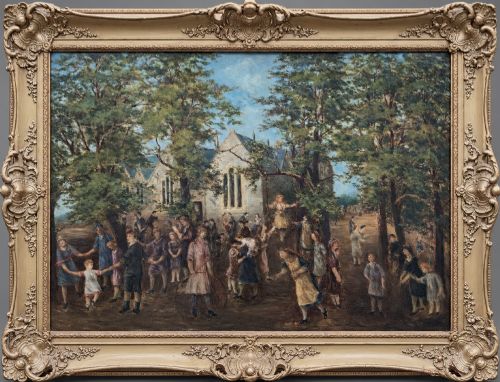
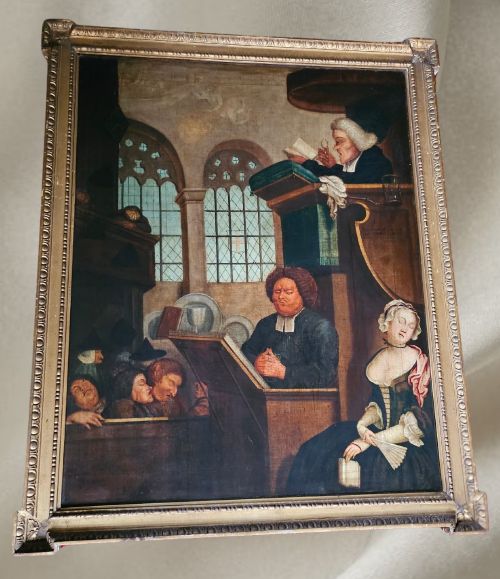
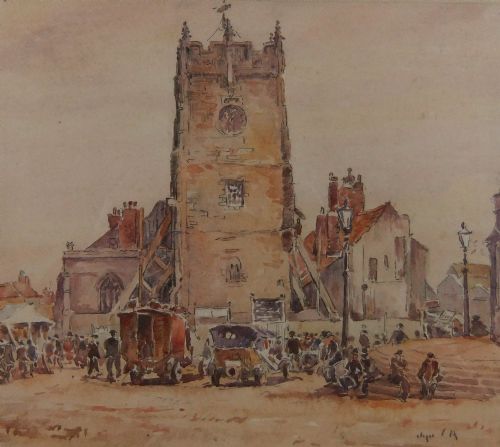
When you search for a framed church painting, you meet a variety of historic watercolours, oils on canvas, and panels depicting ecclesiastical buildings.
Framed Church Painting
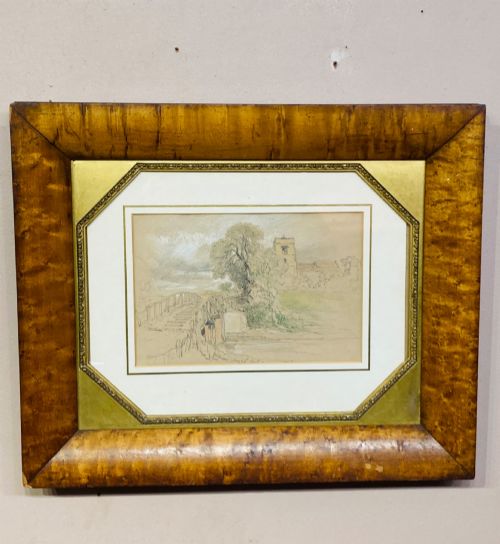
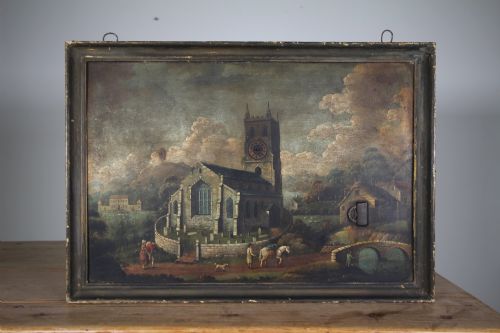
A framed church painting represents historic buildings and village gatherings, spanning the nineteenth and twentieth centuries. These works range from naive folk art depictions to detailed watercolours and oils.
You frequently encounter pieces from the Victorian and Edwardian eras, alongside mid-century interpretations. The subjects encompass specific locations like Whitby Abbey and St Martins in the Fields, as well as rural landscapes featuring local spires.
The selection includes varied formats such as arched window mirrors, stained glass panels, and traditional canvas works. Each piece preserves a record of historic architecture and local community life.
How They Were Made
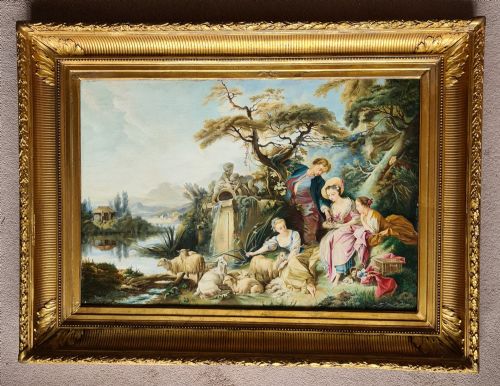
Artists utilised oil paint on canvas and board, alongside watercolour on paper, to capture architectural details and rural lighting. Gilded wood and standard timber frames enclose these works.
Certain items incorporate leaded glass and tin panels, reflecting diverse material traditions within religious and domestic art. Hand-painted surfaces combine with structured wooden supports to form each finished display.
Framed Church Painting Retail Price Guide 2026
Typical asking prices for framed church painting among the pieces listed under this phrase on Sellingantiques today, from the lower quarter to the upper quarter. They describe what is for sale here now, not the wider market.
Listings feature works from the 19th Century, Victorian era, 1930, and 1960, utilising oil paint, canvas, watercolour, and gilded wood.
What Varies in Quality
The sophistication of brushwork and the precision of architectural perspective differentiate individual works. Earlier pieces from the nineteenth century show distinct handling compared to later twentieth-century interpretations.
The integrity of the original framing, whether gilded wood or structural timber, contributes to the overall character of the piece. Preservation of the painted surface on canvas, panel, or glass dictates the visual strength of the artwork.
John Smith Atherton·William Hogarth·Renato Moretti·Joan Gillchrest·Alfred George Morgan·William Greaves·John Edward Bale·Walter Meegan·Kershaw Schofield·Rowland Henry Hill·Maurice Asselin·Jeffrey Pratt·John Jaques·David Bates·Frederick Underhill·Stephanie Cooper·Fred Lawson
The Framed Church Painting Glossary
- Watercolour
- A painting method where fine pigment is suspended in water-based solution on paper. This technique yields translucent washes often seen in topographical views.
- Gilded Wood
- Timber treated with a thin layer of gold leaf or metallic powder. Frames finished in this manner provide a reflective border for traditional canvases.
- Stained Glass Panel
- Coloured glass pieces joined by lead cording to form pictorial windows. These items combine illumination with narrative religious scenes.
- Oil Paint
- Pigment mixed with drying oils such as linseed. This medium allows for rich colour depth and textured application on canvas or board.
Framed Church Painting: Frequently Asked Questions
What periods do these paintings cover?
The works span from the nineteenth century through the Edwardian period and into the mid-twentieth century.
Specific examples reflect Victorian architectural styles and later modern British approaches to landscape art.
Are all the artworks executed in oil?
Materials include oil paint on canvas or board, alongside watercolours on paper and painted glass panels.
Artists selected mediums based on the desired level of detail and atmospheric effect for each church scene.
Do the paintings depict real churches?
Many works identify specific locations such as Whitby Abbey, St Martins in the Fields, and local village parishes.
Other compositions present generalized rural landscapes featuring traditional spires and churchyards.
What framing materials are common?
Frames typically consist of wood, with numerous examples featuring gilded wood finishes suited to the period.
Alternative formats include architectural elements like arched window frames and leaded glass structures.