
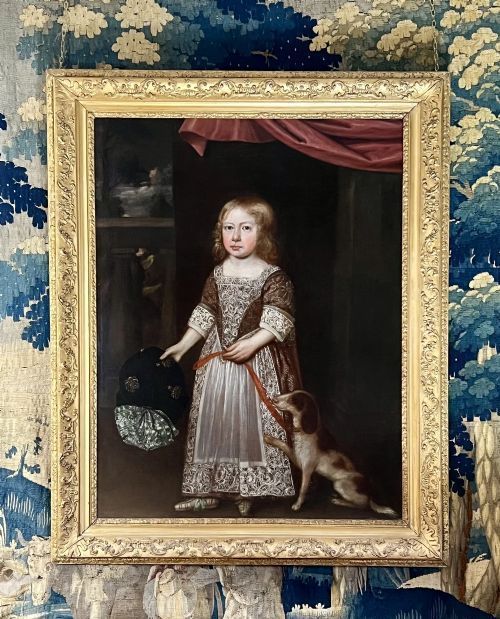
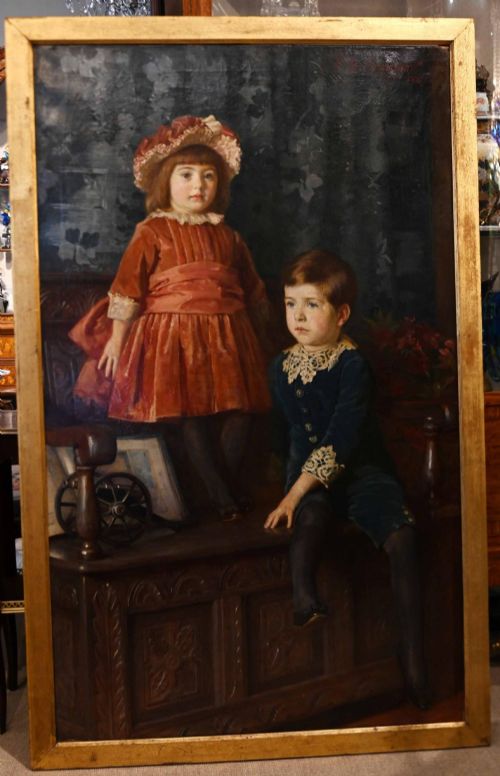
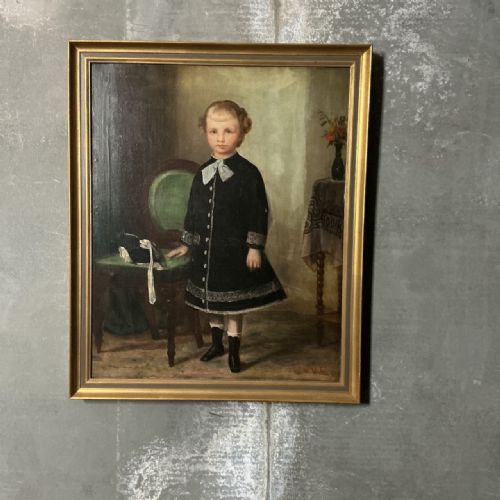
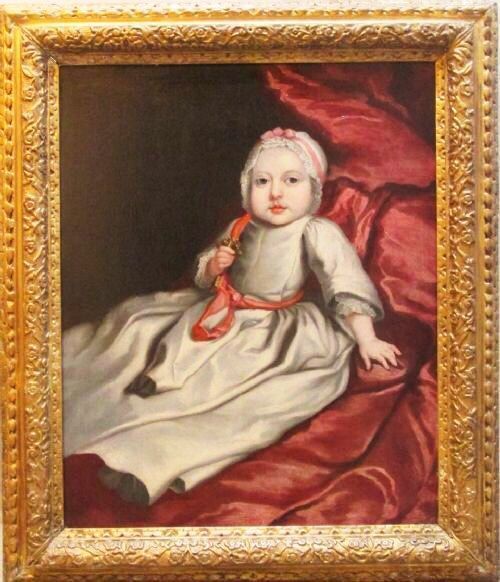
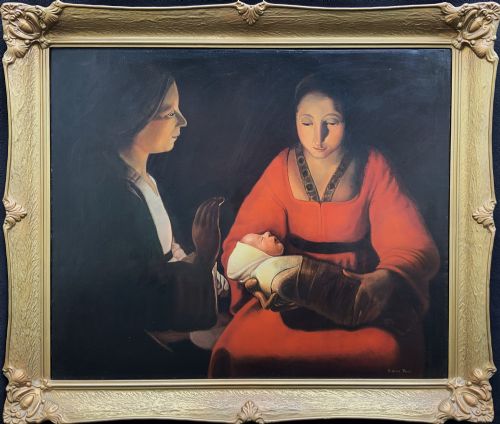

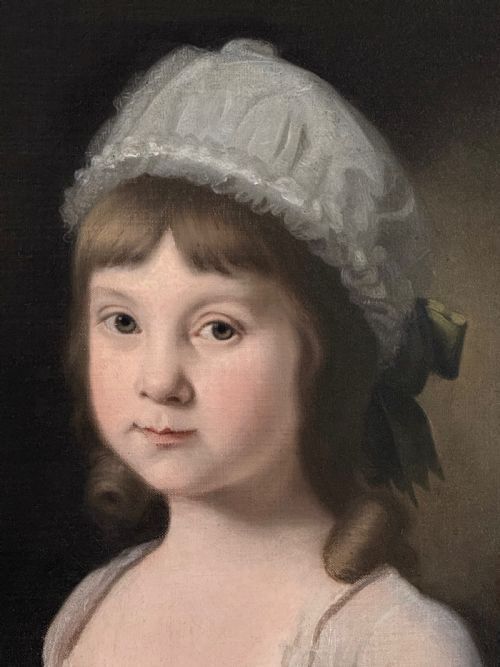
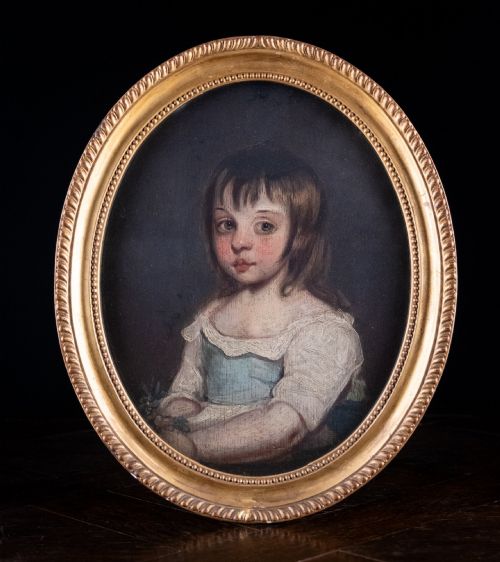
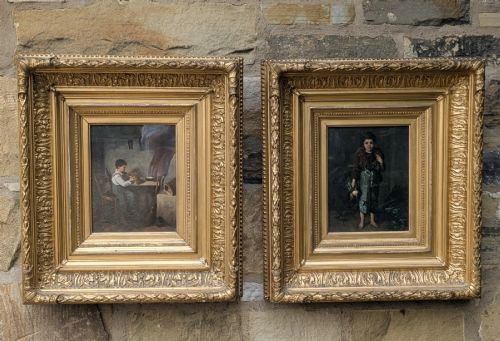
Framed Child Portrait Painting
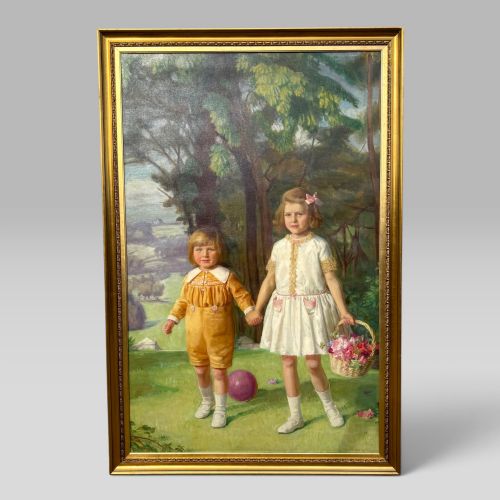
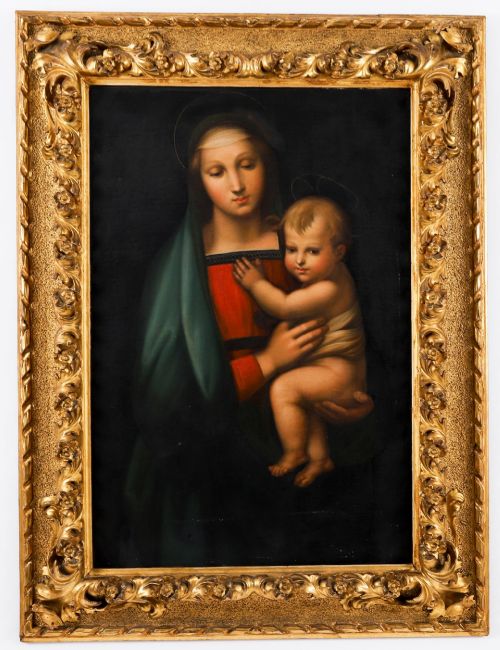
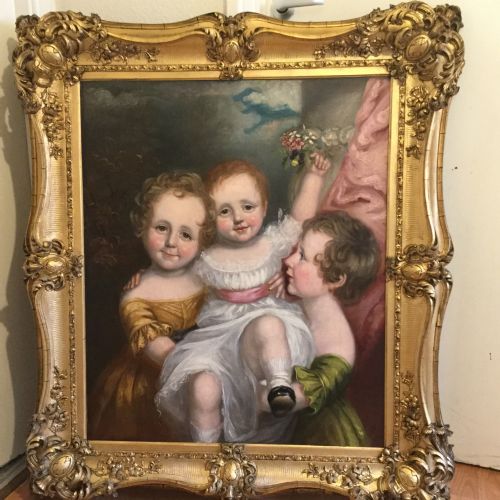
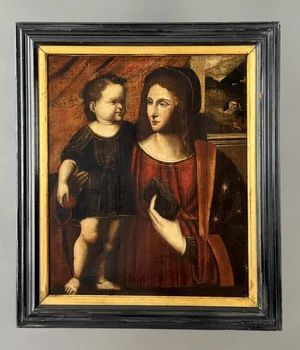
A framed child portrait painting captures youth with enduring character, offering buyers a direct window into past eras.
Framed Child Portrait Painting
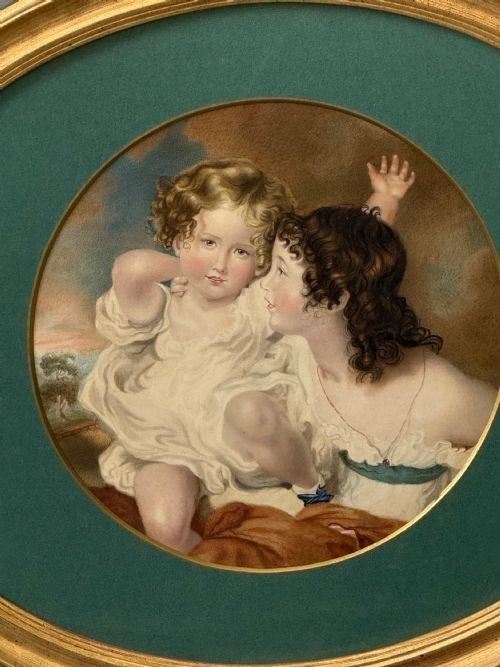
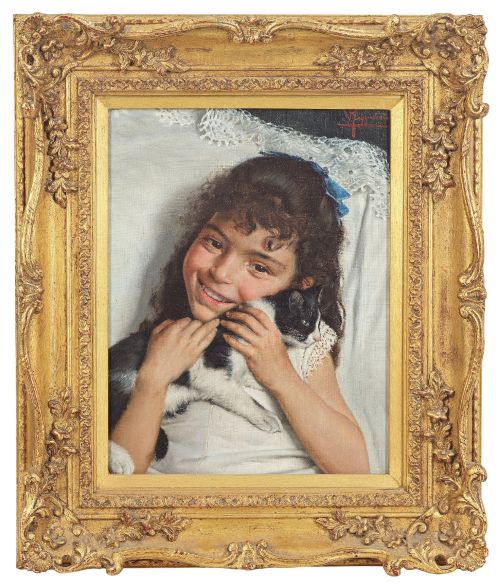
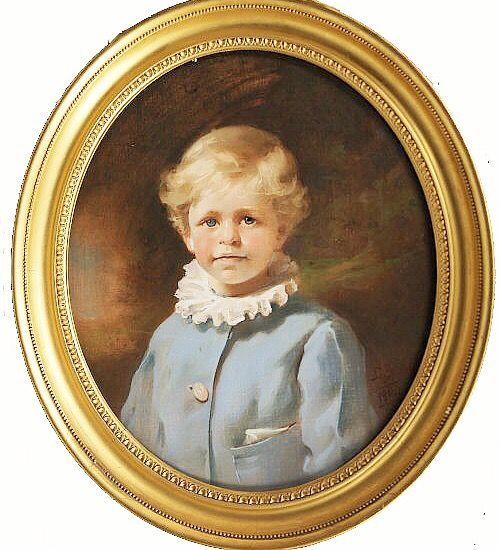
A framed child portrait painting represents young subjects executed across centuries, ranging from formal aristocratic commissions to informal depictions. Buyers inspecting this selection encounter works spanning the sixteenth century through the mid-nineteenth century and into the Edwardian period.
Originating from diverse European and British schools, these pieces include naive folk art alongside academic studio works. The subjects range from royal children and country girls to sibling pairs with pets and toys.
How They Were Made
Artists painted primarily in oil on canvas or worked with pastel and watercolour on paper, often incorporating gouache for opacity. Canvases received layers of pigment to build depth in clothing and flesh tones.
Surrounding the artworks are wooden frames finished in giltwood or gold leaf, protecting the fragile paper or canvas surfaces beneath glass where appropriate. These decorative borders reflect the cabinetmaking and gilding techniques of their respective periods.
The listings span from sixteenth-century Renaissance works through Georgian and Victorian pieces up to mid-twentieth-century examples in oil, pastel, and watercolour.
What Varies in Quality
The preservation of the original support, whether canvas or paper, combined with the integrity of the period frame, dictates the overall standard of the piece. Works retaining their original giltwood surrounds command greater visual cohesion.
Emily Eyres·Joshua Reynolds·Vittorio Reggianini·Leon Sprinck·Charles D'Agar·Bernardino Luini·Adelaïde Salles-Wagner·Henry Windsor Fry·Thomas Lawrence·Thomas Beach·Henry Travis·Raphael Conestabile·Charles Hunt·J.A. Grant·Frederick Tatham·Miguel Barroso·James Maubert·Michael Dahl·Joseph Highmore·Arthur Percy Dixon·Byam Shaw
The Framed Child Portrait Painting Glossary
- Oil on Canvas
- Pigment mixed with drying oil applied to a stretched woven fabric support. This medium allowed artists to achieve rich colour saturation and subtle tonal gradations.
- Giltwood
- Wood carved and coated with thin gold leaf or metal powder. This finish provided opulent reflection for historical picture frames.
- Pastel
- A dry medium composed of powdered pigment and a binder pressed into stick form. It creates velvety textures that require glass protection.
- Naïve Art
- Artwork created by artists without formal academic training, often characterised by flat perspective and direct expression. These pieces possess a distinct folk art appeal.
- Mezzotint
- A printmaking process of the intaglio family where the plate is roughened to achieve rich tonal variations. It was widely utilised for reproducing famous paintings.
Framed Child Portrait Painting: Frequently Asked Questions
How do I date an antique child portrait?
Dating relies heavily on the clothing styles, hairstyles, and accessories depicted in the artwork, alongside the construction methods of the frame and stretcher bars. Costume historians use specific collar shapes and dress cuts to narrow down the decade.
Material evidence on the reverse, such as canvas stamps, wedge keys, and paper labels, provides additional chronological markers that align with the active periods of the artists.
What is the difference between oil and pastel portraits?
Oil paintings utilise pigment bound in oil on a stretched canvas support, offering durability and deep, blendable colours that darken slightly over centuries. Pastels consist of dry pigment sticks applied to paper, yielding a soft, matte finish.
Pastel works require glass framing to prevent the powdery medium from smudging or flaking away from the paper surface over time.
How should I care for a framed portrait?
Protect the artwork by hanging it away from direct sunlight and maintaining stable indoor humidity levels to prevent wood warping and canvas degradation. Dust giltwood frames gently with a soft, dry brush without using liquid cleaners.
Ensure that wall fixings are secure and appropriate for the substantial weight of period wooden frames.
What defines folk art child portraits?
Folk art child portraits are characterised by a flat perspective, simplified anatomy, and a charming directness created by self-taught or provincial artists. These pieces prioritise honest character representation over strict academic proportions.
They frequently feature domestic settings with beloved pets, toys, or fruit baskets that reflect the daily life of the period.