


Framed Cattle Landscape
A framed cattle landscape captures rural industry and pastoral quiet, bringing Victorian countryside and nineteenth-century realism straight onto the wall.
Framed Cattle Landscape
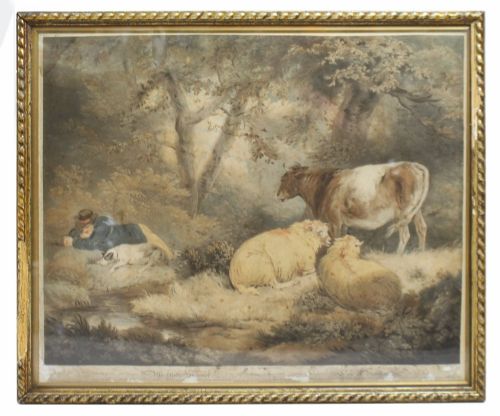
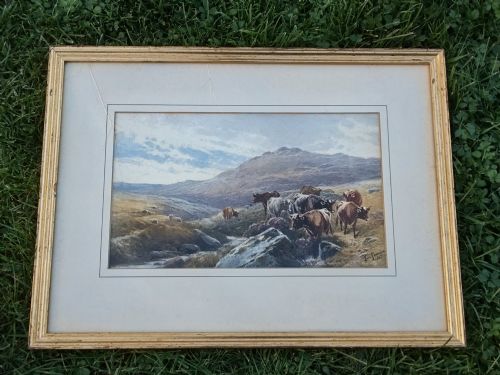
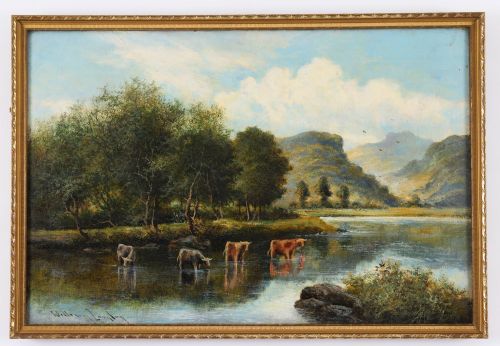
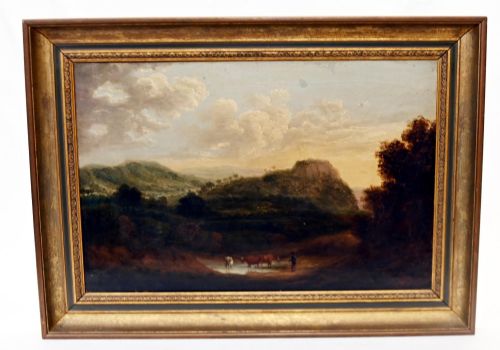
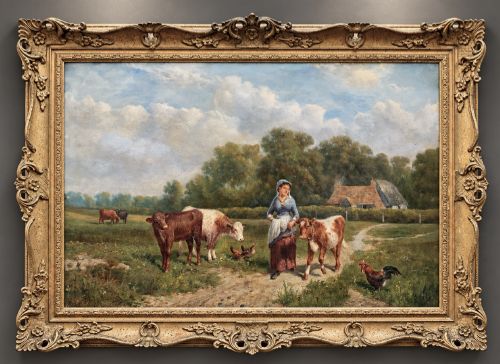
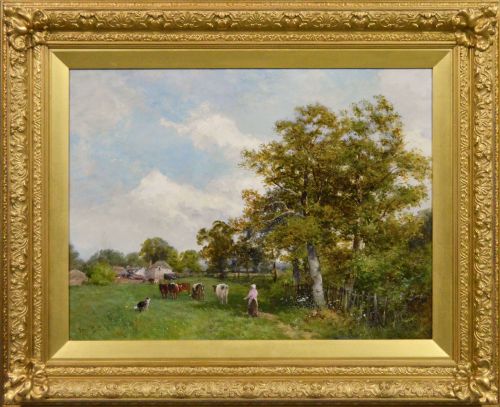
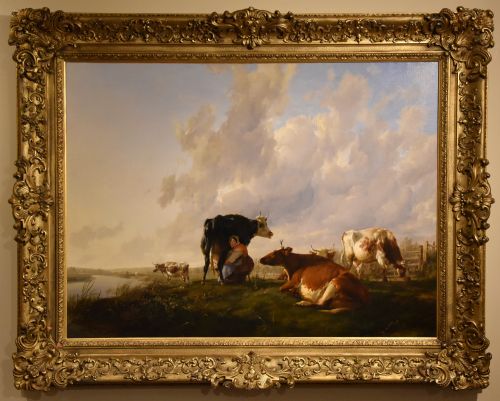
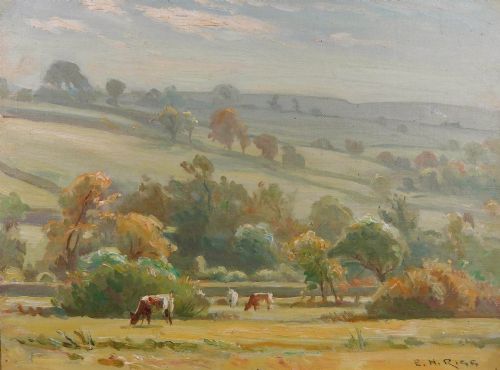
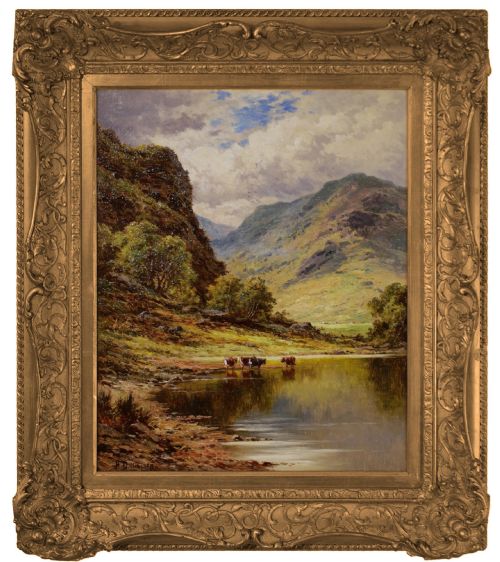
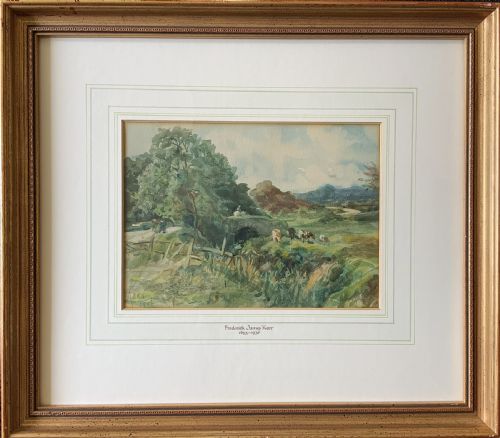
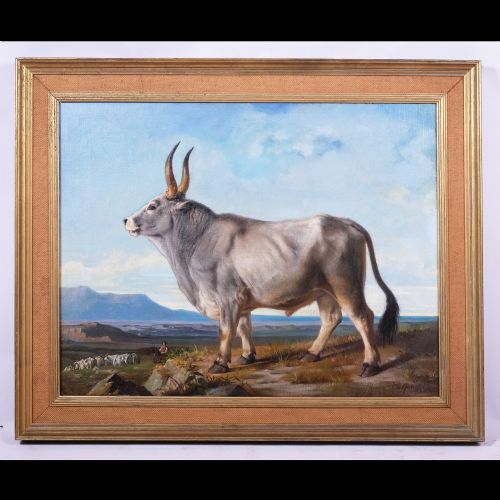
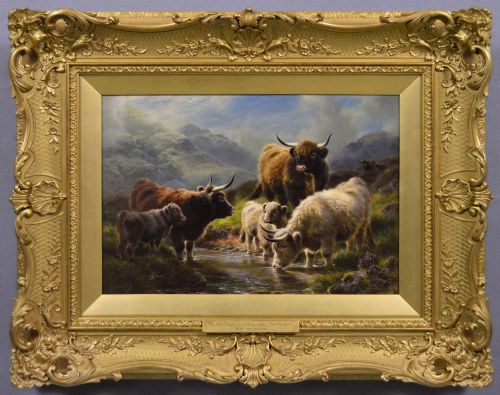
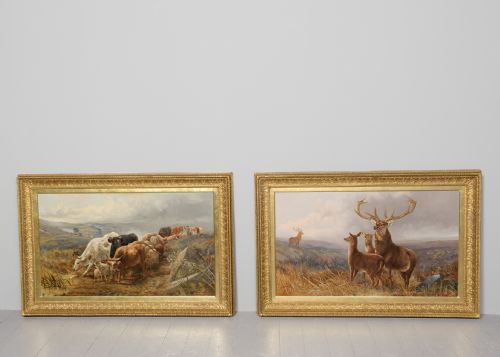
When searching for a framed cattle landscape, buyers encounter oil on canvas and watercolour paintings originating from the nineteenth century into the Edwardian era. These works depict rural scenes, pastoral landscapes, and farmyard views populated by cattle, bulls, and cows.
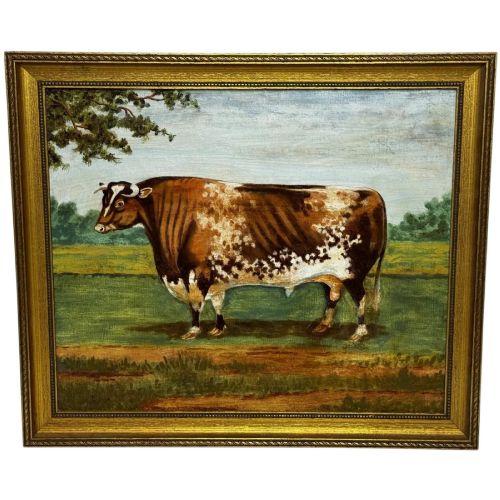
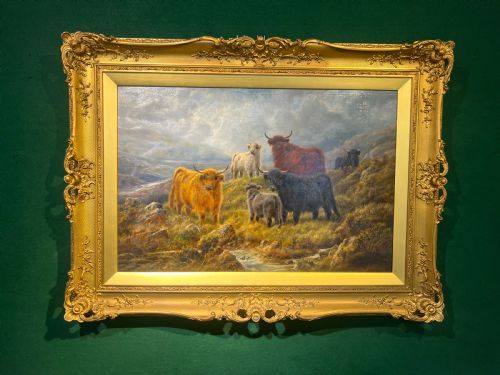
Most pieces on this page stem from the Victorian period, showcasing British realism, pastoral styles, and occasional Scottish Highland settings. Artists record agricultural life through detailed portraits of shorthorn bulls, milkmaids, and herds resting by streams or castle ruins.
Quality Variations
Quality rests in the anatomical accuracy of the animals, the handling of light across the landscape, and the cohesion of the composition. Skilled artists render the musculature of cattle and the atmospheric conditions of the countryside with precision.
The preservation of the original canvas, pigment stability, and the condition of the period giltwood frame contribute to a piece's standing. Finer examples maintain crisp detail in both the pastoral background and the central animal portraits.
Framed Cattle Landscape Retail Price Guide 2026
Typical asking prices for framed cattle landscape among the pieces listed under this phrase on Sellingantiques today, from the lower quarter to the upper quarter. They describe what is for sale here now, not the wider market.
Prized shorthorn bulls command the canvas with the same solemn dignity as nineteenth-century nobility.
William Langley·Thomas Sidney Cooper·Robert Watson·Henry Hillier Parker·Eugene Verboeckhoven
The Framed Cattle Landscape Glossary
- Oil on Canvas
- A painting medium where pigments suspended in drying oils are applied to stretched fabric. This technique allows for rich colour blending and texture.
- Giltwood
- Wood carved and coated with gold leaf or metallic paint. It frequently forms the decorative surface of period frames.
- Gesso
- A paint mixture consisting of a neutral binder mixed with chalk, gypsum, or pigment. It prepares wooden frames and canvases for gilding or painting.
- Watercolour
- A painting method where water-soluble pigments are applied to paper. It produces translucent washes suited to light-filled rural scenes.
- Victorian Naturalism
- An artistic approach focusing on unidealised representations of nature and rural life. Practitioners prioritise realistic observation of light and agriculture.
Framed Cattle Landscape: Frequently Asked Questions
What periods do these paintings come from?
The works primarily date from the nineteenth century through to the Edwardian era, spanning the Victorian period and surrounding decades. Artists worked within traditional British and European schools.
Dates align with documented painting careers and stylistic developments in landscape and animal portraiture.
How should I hang a framed cattle landscape?
Hang these works at eye level on walls with stable environmental conditions, avoiding direct sunlight and dampness. Proper placement protects both the canvas and the original giltwood frame.
Ensure wall fixings match the weight of the wooden framing and canvas combined.
Are watercolours framed differently from oils?
Watercolours typically sit behind protective glass within paper mats and wooden frames to prevent moisture damage. Oil paintings on canvas remain unglazed to let the textured paint surface breathe.
Both formats rely on period wood and gesso construction for structural integrity.
What subjects accompany the cattle?
Compositions often feature milkmaids, shepherds, and farm hands working alongside rivers, woodlands, and castle ruins. Some scenes incorporate sheep, horses, and dogs within the wider agricultural setting.
Scenery ranges from English pastures to Scottish lochs and Welsh mountain valleys.