



Framed Bull Portrait
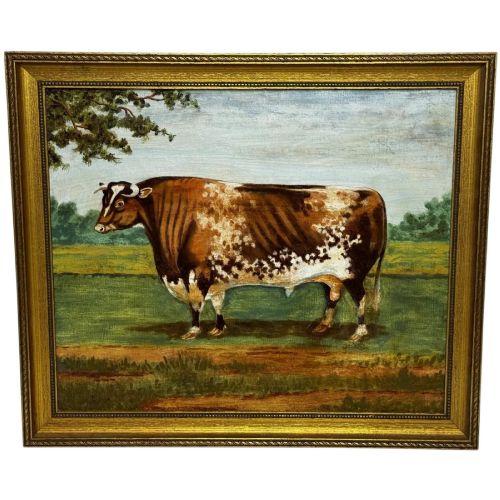
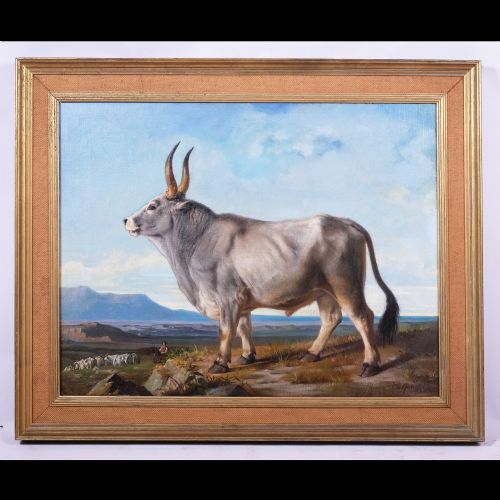
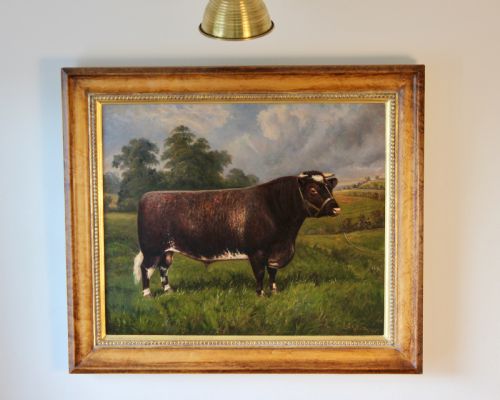
A framed bull portrait brings robust rural character to a room, showing livestock rendered in oil, etching and tile.
Framed Bull Portrait
A framed bull portrait captures prized livestock through nineteenth-century realism, Edwardian works and English folk art. These pieces record agricultural pride, depicting shorthorns, bulldogs and Tuscan cattle in oil paintings, engravings and framed tiles.
The most common versions on this page are nineteenth-century oil paintings on canvas and board. They bring authentic country house presence into modern interiors through straightforward portraiture of cattle and hounds.
How they were made
Painters applied oil paint to canvas, board and paper to capture the heavy musculature and dense coats of prize cattle. These works rely on layered brushwork to build depth in both the animal and the rural background.
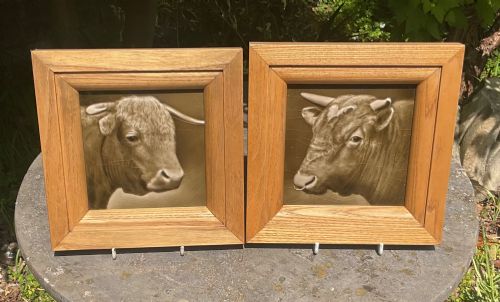
Makers framed these portraits in oak wood and giltwood, while printmakers utilised ink on paper for detailed engravings and etchers like Herbert Dicksee worked with fine plates. Sherwin and Cotton produced ceramic tiles that were framed for wall display.
Framed Bull Portrait Retail Price Guide 2026
Typical asking prices for framed bull portrait among the pieces listed under this phrase on Sellingantiques today, from the lower quarter to the upper quarter. They describe what is for sale here now, not the wider market.
Listings feature oil paint, canvas, oak wood, giltwood frames, paper and ink across nineteenth-century and Edwardian periods.
What varies in quality
Anatomical precision separates standard decorative pieces from accomplished British agricultural portraiture. Master painters command perspective and light to give the animal genuine weight and presence within the frame.
The sophistication of the original framing alters the overall character. Simple oak surrounds contrast with gilded mouldings that reflect the high status of the animal recorded within.
Sherwin and Cotton·A M Gauci·Heinrich Harder·W. A. Clark·Herbert Dicksee
The Framed Bull Portrait Glossary
- Oil painting
- A picture created using pigments bound in a drying oil, typically applied to canvas or wood board. This medium allows for rich colour blending and deep texture.
- Etching
- A printmaking process where lines are incised into a metal plate with acid before ink is applied and pressed onto paper. It produces fine, sharp details.
- English folk art
- Artistic work created by self-taught makers outside academic traditions. These pieces prioritise direct observation over strict proportion.
- Giltwood frame
- A wooden picture surround coated with a thin layer of gold leaf or gold paint. It adds brightness and formality to the artwork.
Framed Bull Portrait: Frequently Asked Questions
What periods do these portraits cover?
The pieces span the nineteenth and early twentieth centuries, capturing Victorian and Edwardian agricultural interests. Artists recorded prize livestock through changing stylistic lenses during this era.
Most items date from the late nineteenth century up to the nineteen-twenties. This period saw strong interest in rural portraiture and livestock recording.
How do I hang a framed bull portrait?
These works suit traditional spaces like studies, libraries and dining rooms where country house aesthetics apply. Their substantial subjects demand sturdy wall fixings and adequate spacing.
Keep them away from direct sunlight to protect the oil paint and paper surfaces. Proper wall placement ensures the framed piece becomes a natural focal point.
Are all these pieces painted in oil?
While oil on canvas and board forms a large part of the selection, other mediums appear too. Engravings, original etchings and framed ceramic tiles also represent the subject.
Each medium offers a distinct texture, from the glossy surface of glazed tiles to the fine ink lines of printed plates. This variety reflects diverse approaches to animal portraiture.
How do I tell an etching from an oil painting?
An oil painting shows visible brushstrokes and thick layers of pigment built up on canvas or wood. It has a tactile surface that catches the light.
An etching sits flat beneath glass, showing fine ink lines printed on paper. Examining the surface closely reveals the distinct difference between applied paint and printed ink.