





Framed Big Cat Art
Framed big cat art brings the raw power of the wilderness indoors through historic prints and paintings that captivate the eye.
Framed Big Cat Art
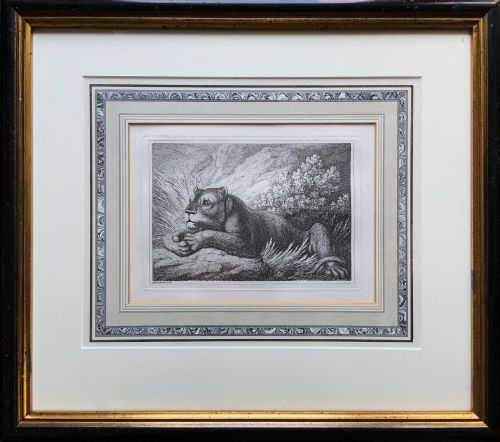
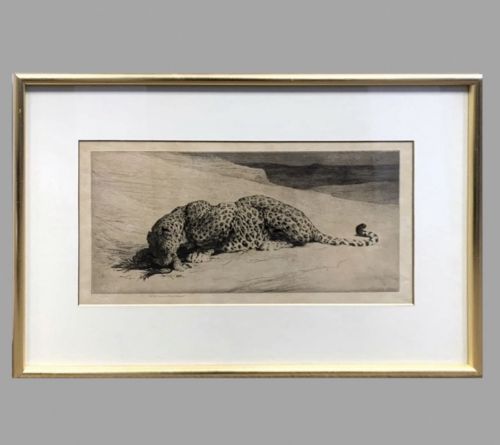
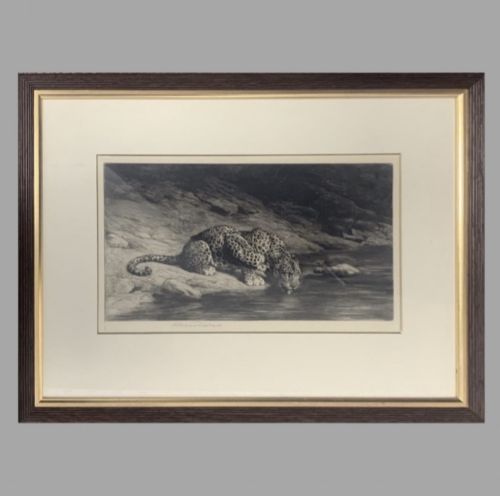
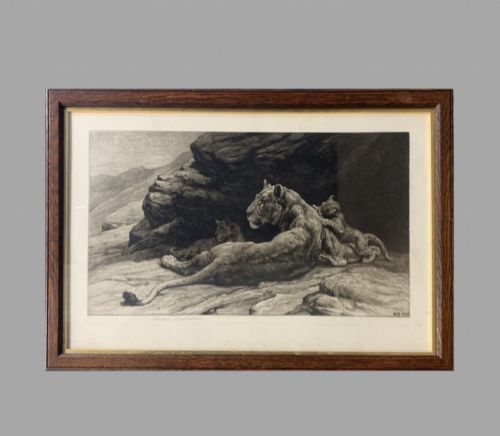
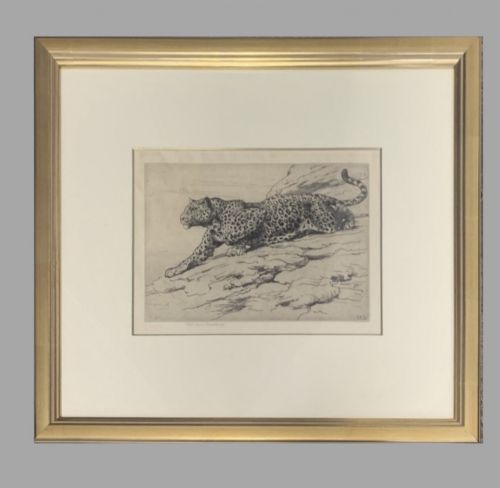
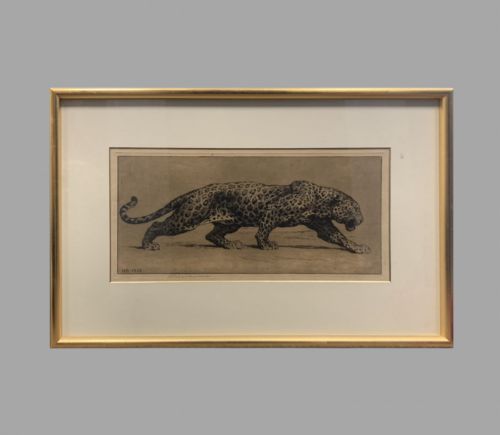
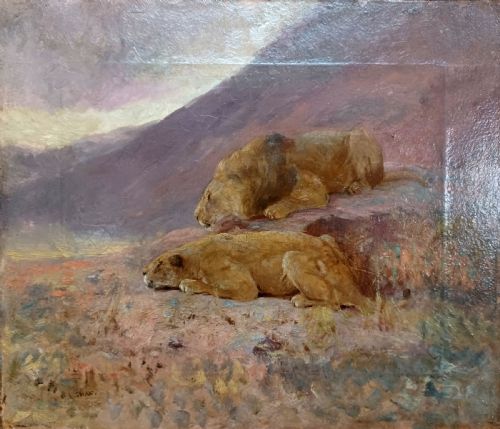
When you search for framed big cat art, you encounter powerful depictions of lions, leopards, and tigresses rendered during the nineteenth and early twentieth centuries. These works range from finely worked etchings on paper and vellum to intimate oil paintings on canvas.
You are most likely to meet signed artist proof etchings alongside nineteenth century oil paintings and studies on paper. The dominant styles span Late Victorian animalier, Edwardian academic approaches, and early twentieth century wildlife depictions.
These pieces bring a distinct nineteenth century naturalist focus into domestic interiors, capturing big cats in moments of stillness, drinking, or stalking prey at dusk. The framing typically involves traditional wood and gilt wood surrounds that complement the paper or canvas within.
How they were made
Makers utilised traditional printmaking and painting techniques, applying ink to paper and vellum for detailed etchings, or oil paint to canvas for richer colour and texture. Gold leaf often accents the gilt wood frames that house these works.
The physical construction relies on protective glass frontings, timber wooden frames, and heavy paper or canvas supports. Artists built up their compositions through meticulous linework in the etchings and layered brushstrokes in the oil paintings.
Framed Big Cat Art Retail Price Guide 2026
Typical asking prices for framed big cat art among the pieces listed under this phrase on Sellingantiques today, from the lower quarter to the upper quarter. They describe what is for sale here now, not the wider market.
Cats in these historic frames remain perpetually poised to pounce, refusing to chase any birds outside your window.
What varies in quality
The distinction between ordinary and exceptional works rests on the precision of the draughtsmanship and the expressive force captured in the animal's form. Signed artist proofs by accomplished handlers demonstrate superior mastery of line and tone compared to standard prints.
Materials and presentation also differentiate the pieces, with vellum supports and original gilt wood framing adding notable substance. The depth of the composition, whether an oil painting after an established painter or an intimate miniature etching, dictates the visual impact.
Herbert Dicksee·Cuthbert Edmund Swan·John Macallan Swan·Geza Vastagh
The Framed Big Cat Art Glossary
- Etching
- A printmaking process where lines are bitten into a metal plate with acid before being inked and pressed onto paper. This technique allows for remarkable fine detail in wildlife subjects.
- Artist Proof
- An impression of a print taken in limited numbers before the official edition is finalized, carrying higher value for collectors. These proofs are frequently signed by the hand of the maker.
- Animalier
- A nineteenth century artistic focus on the realistic portrayal of animals, particularly predators in natural poses. It requires deep anatomical understanding from the maker.
- Vellum
- A fine parchment prepared from calfskin, offering a smooth and durable surface for ink. Etchings pulled onto vellum possess a distinct luminous quality.
- Gilt Wood
- Wood that has been decorated with a thin layer of gold leaf. It provides traditional ornate framing for historic works on paper and canvas.
Framed Big Cat Art: Frequently Asked Questions
What periods do these pieces date from?
The works span the nineteenth century and the early twentieth century, including Victorian animalier pieces and Edwardian print editions. This era saw a surge in natural history appreciation and wildlife art.
Collectors encounter everything from 1900 etchings to earlier oil paintings, reflecting distinct shifting tastes in how predators were portrayed.
How do I identify an artist proof?
Artist proofs are marked by the creator's signature in pencil beneath the printed image, often accompanied by limited edition notations. They represent the finest pulls from the etched plate before mass production.
Checking the bottom margin under the glass reveals these hand-signed details that distinguish them from standard published prints.
Where should I hang framed big cat art?
These works suit traditional studies, libraries, or living spaces where dark wood furniture and classic interiors complement gilt frames. Their subject matter commands attention, making them natural focal points above mantelpieces or along hallways.
Keep them away from direct sunlight to protect the ink, paper, canvas, and gold leaf from fading over time.
What is the difference between etching and oil painting?
Etchings rely on incised metal plates and ink on paper or vellum to create fine, monochromatic linear detail. Oil paintings utilise pigments suspended in oil on canvas to build rich colour, texture, and light.
Both mediums capture the muscular forms of big cats, but through entirely different tactile and visual languages.