


Framed Autumn Landscape Art
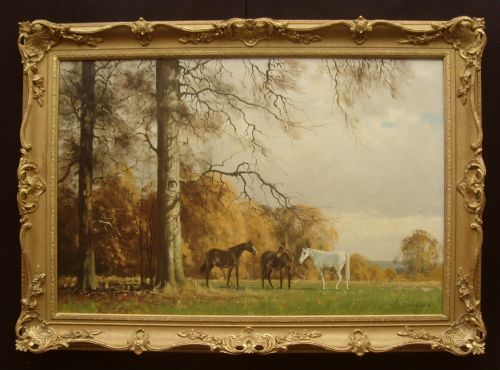
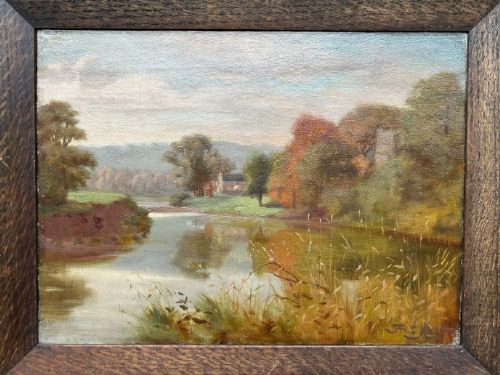
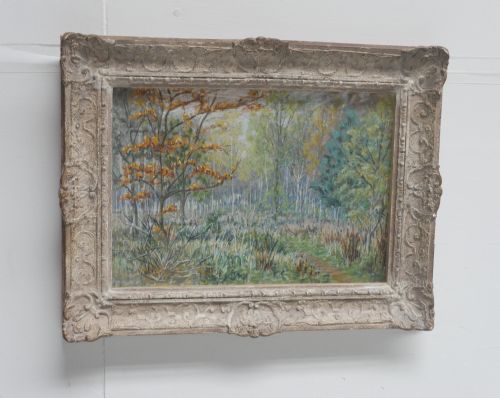
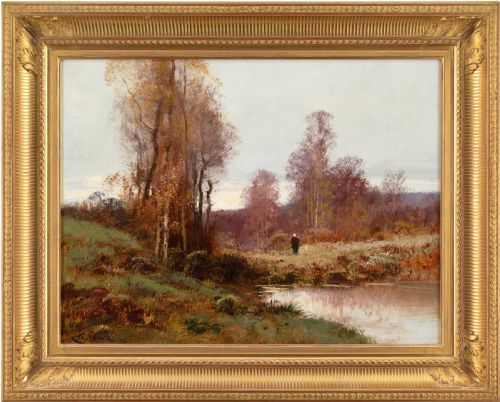
Framed autumn landscape art brings warmth into a room through woodland scenes, river views and harvest fields captured in oil and watercolour.
Framed Autumn Landscape Art
Framed autumn landscape art encompasses oil paintings and watercolour works depicting seasonal rural scenes, rivers and woodland views. The selections available span from the Victorian period through the Edwardian era and into the mid-century decades.
Buyers encounter works executed in British Impressionism, Victorian Naturalism and traditional country styles. Canvases and paper supports arrive enclosed in period wood frames, protected by glass where watercolours are used.
Materials and technique
Artists applied oil paint to canvas or wood panels, and watercolour or pastel to paper, utilising layered brushwork to build depth in foliage and water. Canvases stretch over wooden frames while works on paper sit behind glass.
The physical build relies on traditional media such as ground pigments in oil or water-soluble binders. Frames consist of timber moulding, occasionally gilded or painted to complement the tonal palette of the scene.
Subjects cover river valleys, farming fields and woodland scenes across British and French locations.
Assessing the works
Quality rests upon the confidence of the brushwork and the artist's command of light, shadow and seasonal colour gradation. Stronger examples convey atmospheric depth in the woodland canopy and river reflections rather than relying on formulaic foliage.
The integrity of the original support, the sensitivity of the framing and the clarity of the signature contribute to the standing of an individual painting. Works by recorded painters with established exhibition histories demonstrate greater compositional control.
Frederick Marriott·Charles Clair·Samuel Timmins·Arthur Herbert Rigg·George Graham·Owen Bowen·William Mellor·Walter Follen Bishop·Edmund George Warren·Berthe des Clayes·John Falconar Slater·Robert Lesley Howey·Charles James Adams·Frederick W Jackson·Ernest Higgins Rigg·J McIntyre·Hans Kappel Øvre·George Sykes·Ernest Moore·Augustus William Ennes·Fred Merriman·Percy Lancaster·Everett Watson Mellor·Charles Ashmore
The Framed Autumn Landscape Art Glossary
- Oil on Canvas
- Pigment mixed with drying oil applied to a woven fabric stretched across a wooden frame. This combination allows for rich texture and blended colour mixing.
- Watercolour Painting
- Pigments suspended in a water-soluble vehicle applied to paper supports. The technique relies on translucent washes of colour that let the white of the paper illuminate the scene.
- Pastel Painting
- Artworks created using dry powdered pigment sticks compressed into chalk-like cylinders. They produce soft, velvety textures across paper surfaces.
- British Impressionism
- A painting approach focused on natural light and outdoor scenes, prominent from the late nineteenth century onward. Artists worked with visible brush strokes to capture fleeting atmospheric effects.
- Victorian Naturalism
- An artistic movement emphasising detailed observation of the natural world without idealisation. Works in this style record rural life and topography with botanical precision.
Framed Autumn Landscape Art: Frequently Asked Questions
What periods do these paintings come from?
The inventory includes works from the Victorian era, the Edwardian period and mid-century decades up to nineteen-sixty.
Styles shift from nineteenth-century naturalism toward twentieth-century impressionistic and traditional country interpretations.
How should I hang and light these pieces?
Position paintings away from direct sunlight to protect oil pigments and watercolour paper from fading over time.
Use picture lights or ambient room illumination directed at a gentle angle to prevent glare on the glass or varnished canvas.
Are these works signed by the artists?
Many examples feature artist signatures, inscriptions or studio labels on the front or verso of the canvas and frame.
Attributions rely on these signatures alongside documented exhibition records and period stylistic traits.
What framing is typically included?
Most pieces arrive within wood frames appropriate to their period of origin, ranging from simple mouldings to decorative carved timber.
Watercolours and pastels include glass protection to safeguard the delicate paper surfaces from dust and moisture.