




Framed Agricultural Canvas
Framed agricultural canvas pieces capture rural working life on oil and wood, bringing historic pastoral scenes directly into your interior.
Framed Agricultural Canvas
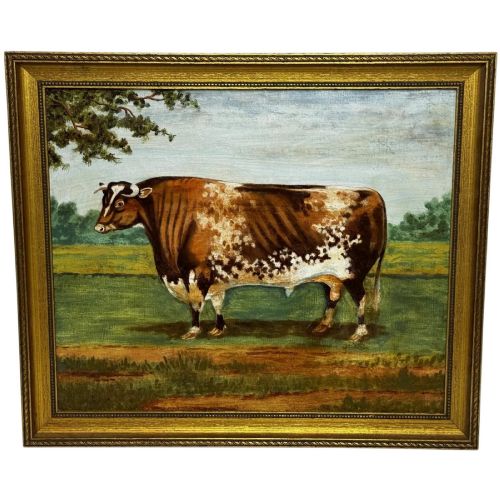
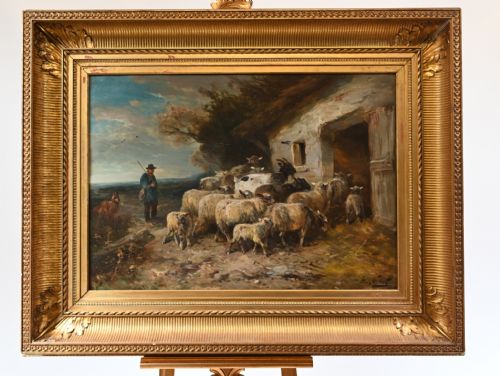
A framed agricultural canvas presents rural scenes, farmyard animals, and pastoral landscapes rendered in oil paint. These works record historic working life, focusing on shire horses, cattle, sheep, and harvest labour.
Most examples you encounter on this page date from the Victorian period through the early twentieth century, alongside mid-twentieth-century interpretations. They typically portray British and European countryside settings, capturing animals and farmworkers in traditional environments.
How they were made
Artists applied oil paint onto stretched canvas, building up layers of pigment to achieve depth in landscapes and animal portraits. Wooden frames enclose these canvases, occasionally finished with gesso and gilt details.
Support structures consist of wooden stretchers fitted behind the canvas to maintain tension, housed within protective wood surrounds that frequently display period ebonised or gilded surfaces.
Several canvases record the quiet dignity of heavy shire horses resting at troughs long before tractors changed the fields forever.
What varies in quality
The skill of the brushwork and the anatomical accuracy of the animals set superior works apart from simpler naive pieces. Painters who captured light and movement with precision command greater attention from collectors.
Framing also distinguishes individual works, as period wooden frames suited to the canvas era enhance the overall presentation far beyond later or mismatched replacements.
Henry Schouten·James Kyd·Herbert Royle·James William Booth·Thomas Sidney Cooper·Arthur Charles Dodd·Vernon Stokes·George Cole·William Sidney Cooper·George Wright
The Framed Agricultural Canvas Glossary
- Canvas
- A heavy woven fabric used as a surface for oil paintings. It provides the flexible base stretched over wooden frames for the artist's pigments.
- Gesso
- A plaster-like mixture applied to wooden frames before gilding or painting. It creates a smooth base for decorative surface treatments.
- Oil paint
- A slow-drying medium made by mixing pigments with oils. It allows artists to blend colours smoothly and build rich textures.
- Pastoral
- A style of art depicting rural life and landscapes. These scenes focus on farming, livestock, and country settings.
- Stretchers
- The wooden frames that hold a painted canvas taut. They fit inside the decorative outer frame to keep the fabric stable.
Framed Agricultural Canvas: Frequently Asked Questions
How do I clean a framed agricultural canvas?
Dust the canvas gently with a soft, dry brush to remove surface particles. Avoid liquid cleaners or water, which can damage aged oil paint.
Keep the piece away from direct sunlight and damp environments to protect both the canvas and the wooden frame from warping.
How do I date a framed agricultural canvas?
Examine the style of dress, agricultural machinery, and framing materials for period clues. Victorian works often feature heavier gilt frames and traditional realism.
Check the reverse of the canvas for artist signatures, dates, or old dealer labels that provide clues to the origin and period.
Where should I hang these paintings?
These works suit dining rooms, studies, or living spaces where traditional country aesthetics complement the interior. Ensure the wall space receives indirect light to preserve the colours.
Pair the canvas with wooden furniture or period decor to echo the rustic themes found within the artwork.
What subjects appear most frequently?
Shire horses, cattle herds, and sheep flocks dominate the pastoral scenes on these canvases. Farmers engaged in harvesting, ploughing, and farmyard chores also recur frequently.
These depictions reflect the agricultural focus of nineteenth and early twentieth-century rural life in Britain and Europe.